
Thielaviopsis punctulata
Thielaviopsis punctulata
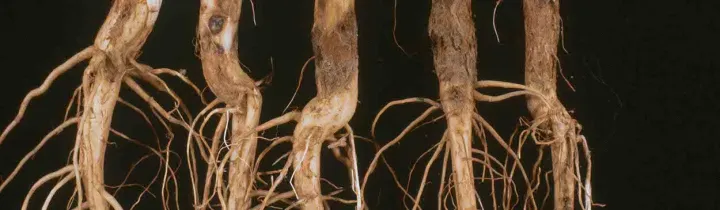
Description
Symptoms
The primary symptom of infection is stunted growth and yellowing of the foliage. These signs appear because the damaged root system is unable to sustain the plant’s nutritional needs, even if moisture levels in the soil are adequate.
Roots show characteristic necrotic lesions that are dark brown or black in color. These spots start small but eventually coalesce to encircle the entire root or stem base, leading to the collapse of the plant vascular system and death.
Under humid conditions, the pathogen produces black, dusty sporulation on the surface of infected tissues. This is a diagnostic hallmark of the genus Thielaviopsis, differentiating it from other common root rot agents.
In fields, the disease is often patchily distributed. Plants within these infected patches display symptoms such as premature wilting and reduced vigor. In severe cases, seedlings may suffer from pre- or post-emergence damping-off.
Upon inspecting the root system, gardeners and farmers will notice the roots are brittle and easily detach from the plant. The tissue becomes soft and water-soaked in the early stages, followed by severe desiccation as the rot progresses.
Pathogen
Thielaviopsis punctulata is a significant soil-borne fungal pathogen responsible for various root rot diseases in agricultural crops. The fungus survives in the soil by producing highly resistant chlamydospores, allowing it to persist for several seasons without a host plant.
This pathogen infects the roots of susceptible plants by penetrating the cortical tissues. Once inside, the fungus colonizes the root system, causing cellular degradation and interfering with the plant's ability to uptake water and essential minerals from the soil.
The life cycle of the pathogen includes both endoconidia and chlamydospores. These reproductive structures facilitate survival and dispersal through infested soil, contaminated agricultural machinery, and irrigation water, making it a persistent challenge in cultivation.
As a facultative parasite, the fungus can switch between pathogenic and saprophytic lifestyles. When a host plant is absent, it derives energy from decaying organic matter, ensuring its presence in the soil profile even after intensive field cleanup.
Molecular studies on Thielaviopsis punctulata indicate significant genetic variability among different isolates, which can affect the severity of disease outbreaks in various geographic regions and host species.
Conditions for development
The development of Thielaviopsis punctulata is strongly influenced by soil temperature and moisture levels. Warm, moist soils, typically in the range of 20°C to 25°C, provide the most favorable environment for fungal activity.
High soil pH (alkaline conditions) is a critical factor that promotes the activity of this pathogen. It is often observed that fields with higher alkalinity experience more frequent and devastating outbreaks compared to neutral or slightly acidic ones.
Poorly drained and compacted soils with low oxygen availability create stressful environments for plant roots. These conditions compromise the plant's natural immune response, allowing the pathogen to invade the root tissues more easily.
Environmental stress factors such as rapid temperature fluctuations, especially during the early stages of plant growth, make the crop more vulnerable to soil-borne infections like those caused by Thielaviopsis.
Large amounts of crop residues left in the field from previous seasons provide an ideal substrate for the fungus to multiply. Without proper sanitation, the concentration of the pathogen in the soil will increase year after year.
Why it matters
The primary economic impact of this disease is the drastic reduction in marketable crop yields. By compromising the root system, the fungus limits plant growth, reduces fruit set, and diminishes the overall quality of grain or vegetable production.
Seedlings and young plants are particularly at risk, often dying before they can establish properly, leading to reduced plant density in the field. This necessitates costly replanting efforts and disrupts farm management plans.
Infected fields serve as a source of long-term contamination. Thielaviopsis punctulata can persist for many years, rendering the soil unsuitable for sensitive crops and requiring significant investment in remediation or long-term rotation strategies.
The pathogen is easily transmitted via farm equipment and tools. If proper hygiene measures are not implemented, a localized outbreak can quickly spread across the entire farm, leading to widespread losses and quarantine-like restrictions.
Additional costs associated with fungicides, soil amendments, and altered crop management practices increase the cost of production, reducing the overall profitability of the farm business in the long run.
Protection
The most effective strategy for managing this pathogen is long-term crop rotation. By planting non-host crops for several consecutive seasons, farmers can significantly lower the fungal inoculum density in the soil.
Chemical control focuses on the use of effective seed treatments and systemic fungicides. Choosing the right chemistry is crucial, as some strains of the pathogen show tolerance to commonly used fungicides.
Improving soil structure through proper land preparation is essential. Methods such as deep tilling to incorporate organic matter and improving field drainage can create an environment that is less hospitable to the fungus.
Biological controls, such as beneficial fungi or bacteria that act as antagonists to Thielaviopsis, are becoming valuable tools in integrated pest management (IPM) to suppress pathogen populations naturally.
- Strict sanitization of equipment moved between fields.
- Using only certified, disease-free, and treated seeds.
- Monitoring soil pH and adjusting it to slightly acidic levels if feasible.
- Promptly removing and disposing of infected plant material to reduce local inoculum.
Discussion
No discussions yet — be the first.