
Phytoplasmoses
Thermoplasmataceae
Description
Symptoms
The most common symptoms include chlorosis and stunted growth. Infected plants often display yellowing or reddening leaves as the bacteria interfere with the translocation of sugars and other essential nutrients.
A hallmark symptom is the formation of witches' brooms, where adventitious buds sprout in excessive numbers, resulting in a dense, bushy appearance. This indicates a severe disruption of the plant's hormonal balance.
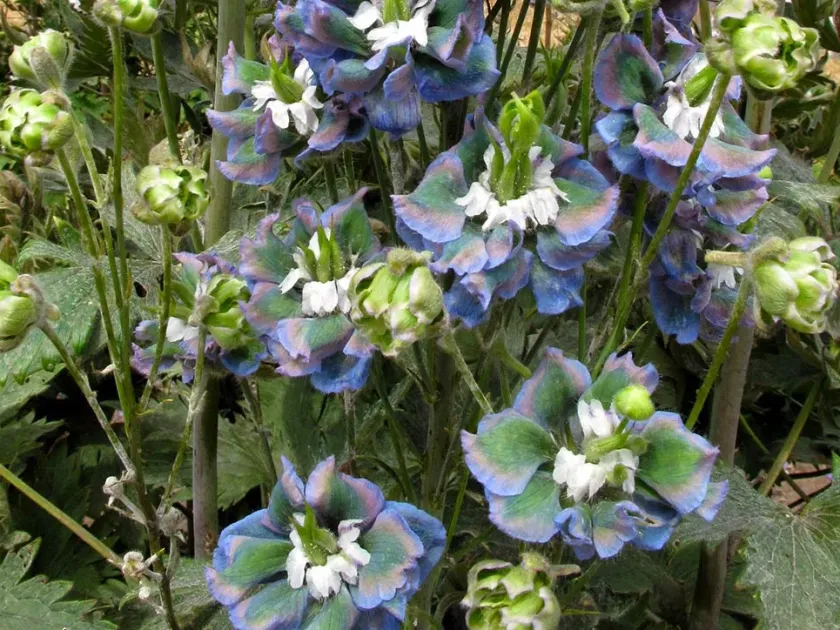
Virescence and phyllody are frequently observed, where flowers lose their natural color and become green, or transform into leaf-like structures. This often leads to complete sterility and the loss of reproductive capabilities.
Fruits and seeds of infected plants are usually small, deformed, or fail to develop entirely. This directly translates to significant reductions in both quality and quantity of the harvest.
In many cases, root systems also become dysfunctional, showing decay or abnormal growth. This overall decline in plant health eventually makes the crops highly susceptible to secondary pathogens and abiotic stresses.
Pathogen
Phytoplasmoses are caused by phytoplasmas, which are specialized bacteria lacking a cell wall. Once associated with the Thermoplasmataceae family, they are now recognized as distinct organisms that inhabit the plant phloem tissue exclusively.
These pathogens are obligate parasites, meaning they cannot survive or multiply outside of a living host, whether it is a plant or an insect vector. Their biology revolves around exploiting the nutrient-rich flow of the plant's vascular system.
Transmission occurs primarily through hemipteran insects, such as leafhoppers and psyllids. After ingesting infected phloem sap, the phytoplasmas undergo a latent period within the insect before they can be transmitted to new plants.
The absence of a cell wall makes these bacteria extremely flexible, allowing them to traverse the sieve tubes of the host plant with ease. Once established, they cause long-term, systemic infections that alter the plant's metabolic pathways.
Understanding the life cycle of these pathogens is essential for developing effective agricultural management plans, focusing primarily on controlling the insect vectors that carry the disease.
Conditions for development
Phytoplasma outbreaks are highly dependent on the population dynamics of their insect vectors. Warm, dry weather conditions tend to accelerate the movement and reproductive cycles of leafhoppers, leading to faster disease spread.
Weed reservoirs are critical in the development of epidemics. Many perennial weeds act as asymptomatic hosts, allowing the pathogen to persist through the winter and serve as a source for the next growing season.
Poor agricultural practices, such as excessive use of broad-spectrum insecticides that kill natural predators, can lead to sudden surges in vector populations, exacerbating the spread of the disease.
High-density planting provides a bridge for vectors to move from plant to plant. In such crowded environments, the infection can move through a field rapidly, impacting a large proportion of the crop within a short time frame.
The introduction of the pathogen via infected nursery stock is the primary way phytoplasmoses are spread over long distances. Once introduced to a new area, the local insect population quickly facilitates its spread to surrounding crops.
Why it matters
The economic impact of phytoplasmoses is severe, often resulting in yield losses of over 50%. Because the infection is systemic and difficult to detect in early stages, control measures are often implemented too late.
In addition to yield reduction, the quality of the produce is compromised, making it unsuitable for market sale. This is especially devastating for fruit and vegetable growers who rely on high aesthetic and nutritional standards.
In nurseries and orchards, phytoplasmoses can lead to the total loss of investment. Infected trees or plants may live for several years in a state of permanent decline, acting as a permanent source of infection for the entire farm.
Quarantine measures are often triggered by the identification of these diseases, leading to increased regulatory costs and trade restrictions. This can limit the grower's ability to sell or transport their produce.
Overall, the persistent nature of the disease and the need for constant monitoring and vector control significantly increase production costs, reducing the long-term profitability of the agricultural operation.
Protection
Effective management requires an integrated approach that focuses on the removal of weed hosts and the control of insect vectors. Regular weeding is a fundamental step in minimizing the pathogen reservoir.
Systemic insecticides should be applied to manage leafhopper and psyllid populations. Timing is crucial, and applications should be synchronized with the peak activity periods of the vectors.
The use of certified, disease-free propagation material is the most important prophylactic measure. Tissue culture techniques have been instrumental in producing healthy starter material that is free from phytoplasmas.
Spatial isolation between different fields and using barrier crops can help limit the migration of insect vectors. Crop rotation strategies are also useful to prevent the buildup of specific vector populations in the soil.
- Use of yellow sticky traps to monitor vector density.
- Immediate rogueing of symptomatic plants to reduce inoculum.
- Development and adoption of resistant cultivars and hybrids.
Discussion
No discussions yet — be the first.