
Phytoplasmosis
Thermoplasma
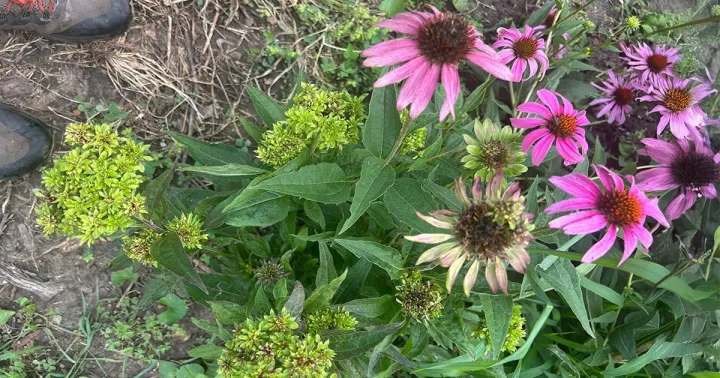
Description
Symptoms
Symptoms of phytoplasmosis are often dramatic and easily recognizable as indicators of metabolic disruption. The most common sign is chlorosis, where leaves turn yellow, red, or purple, often starting from the margins and spreading inward.
A hallmark of the disease is the development of "witches' brooms," where the plant produces an abnormal proliferation of shoots from dormant buds. This creates a dense, bushy appearance that is highly atypical for the specific plant species.
Phyllody is another characteristic symptom, occurring when flower parts are transformed into leaf-like structures. This results in the loss of reproductive capability, as the floral organs can no longer function correctly for fertilization.
Stunting is almost always present in affected plants, leading to severe growth retardation. For tuber or root crops, the disease often causes the development of secondary, spindly roots rather than a main, productive harvest.
- Chlorosis and unusual leaf discoloration.
- Witches' broom formation (dense, stunted branching).
- Phyllody (floral organs turning into leaves).
- Stunted growth and reduced plant vigor.
- Infertility and failure to produce viable fruit or seeds.
Pathogen
Phytoplasmosis is a group of severe plant diseases caused by phytoplasmas, which are specialized prokaryotic organisms lacking a cell wall. They belong to the class Mollicutes and are obligate parasites.
These pathogens inhabit the phloem tissue of host plants, where they feed on nutrients and interfere with normal translocation. Because they lack a cell wall, their morphology is diverse, and they rely entirely on their host or vector for survival.
Transmission occurs through insect vectors, primarily leafhoppers, planthoppers, and psyllids. Once an insect acquires the phytoplasma through feeding, it undergoes a latent period before becoming capable of transmitting the disease to new plants.
Phytoplasmas are notoriously difficult to cultivate in laboratory settings, making traditional culturing impossible. Modern diagnostics rely heavily on molecular techniques such as Polymerase Chain Reaction (PCR) to detect the specific DNA of the pathogen.
The infection is systemic, meaning the pathogen spreads throughout the plant's vascular system. Once a plant is infected, it typically remains a permanent reservoir, as there is currently no way to eliminate the phytoplasma from an established plant.
Conditions for development
The spread of phytoplasmosis is directly tied to the presence and activity of insect vectors. Hot, dry climatic conditions are highly favorable for the migration and breeding of leafhoppers and other sucking insects.
Alternative hosts, especially perennial weeds, play a critical role in the disease cycle. These weeds act as reservoirs where the phytoplasma can survive during the winter months when the main crops are not in the field.
The transmission process is exclusively vector-dependent. The disease frequency in a field correlates strongly with the population density of the vectors. If vectors are active early in the growing season, the risk of a widespread outbreak increases significantly.
Young plants are particularly vulnerable to infection, and the damage is usually most severe if they are infected early in their development. Stress factors, including moisture deficiency or poor soil nutrition, make plants more susceptible to successful inoculation.
Agricultural practices that promote the concentration of vectors, such as planting near infected hedge rows or failing to manage weeds, are the primary drivers of disease distribution in commercial farming areas.
Why it matters
The economic impact of phytoplasmosis is devastating, as infected plants rarely produce marketable yield. The plant diverts all its energy toward abnormal growth patterns, effectively halting fruit or grain production.
Young fruit trees and nursery stocks are particularly at risk, as infection often leads to rapid decline and death. The long-term nature of these investments makes the loss from phytoplasmosis particularly significant for growers.
For annual vegetable crops, losses can be absolute. Infected plants are often so deformed or sickly that they are culled before harvest, resulting in a total loss of investment in seeds, fertilizers, and labor for those specific areas.
Affected plants have a compromised immune system, making them more susceptible to opportunistic secondary infections, including viruses and fungal pathogens, which further weaken the plant.
Because there is no "cure" for infected plants, management of the disease is purely focused on prevention and eradication of infected reservoirs. This makes the disease one of the most challenging to manage in sustainable agriculture.
Protection
Control strategies for phytoplasmosis focus on breaking the transmission chain between vectors and crops. Managing the population of leafhoppers and psyllids through targeted insecticide applications is the primary method of defense.
Rigorous weed management is essential. By eliminating potential weed reservoirs in and around fields, farmers can significantly reduce the sources of infection available to insect vectors.
Using certified, pathogen-free propagation material is the single most important preventive measure. Growers should perform regular inspections and immediately remove and destroy any plant showing symptoms of phytoplasmosis.
Breeding for resistance is the most promising long-term solution. Many research programs are currently focused on identifying genetic traits that provide plants with a level of tolerance or complete resistance to phytoplasma colonization.
Spatial and temporal isolation can help limit the spread. Planting at different times or maintaining distances between highly susceptible crops can reduce the success rate of vector-mediated transmission, providing a buffer against mass infection.
Discussion
No discussions yet — be the first.