
Description
Symptoms
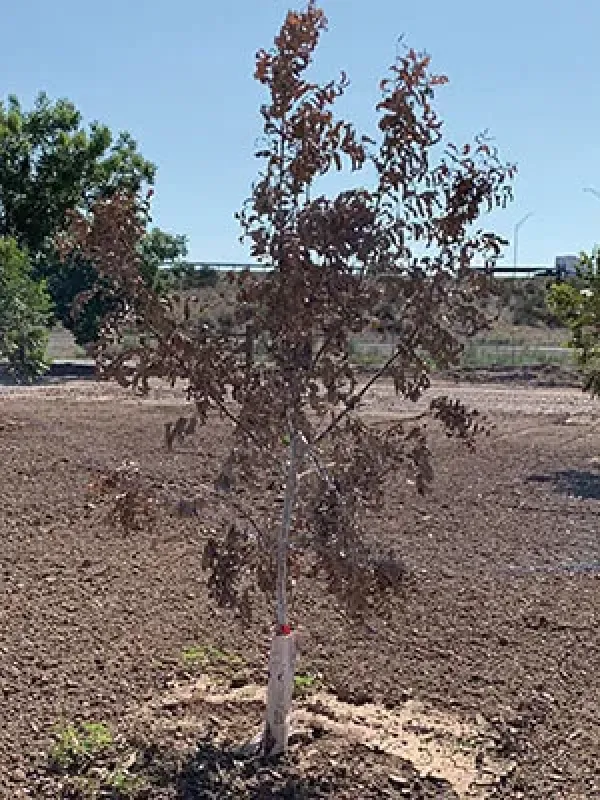
The first external symptom is often sudden wilting of the foliage during the hottest part of the day, with plants appearing to recover during the cooler night hours.
As the disease progresses, the wilting becomes permanent. Examination of the roots reveals dark brown lesions and a characteristic yellow-to-tan mycelial mat on the root surface.
In mature hazelnuts, the tree may die abruptly. Closer inspection of the collar region often shows the presence of small, dark brown sclerotia scattered in the surrounding soil.
In lettuce crops, root rot manifests as a rapid collapse of the plant. The roots appear decayed, mushy, and darkened, eventually separating from the base of the stem.
Under humid conditions, a white-to-cream colored mycelial growth may appear on the soil surface around the base of an infected plant, though it desiccates quickly in direct sunlight.
Pathogen
The causal agent is the soil-borne fungus Phymatotrichopsis omnivorum, which is recognized as one of the most destructive plant pathogens in warmer climates.
This fungus has an extremely broad host range, attacking over 2,000 species of dicotyledonous plants, including important agricultural crops like hazelnuts and lettuce.
The pathogen persists in the soil through the formation of sclerotia, which are dense survival structures capable of remaining viable for many years in deep soil layers.
The fungal mycelium colonizes the root system, infiltrating the vascular tissues and effectively cutting off the plant's supply of water and nutrients from the soil.
The branching pattern of the hyphae allows the fungus to move efficiently through the soil profile, creating localized infection centers that expand over time.
Conditions for development
The fungus thrives in high soil temperatures, with an optimal range between 25 °C and 30 °C, and requires sufficient soil moisture to initiate active growth.
It is most prevalent in alkaline, clay-heavy soils. These environments support the rapid spread of the mycelium and protect the fungus from unfavorable conditions.
The disease spreads primarily through the growth of mycelial strands moving from plant to plant through the root system in the soil.
Long droughts may induce the fungus to go dormant, but the sclerotia remain in the soil, ready to germinate as soon as environmental conditions become favorable again.
Soil compaction and poor drainage are significant factors that exacerbate the disease, as they limit root health and favor the pathogen's establishment.
Why it matters
Texas root rot is extremely destructive because there is no known cure once a plant becomes infected, usually resulting in the total death of the host.
For hazelnut plantations, the disease causes significant economic loss, as it spreads radially from tree to tree, resulting in large, permanent gaps in the orchard.
Lettuce producers face severe risks, particularly in the summer, where 100% crop loss can occur in infested areas, making the land temporarily unsuitable for cultivation.
The persistence of sclerotia in the soil makes it a long-term management challenge, often forcing farmers to abandon the cultivation of susceptible crops on infested sites.
The cumulative harm includes not only the loss of current production but also the high costs associated with sanitation and land management to prevent further spread.
Protection
The primary control method is strict quarantine to prevent the introduction of infected soil or plant material into clean areas, as the pathogen is easily moved.
Establishing deep trenches around infection centers can physically isolate the pathogen and slow the expansion of the disease to neighboring healthy plants.
Crop rotation using resistant species, such as monocots or grasses, can help reduce the population density of the pathogen in the soil over time.
Improving soil organic matter and managing soil acidity can promote beneficial microbial activity, which may naturally suppress the fungus's ability to infect roots.
While soil fumigation is technically an option for high-value crops in nurseries, it is generally considered too expensive and environmentally disruptive for large-scale field use.
Pathogens and affected parts
Affects crops · 2
Discussion
No discussions yet — be the first.