
Velvet shank
Tapinella atrotomentosa
Description
Symptoms
The most visible sign of an infestation is the emergence of fruiting bodies at the base of the trunk. These mushrooms typically appear in clusters or as solitary specimens around stumps.
Internal wood decay is characterized by a brownish, brittle texture. Affected timber often cracks significantly, a symptom known as checking, due to the loss of moisture-retaining capacity in the wood fibers.
One may find thick, white or yellowish mycelial mats spreading within the cracks of the decaying wood. These structures are clear indicators of active colonization by the fungal pathogen.
Canopy thinning and yellowing of foliage are frequent secondary signs. As the root system is compromised, the tree struggles to transport nutrients, leading to progressive limb dieback.
Soil-level inspection may reveal decaying roots that have softened and lost their structural integrity, often accompanied by a distinct earthy odor associated with wood decomposition.
Pathogen
Tapinella atrotomentosa, commonly known as the velvet shank or velvet-footed pax, is a fungus species that acts as a wood-decaying agent. In forestry, it is recognized for its ability to cause brown rot in coniferous trees.
The fungus produces mycelium that invades the xylem of trees. By secreting specialized enzymes, it breaks down the structural components of wood, specifically targeting cellulose and hemicellulose.
The life cycle involves the dispersal of basidiospores through the air. These spores colonize wounds on the bark, pruning scars, or exposed root systems, where they initiate the infection process.
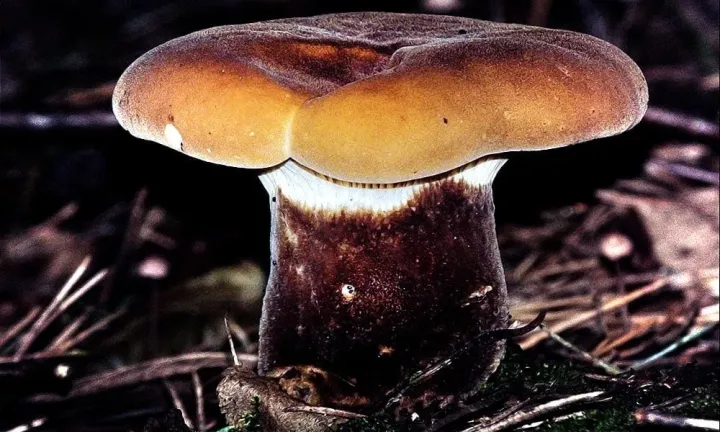
The fruiting bodies of Tapinella atrotomentosa are distinctive due to their dark, velvety stem and brown cap. Their appearance on a tree trunk or stump indicates that the internal decay process is well-established.
Although it primarily functions as a saprotroph living on dead organic matter, it can switch to a pathogenic role under conditions of environmental stress, significantly impacting weakened trees.
Conditions for development
Tapinella atrotomentosa thrives in environments with high humidity and consistent moisture. It is most frequently encountered in shaded, cool forest settings with dense organic debris.
Coniferous species, particularly spruce and pine, provide the preferred substrate for this fungus. It easily colonizes dead stumps left behind from harvesting, using them as platforms to spread.
Environmental stressors such as frost damage or mechanical injuries provide entry points for the fungal spores. These openings allow the pathogen to bypass the tree's natural defense barriers.
The optimal temperature range for the fungus to grow is between 15°C and 22°C. During this time, the development of the mycelial network accelerates, especially in non-ventilated, wet soil conditions.
Poor soil drainage and low light levels contribute to the persistence of the fungus. Trees in these conditions often exhibit a decreased ability to wall off infection sites within their vascular tissue.
Why it matters
The primary concern regarding this fungus is the destruction of the lower trunk and root system. This weakens the tree's anchorage, making it highly susceptible to uprooting during strong winds.
The economic value of timber is severely degraded by brown rot. Infested logs lose their structural strength, rendering them unsuitable for construction or high-quality carpentry purposes.
In orchards and park landscapes, the fungus causes reduced vigor and eventually the death of ornamental or fruit-bearing trees. This loss necessitates costly removal and disposal operations.
Interruption of water and nutrient uptake through the roots leads to severe physiological stress. This syndrome often culminates in the tree becoming a safety hazard in residential or public areas.
The presence of the fungus creates a localized infection reservoir, facilitating the spread of spores to adjacent healthy trees, which can eventually lead to widespread canopy loss within a stand.
Protection
Sanitation is the most effective management strategy. Removing stumps and decaying wood debris eliminates the main breeding grounds and reservoirs for fungal spores.
Careful pruning practices are essential to prevent the spread of the pathogen. Always ensure that tools are disinfected and that pruning cuts are made correctly to encourage rapid callus formation.
Maintaining the overall health and vitality of trees through proper fertilization and watering schedules increases their resilience against fungal colonization and internal decay.
If an infection is detected in a valuable tree, applying soil drenches with appropriate fungicides can help suppress fungal growth, though this is only effective in early stages of the disease.
Regular monitoring of trees for any sign of decay or structural instability allows for early intervention, potentially saving the tree through surgical removal of infected tissues or targeted pruning.
Discussion
No discussions yet — be the first.