
Sugarcane mosaic
Sugarcane mosaic
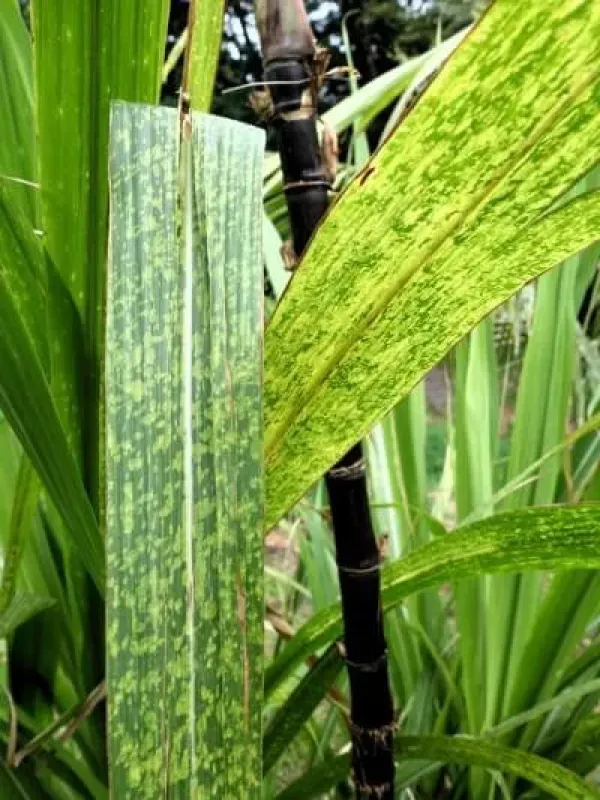
Description
Symptoms
The characteristic symptom is a light and dark green mosaic pattern on the leaves, often appearing as streaks or stripes that run parallel to the leaf veins.
Infected plants may exhibit stunted growth, reduced height, and a generally chlorotic appearance, especially in younger leaves that emerge after the initial infection.
Severe infections can lead to leaf malformation, curling, or twisting, which significantly impairs the plant's ability to conduct photosynthesis efficiently.
In some susceptible genotypes, the mosaic patterns may be accompanied by necrotic lesions or red striping, which indicates a more advanced and aggressive stage of the viral disease.
It is important to distinguish these symptoms from nutrient deficiencies, as nitrogen or magnesium deficiencies can sometimes mimic the chlorotic patterns caused by SCMV.
Pathogen
The causative agent of this disease is the Sugarcane mosaic virus (SCMV), a member of the Potyviridae family. This is a single-stranded RNA virus that has a broad host range among members of the Poaceae family.
SCMV is characterized by high genetic variability, leading to the existence of multiple strains that vary in their virulence and host specificity across different regions.
The primary method of transmission in the field is non-persistent transmission by various aphid species. Aphids acquire the virus during brief probes and quickly transmit it to healthy plants.
Transmission can also occur through mechanical contact, such as when machinery or tools touch infected leaves, or through leaf-to-leaf contact during windy conditions.
The virus persists in perennial grasses and overwintering plant residues, serving as a primary source of inoculum for the new season's crops.
Conditions for development
Favorable conditions for virus spread are linked to moderate temperatures and high humidity, which promote the multiplication and migration of aphid populations.
The presence of wild grasses acting as reservoir hosts in the vicinity of crop fields is a key factor in the early-season spread of the virus.
Dry periods that stress the crop may make plants more susceptible to viral impact, while optimal moisture supports lush growth that attracts aphid vectors.
Late plantings are often more susceptible to infection, as they coincide with the peak migration times of aphid vectors, leading to higher rates of disease incidence.
High-density planting, while good for yield, can sometimes create microclimates that favor the movement and colonization of aphids within the canopy.
Why it matters
The primary economic impact is a reduction in grain or biomass yield, as the virus diverts energy away from development to manage the infection process.
Infected crops often show poor grain filling, resulting in smaller and lighter kernels, which significantly reduces the quality and marketability of the harvested product.
Viral infection weakens the plant's immune system, making it more susceptible to secondary fungal infections, which can further aggravate yield losses.
When the crop is grown for silage, the reduction in photosynthetic area leads to a lower nutrient content, affecting the feed quality for livestock.
Yield losses can vary widely depending on the strain of the virus and the time of infection, sometimes exceeding 30-50% in highly susceptible hybrid varieties.
Protection
The most effective strategy for managing Sugarcane mosaic is the use of resistant or tolerant commercial hybrids, which are developed through breeding programs.
Effective weed management is essential, particularly for control of perennial grasses that serve as primary reservoirs for the virus during the off-season.
Insecticide applications can be used to manage aphid populations, although this must be timed correctly to be effective in preventing the initial spread of the virus.
Implementing crop rotation and ensuring sufficient spatial distance from heavily infested areas can help break the cycle of virus transmission.
Field sanitation, including the destruction of crop residues immediately after harvest, is crucial to minimize the survival of the virus and its hosts into the following season.
Discussion
No discussions yet — be the first.