
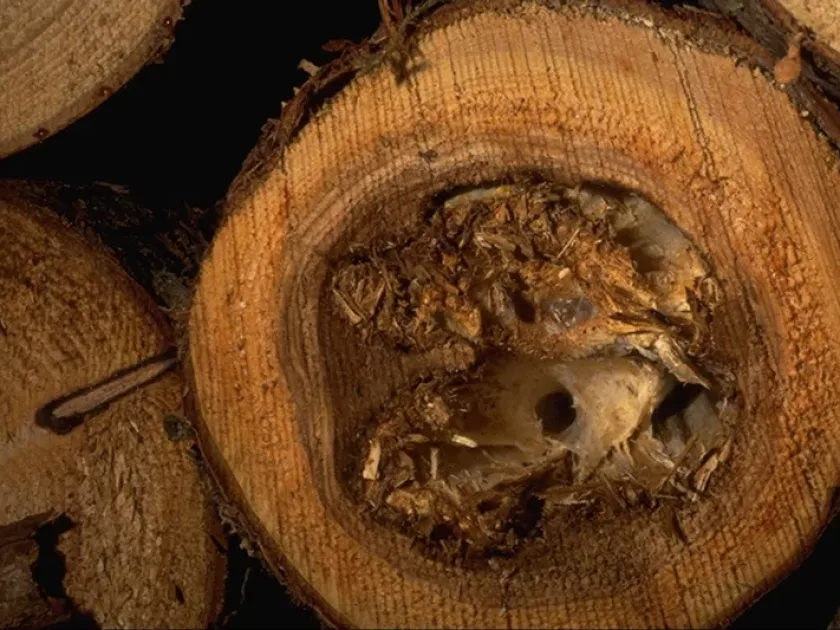
Description
Symptoms
The primary symptom of this infection is the gradual thinning and browning of the tree crown. Needles typically turn yellow or reddish-brown before shedding prematurely.
Distinctive fruit bodies of the fungus appear at the base of the tree or on the roots. These are often flat, leather-like, and light-colored structures with a porous surface.
Upon removing the bark near the root collar, a dense, white mycelial mat is visible. This white growth penetrates the wood tissue, causing structural degradation.
Infected roots lose their integrity and become soft and stringy, which is why the disease is commonly referred to as fibrous root rot. This decay significantly reduces the root system's anchorage.
Trees affected by this pathogen often exhibit reduced growth rates and become increasingly susceptible to windthrow, especially as the decay progresses into the lower stem.
Pathogen
The causative agent of this disease is Perenniporia subacida, a wood-decaying basidiomycete fungus that can survive for extended periods in dead wood.
The fungus acts as both a saprophyte and a parasite, breaking down lignin and cellulose components in the wood. It propagates through spore dispersal and direct root-to-root contact.
This pathogen forms rhizomorphs, thread-like structures that allow the mycelium to spread through the soil and infect the roots of neighboring healthy trees.
Perenniporia subacida is particularly aggressive toward conifers, including Douglas fir (Pseudotsuga menziesii), causing significant decay in their root systems.
Once established in a forest site, the fungus remains active in woody debris, making it a persistent threat to susceptible tree species in the area.
Conditions for development
High soil moisture and poor drainage are significant factors that promote the development of the disease, as they stress the tree's root system.
Dense soils with low oxygen availability create an environment that favors fungal colonization and the spread of the mycelium through the rhizosphere.
The fungus thrives in warm, temperate climates where the seasonal conditions support the formation of fruit bodies and the release of spores.
Sites with an abundance of old stumps and decaying organic matter are high-risk areas, as these materials provide a reservoir for the pathogen to persist.
Mechanical damage to roots or bark during logging or forest management activities creates entry points for spores, significantly accelerating the rate of infection.
Why it matters
The major risk is the hidden progression of the rot; visible symptoms only appear when the root system is already severely damaged and the tree is unstable.
The disease causes substantial losses in timber quality, as the decay extends from the roots into the base of the trunk, rendering the wood unusable for commercial purposes.
Infection centers in Douglas fir plantations lead to reduced productivity, forest stand thinning, and the eventual death of large groups of trees.
Managing the affected stands often requires costly sanitary cuttings and the complete removal of stumps, which disrupts regular forest management cycles.
Persistent presence of the fungus in the soil prevents the immediate replanting of the site with susceptible species, leading to long-term economic and ecological challenges.
Protection
The most effective preventive measure is the thorough removal of stumps and large woody debris from a site prior to replanting to eliminate inoculum sources.
Forest managers should minimize mechanical damage to the roots and trunks of standing trees during maintenance operations to prevent infection via wounds.
If an infection center is identified, sanitary harvesting should be conducted, involving the removal of all diseased wood and surrounding infected organic matter.
Selecting disease-resistant or tolerant tree species for reforestation is a key strategy for mitigating the impact of fibrous root rot in high-risk areas.
Regular monitoring of forest health is essential for early detection of symptomatic trees, allowing for timely intervention before the disease spreads across the stand.
Pathogens and affected parts
Affects crops · 1
Discussion
No discussions yet — be the first.