
Description
Symptoms
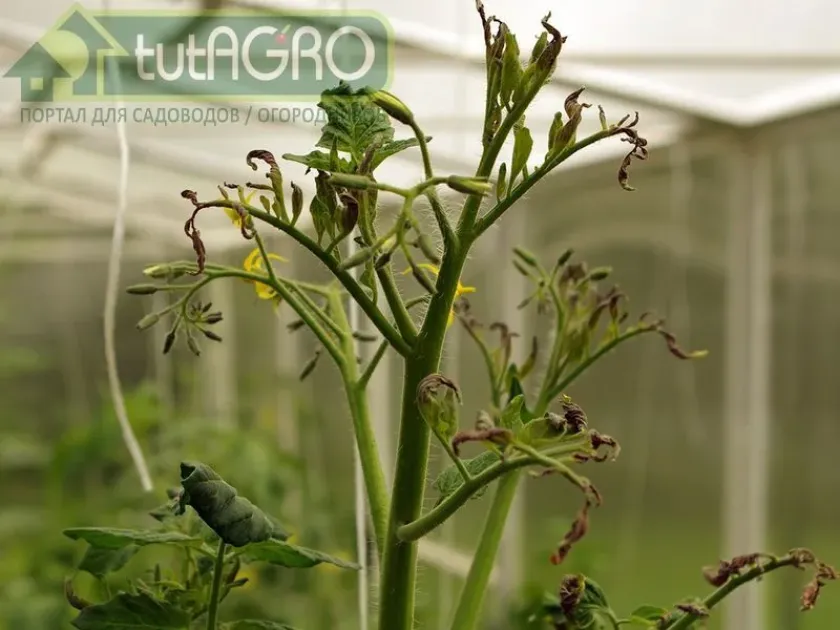
One of the earliest symptoms is the chlorosis of upper leaves, which may also show a characteristic purple or reddish tint, especially in tomato plants, due to increased anthocyanin production.
Leaves often become small, brittle, and cupped. In tobacco, infected plants exhibit severe stunting, shortened internodes, and a general lack of vigor throughout the growth cycle.
Reproductive parts show dramatic changes, known as phyllody. Flowers may become deformed, green instead of their normal color, or sterile, making it impossible for the plant to set fruit.
The root system may show signs of vascular necrosis. If fruits do develop on infected plants, they are usually small, hard, and lack flavor, rendering them unsuitable for market.
- Yellowing and purpling of young leaves;
- Leaf curling and deformation;
- Phyllody (green, leaf-like flower structures);
- Severe growth stunting (dwarfing);
- Poor root development and necrosis.
Pathogen
Stolbur is a systemic disease caused by phytoplasmas, which are specialized wall-less bacteria that inhabit the phloem tissue of infected plants. They are obligate parasites that rely on insects for transmission.
The disease is classified as a phytoplasmosis. It affects a wide range of host plants, including various horticultural crops and common field weeds that serve as reservoirs.
The primary vector responsible for transmitting the Stolbur phytoplasma is the leafhopper Hyalesthes obsoletus. These insects acquire the pathogen by feeding on infected weeds and then move to cultivated crops.
Once introduced into a plant, the phytoplasmas multiply within the sieve tubes and travel throughout the host, causing significant physiological and morphological disturbances.
The disease is particularly devastating for Solanaceous crops, including tomatoes, peppers, potatoes, and tobacco, significantly impacting global agriculture in affected temperate zones.
Conditions for development
The spread of Stolbur is closely correlated with the population density and activity of its insect vector, the Hyalesthes obsoletus leafhopper, which thrives in warm and dry weather.
Weeds act as essential overwintering reservoirs. Fields located near neglected areas with abundant bindweed (Convolvulus arvensis) are at a much higher risk of infection.
Environmental stress, such as drought, often exacerbates the severity of the disease. Hot and dry summers usually lead to higher infection rates in commercial vegetable fields.
The timing of vector migration is critical. The highest risk of transmission occurs during the peak flight of leafhoppers, often synchronized with the flowering stage of host weeds.
Sparse crop stands or fields with heavy weed infestations provide optimal environments for the vectors to transition from wild hosts to vulnerable crop species.
Why it matters
Stolbur poses a severe threat to agricultural productivity, as it often results in total crop loss within affected areas. Infected plants fail to produce marketable produce.
In tobacco production, the disease significantly alters the quality of the leaf. This leads to issues during curing and fermentation, causing a major loss in commercial value.
Because the disease is systemic and currently lacks a cure, infected plants remain a constant source of the pathogen, endangering healthy neighboring plants for the duration of the season.
Large-scale epiphytotics can occur when weather conditions favor vector population explosions, leading to economic collapse for affected growers who lose their entire yield.
Furthermore, the disease can impact seed quality, producing seeds that are either infertile or generate plants with reduced resistance to other pathogens.
Protection
Integrated pest management (IPM) is the most effective approach. The primary strategy involves the rigorous elimination of weed reservoirs, particularly bindweed, in and around the fields.
Insecticide applications targeted at controlling the leafhopper population are necessary during periods of high vector activity to prevent the spread of phytoplasmas.
Utilizing resistant or less susceptible plant varieties is recommended. While complete immunity is rare, breeding programs continuously work on improving tolerance to the pathogen.
Spatial isolation of sensitive crops from known sources of infection, such as permanent grasslands or abandoned fields, significantly reduces the likelihood of vector migration.
Field monitoring is essential; early detection and immediate removal of symptomatic plants can help break the cycle of infection within a specific plot.
Pathogens and affected parts
Affects crops · 1
Discussion
No discussions yet — be the first.