
Steccherinum oreophilum
Steccherinum oreophilum
Description
Symptoms
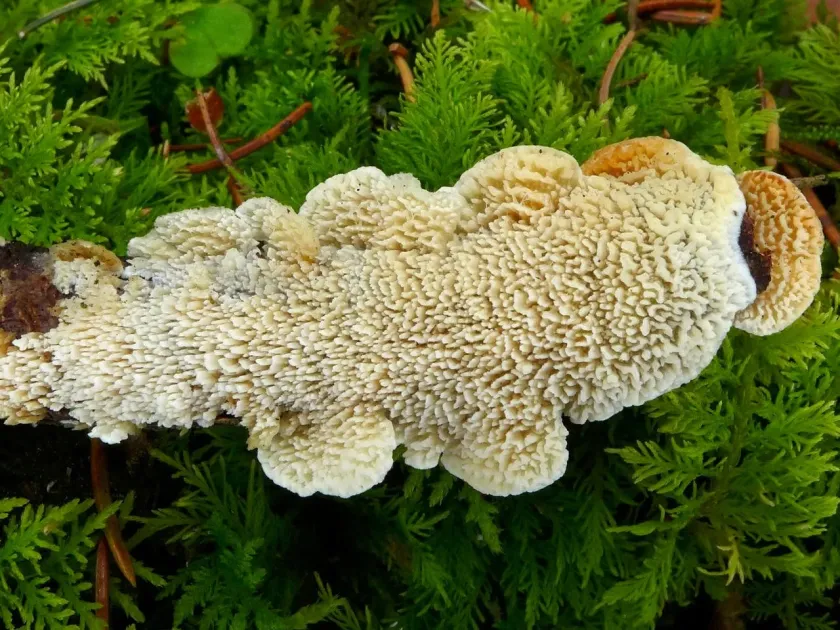
The most visible sign of infection is the emergence of white to yellowish, spine-covered fruiting bodies on the surface of trunks, stumps, or dead branches. These structures often darken as they age.
Infected wood becomes soft, stringy, and brittle. It loses its tensile strength, which often leads to the breakage of branches or even the entire tree trunk, especially during heavy wind or snowfall events.
On cross-sections of infected timber, one can observe bleached zones characterized by a lack of color. These areas are frequently demarcated by dark, thin lines that represent the host tree's attempt to compartmentalize the invading fungus.
Early-stage infection may manifest as localized bark discoloration or oozing. As the mycelium colonizes the interior, the tree's transport capacity is impaired, leading to premature wilting and thinning of the foliage.
In the final stages, severe structural degradation is evident. The bark may become loose, and the tree exhibits a general decline in vigor, characterized by reduced annual rings and increased susceptibility to secondary wood-boring pests.
Pathogen
Steccherinum oreophilum is a species of wood-decaying fungus belonging to the family Steccherinaceae. It acts as a saprotroph, specialized in decomposing complex lignocellulosic materials within the timber of various forest trees.
As a causal agent of white rot, this fungus produces enzymes that efficiently break down lignin, the polymer responsible for wood's rigidity. Consequently, the woody tissue loses its structural integrity and exhibits a bleached, fibrous appearance.
The fungus manifests through annual, often resupinate or effused-reflexed fruiting bodies. A distinctive diagnostic feature is the presence of a hydnoid (spine-bearing) hymenophore, which makes it identifiable during the active growth phase.
Infection typically begins when spores land on bark injuries, pruning cuts, or frost cracks. Once established, the mycelium penetrates the vascular system, spreading through the xylem and degrading the wood from within.
The organism prefers humid, mountainous forest ecosystems. Its biological role is primarily that of a decomposer, but it can negatively impact living trees when natural defensive barriers are compromised by environmental stress or physical damage.
Conditions for development
High moisture levels are essential for the survival and proliferation of Steccherinum oreophilum. The fungus thrives in shaded environments with restricted airflow where moisture remains trapped against the bark for extended periods.
Temperature plays a crucial role in the development cycle. The fungus remains most active under moderate temperatures, typically ranging from +15°C to +25°C. These conditions are frequently met in mountain forest climates.
Mechanical injuries serve as the primary entry point for fungal spores. Damages caused by wildlife, logging equipment, or extreme weather events such as sunscald provide the initial access to the vulnerable interior tissue.
Neglected forest stands with a high accumulation of coarse woody debris serve as major reservoirs for the fungus. In these conditions, the spore pressure remains high, increasing the risk of infection for surrounding healthy trees.
Lack of canopy management contributes to stagnant, humid microclimates around tree trunks. This promotes the colonization of spores and facilitates the development of large fruiting bodies capable of producing millions of new spores.
Why it matters
The primary economic impact is the degradation of wood quality. Infected logs are often rendered unsuitable for construction, furniture, or timber production due to the loss of density and mechanical reliability.
The fungus reduces the overall productivity of forest stands by weakening trees and predisposing them to premature death. This necessitates premature felling and interrupts the sustainable management plan of the forest area.
Infected trees create significant safety hazards in recreational areas and along trails. The risk of falling limbs or trunk failures poses a physical threat to visitors and requires costly maintenance to mitigate risks.
The presence of Steccherinum oreophilum facilitates the buildup of secondary pest populations. Weakened trees are more easily colonized by bark beetles and other insects, which may trigger larger pest outbreaks in the region.
Ecologically, while it aids in nutrient cycling, uncontrolled spread disrupts the composition of forest stands. Excessive tree mortality can lead to habitat loss for canopy-dependent species and alter the local forest structure.
Protection
Rigorous sanitary logging is the most effective control strategy. Removing infested trees, deadwood, and infected stumps reduces the inoculum source and helps limit the potential spread of spores to healthy timber.
Preventing bark wounds is vital for integrated pest management. Care should be taken during pruning and silvicultural operations to avoid damaging the trees, and all wounds should be treated with protective sealants if necessary.
Thinning stands to improve air circulation helps reduce surface moisture on tree trunks. This decreases the likelihood of spore germination and makes the environment less conducive to fungal development.
Cleaning tools with disinfectant solutions after performing maintenance in infected areas is a crucial step. This practice prevents the mechanical transfer of fungal spores between different sites or tree groups.
In high-value ornamental or park settings, early detection through regular visual inspections allows for localized treatment. Applying antifungal agents or removing symptomatic bark areas can sometimes halt the progress of the infection.
Discussion
No discussions yet — be the first.