
Staurothele fissa
Staurothele fissa
Description
Symptoms
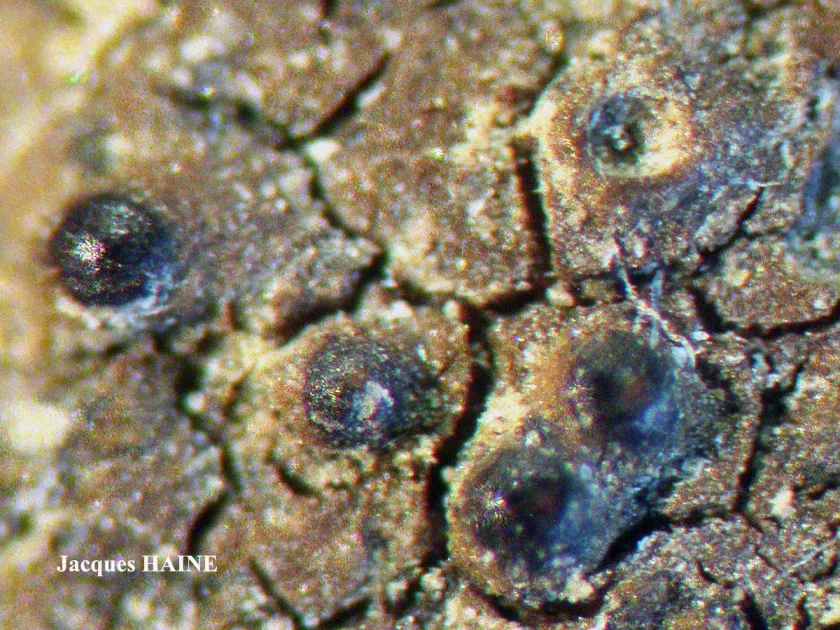
The thallus appears as a thin, olive-brown to dark gray crust that adheres tightly to the stone surface.
A distinctive feature is the cracked surface pattern, which gives the species its specific name.
Minute black spots, representing the openings of the perithecia (fruiting bodies), are scattered across the crust.
When wet, the color deepens significantly, revealing the texture of the lichen more clearly.
The overall appearance is that of a weathered, biological crust on a rocky substrate.
Pathogen
Staurothele fissa is not a plant pathogen; it is a crustose lichen belonging to the Verrucariaceae family.
It is a symbiotic organism consisting of fungal hyphae and photosynthetic algae or cyanobacteria.
In an agricultural context, it is not responsible for any crop diseases and does not parasitize living plants.
The lichen utilizes mineral substrates like rocks, stones, or concrete as a physical anchor only.
Misidentifying this organism as a disease is a common error in garden and infrastructure management.
Conditions for development
This species is a typical epilith, thriving in moist environments near streams, rivers, or damp rocky outcrops.
It requires regular moisture to maintain its metabolic activities and survive in exposed conditions.
It is highly resistant to temperature fluctuations and can withstand periods of desiccation.
Dispersal is primarily achieved through spores carried by water currents or wind during wet periods.
It prefers calciferous or siliceous rocks that offer stable microclimatic conditions for long-term growth.
Why it matters
There is no evidence that Staurothele fissa harms agricultural crops or horticultural plants.
The organism does not produce toxins or chemical inhibitors that affect plant health.
It does not cause structural damage to buildings or infrastructure in any significant way.
Its presence is considered a natural part of the ecosystem rather than a pest problem.
It poses no threat to domestic animals, humans, or the overall productivity of agricultural land.
Protection
No control measures are necessary because this lichen is an ecologically beneficial component of nature.
Mechanical removal via scrubbing is sufficient if growth on artificial surfaces must be minimized for aesthetic reasons.
The use of fungicides or herbicides is strictly discouraged as they are ineffective and environmentally harmful.
Prevention focuses on reducing moisture accumulation on surfaces to discourage colonization.
It is best to leave this lichen undisturbed to maintain the local biodiversity of the environment.
Discussion
No discussions yet — be the first.