
Stagonospora leaf spot of alfalfa
Leptosphaeria weimeri
Description
Symptoms
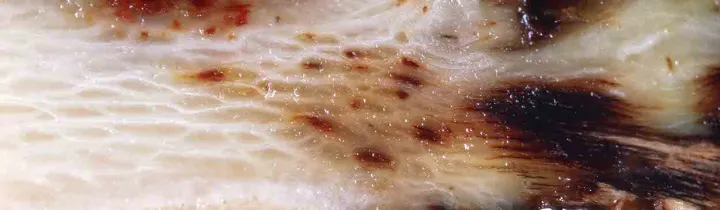
The primary symptom of the disease is the appearance of brown or dark spots on leaves, petioles, and stems of alfalfa, which often have an irregular or oval shape.
As the lesions mature, the center of the spot turns gray or light tan, surrounded by a distinct dark margin, creating a characteristic zoned appearance.
Small, black, speck-like structures called pycnidia develop within the dead tissue of the lesions, serving as the fruiting bodies of the fungus.
Heavy infection causes premature yellowing, withering, and defoliation of the leaflets, significantly reducing the forage quality of the alfalfa stand.
Stem infection can result in tissue cracking and structural weakness, which may lead to lodging and a decrease in overall plant vigor.
Pathogen
The causative agent of the disease is the fungus Leptosphaeria weimeri (anamorph: Stagonospora meliloti), a common pathogen of leguminous forage crops.
The fungus produces conidia, which act as the primary means of spreading the infection during the growing season through rain splash and wind.
It overwinters in crop debris left on the field, ensuring the survival of the pathogen until the next growing season when conditions become favorable.
Besides alfalfa, the pathogen can also infect red clover, making it a significant threat to diverse legume-based forage production systems.
The life cycle is reinforced by the formation of sexual spores in the debris, which can travel longer distances to initiate primary infections in spring.
Conditions for development
The development of Stagonospora leaf spot is favored by warm, humid weather conditions with frequent rainfall or prolonged periods of dew.
Dense stands of alfalfa provide a microclimate with reduced airflow and high humidity, creating optimal conditions for rapid fungal sporulation and infection.
Poor soil fertility, particularly low levels of potassium, can predispose plants to increased susceptibility to fungal diseases and weaken their defenses.
High levels of plant debris on the soil surface after harvest significantly increase the primary inoculum potential for the next season.
Moisture on the foliage is essential for spore germination; therefore, areas with poor field drainage or high rainfall are most at risk of outbreaks.
Why it matters
The main economic impact of the disease is a reduction in forage yield and nutritional value, which is critical for dairy and livestock production.
Reduced leaf area due to defoliation limits photosynthesis, directly suppressing the plant's ability to produce biomass and store energy in the roots.
Forage quality decreases as the infected leaves contain fewer proteins and total digestible nutrients compared to healthy green foliage.
The weakening of the plant stands can also lead to a decrease in winter hardiness and an increased risk of long-term damage during dormant months.
In severe cases, farmers face the need for early harvest or potential reseeding, both of which incur additional costs and management efforts.
Protection
Selecting and planting resistant or tolerant alfalfa cultivars is the most effective long-term strategy for managing this fungal disease.
Crop rotation practices, keeping legumes away from the same field for at least three to four years, help to break the pathogen's life cycle.
Deep burial of crop residue through plowing minimizes the amount of primary inoculum available to infect new shoots in the following spring.
Harvesting alfalfa at the early bloom stage helps to remove infected foliage before the fungus can produce massive amounts of new spores.
Maintaining optimal soil fertility and ensuring good field drainage help to promote vigorous growth, making the plants more resilient to infection.
Pathogens and affected parts
Affects crops · 2
Discussion
No discussions yet — be the first.