
Description
Symptoms
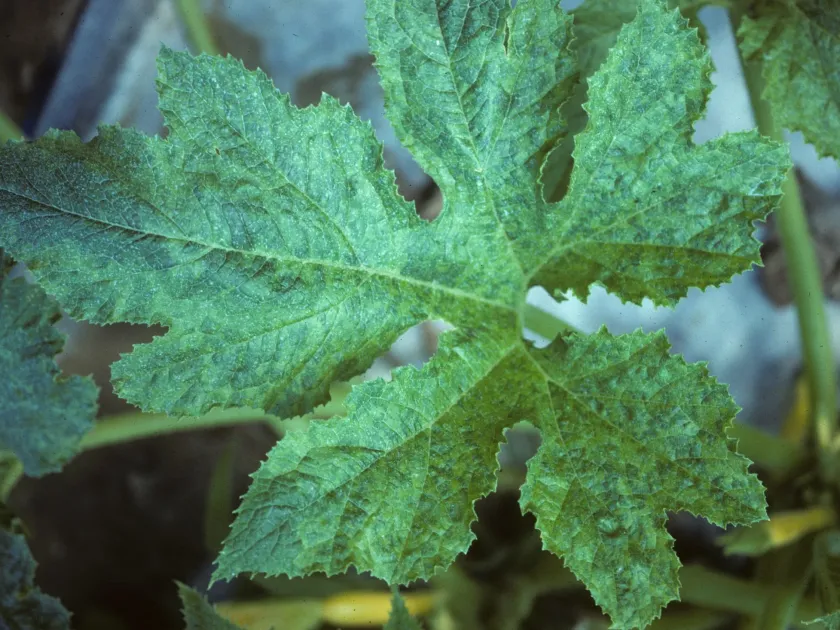
The most characteristic sign is the mosaic pattern on the leaves, featuring alternating light green and dark green patches that distort the leaf surface.
Plants infected with the virus often show symptoms of severe stunting, reduced internode length, and a bushy appearance that significantly deviates from the normal habit.
Leaves may become puckered, blistered, or deformed, sometimes taking on a filiform (thread-like) shape, which impairs the plant's ability to photosynthesize effectively.
Fruits produced by infected plants are often bumpy, mottled, and irregular in size or shape, making them unsuitable for fresh market sale and commercial trade.
Early-stage infection often leads to flower abortion and poor fruit set, which can result in a catastrophic reduction in the total number of harvested fruits.
Pathogen
Squash mosaic is caused by a complex of viruses, most notably the Squash Mosaic Virus (SqMV) and the Cucumber Mosaic Virus (CMV), which affect the development of cucurbits.
These viruses are systemic pathogens that reside within the vascular tissues, specifically the phloem, causing disruption in nutrient transport and plant physiological processes.
The virus can persist in weed reservoirs, particularly perennial species, and in the seeds of certain plants, allowing the infection to survive between cropping seasons.
Transmission occurs primarily through biological vectors such as beetles and aphids, as well as through mechanical wounds caused by pruning or harvesting tools.
The disease is a classic example of a viral plant pathology that cannot be managed with standard fungicides; therefore, integrated pest management is essential.
Conditions for development
Environmental conditions that favor the rapid multiplication of insect vectors, such as aphids and cucumber beetles, are critical factors in the spread of the virus.
Warm, humid periods generally encourage the activity of these vectors, allowing them to travel quickly between host plants and distribute the virus throughout the field.
The presence of wild cucurbits or related weeds adjacent to the farming plot provides an environment where the virus can survive even when no crops are present.
Poor agricultural practices, such as failing to disinfect tools after working in infested areas, create pathways for the virus to enter healthy plant tissues through sap contact.
Crowded planting conditions prevent adequate airflow and make it easier for insect pests to move from plant to plant, facilitating a faster disease outbreak.
Why it matters
This virus is a major concern for growers of squash, watermelon, cantaloupe, and cucumber, as it causes significant damage to both yield quantity and quality.
Economic losses can be severe, often reaching 50-90% in susceptible varieties when the infection is introduced early in the growing season.
Viral infection leaves the plants weak and highly susceptible to secondary attacks by fungi or bacteria, which can accelerate the death of the entire crop.
The accumulation of viral particles in the plant disrupts its hormonal balance, rendering it incapable of producing healthy, vigorous growth or quality fruit.
Once a field is infected, the inability to treat the virus directly means that the economic viability of the entire planting is at high risk.
Protection
The primary control strategy involves reducing the virus inoculum by keeping fields free of weeds and destroying infected plants immediately upon symptom detection.
Managing the population of insect vectors using appropriate insecticides is crucial to breaking the cycle of transmission from host to healthy plant.
- Planting certified, virus-free seeds from reputable suppliers to prevent early introduction.
- Maintaining a clean field perimeter to reduce the risk of secondary vector invasion.
- Using reflective mulches to deter aphids from landing on young, vulnerable seedlings.
- Implementing strict tool sanitation protocols during pruning and harvesting operations.
Selecting and planting cultivars with genetic resistance or tolerance to the specific mosaic viruses prevalent in the region remains the most reliable long-term solution.
Pathogens and affected parts
Affects crops · 1
Discussion
No discussions yet — be the first.