
Beet armyworm
Spodoptera exigua
Description
Symptoms
Initial signs of infestation involve young larvae feeding gregariously on the underside of leaves. This creates characteristic 'window-paning' effects where the upper epidermis of the leaf remains intact while the underlying tissue is consumed.
As the larvae mature, they become solitary and move to other parts of the plant. They begin to consume whole leaves, leaving only major veins, leading to significant defoliation of the crop.
Another symptom is the presence of deep, irregular holes in fruits and stems. In crops like tomatoes and peppers, larvae may tunnel into the fruit, which often results in premature dropping or rot due to secondary infection.
Plants often exhibit stunted growth or distorted shapes, particularly if the larvae damage the terminal growing points of the host plant, preventing further vegetative development.
- Window-paning damage on leaves.
- Presence of dark larval droppings (frass).
- Holes and tunneling in fruits and floral buds.
Pathogen
The beet armyworm (Spodoptera exigua) is a significant polyphagous pest belonging to the Noctuidae family. This insect is highly adaptable and feeds on a wide range of hosts, including vegetables, field crops, and ornamental plants.
Adults are small, mottled-grey moths with a distinct light-colored spot in the center of their forewings. They are nocturnal and are attracted to light, which is often used in monitoring efforts.
The life cycle encompasses four distinct stages: egg, larva, pupa, and adult. Depending on environmental conditions, the pest can complete its development in as little as 3-4 weeks, leading to multiple overlapping generations per season.
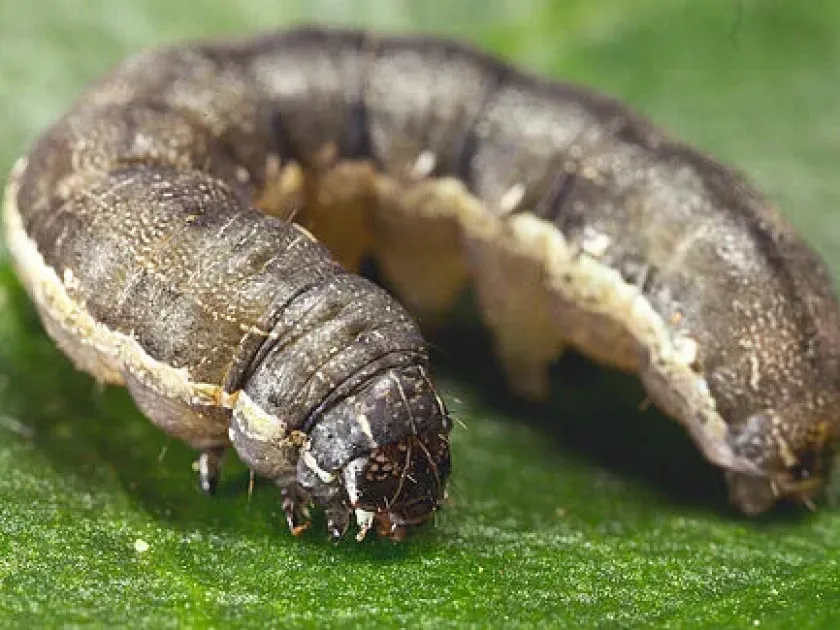
Larvae, commonly known as beet armyworms, transition through five instars. Early instars are typically pale green, while later stages exhibit a darker appearance with light stripes along their bodies.
The pupal stage occurs in the soil. While they are often associated with warmer climates, their high mobility through adult flight allows them to expand their range significantly during warmer months.
Conditions for development
The beet armyworm thrives in hot and dry climates. Temperatures between 25°C and 30°C provide the optimal metabolic speed for rapid larval development and shorter generation intervals.
While larvae prefer warmth, moderate to high humidity can support the survival of eggs and neonate larvae. Dry conditions during summer often correlate with increased pressure from this pest.
Weed management is critical as many common weeds, such as Amaranthus species, act as primary reservoirs for early populations, allowing the pest to build up before moving to commercial crops.
A lack of natural predators and parasitoids in intensive farming systems often leads to explosive outbreaks of the population. Environmental stability allows the pest to flourish without natural checks.
Wind currents play a major role in the spread of adult moths. They can migrate hundreds of kilometers, making it difficult for local farmers to predict infestations without continuous regional monitoring.
Why it matters
The primary economic impact is the direct reduction of yield caused by foliage loss and direct feeding on reproductive organs. Heavy infestations can lead to total crop failure within days.
Damage to the terminal buds is particularly devastating for seedlings and young transplants, as it halts the plant's ability to grow normally, leading to irregular stands and reduced uniformity.
Fruit damage leads to a loss of market quality. Even if the fruit is edible, the presence of internal tunnels or entry holes makes it unacceptable for the fresh produce market.
The damage to plant tissue serves as an entry point for various plant pathogens. Fungal and bacterial rots frequently follow the feeding wounds, accelerating the destruction of the infected crops.
Continuous pest pressure necessitates multiple insecticide applications, which increases production costs and may pose challenges related to pesticide residues on the final produce.
Protection
Cultural control is the first line of defense, focusing on the sanitation of fields and the elimination of weeds that serve as alternate hosts. This reduces the local population density significantly.
Deep plowing after the harvest helps expose pupae to desiccation and natural enemies, reducing the overwintering potential of the pest in the field.
Biological control agents, such as Trichogramma wasps, can be released to parasitize the eggs of the beet armyworm. This method is highly effective if timed correctly with the pest's oviposition cycle.
Chemical control should be implemented based on scouting results. Targeting the younger larval instars is essential, as they are significantly more susceptible to most chemical compounds than older larvae.
Monitoring with pheromone traps is standard practice for professional growers. This allows for early detection of adult migration, enabling precise and timely application of protective measures.
Discussion
No discussions yet — be the first.