
Downy mildew of spinach
Spinach temperate virus
Description
Symptoms
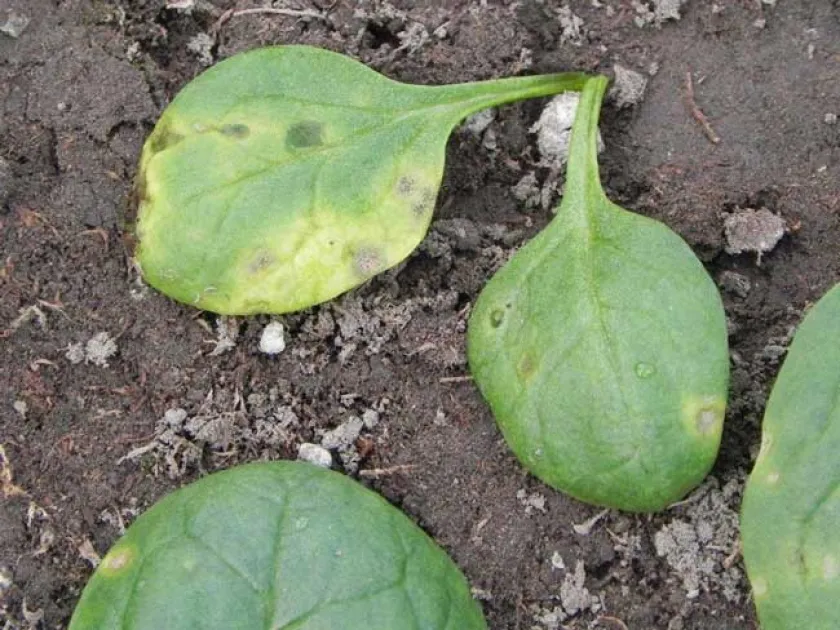
The symptoms appear initially on the adaxial (upper) leaf surface as chlorotic, pale yellow, or light green spots with irregular margins.
On the abaxial (underside) of the leaf, a grayish or violet-colored fuzzy fungal growth develops, which consists of sporangiophores and sporangia.
As the disease progresses, these spots expand, coalesce, and cause the affected leaf tissue to turn necrotic, brown, and dry out.
In severe cases, the entire spinach rosette can become stunted, deformed, and eventually collapse, rendering it unmarketable.
In humid conditions, infected areas may also become subject to secondary bacterial soft rot, resulting in a rapid breakdown of the foliage.
Pathogen
Downy mildew of spinach is caused by the obligate oomycete pathogen Peronospora effusa.
This pathogen is highly host-specific, exclusively infecting spinach and causing significant yield losses worldwide.
The fungus survives in the soil and on crop debris as oospores, which can remain infectious for several years in the field.
Under favorable conditions, it produces conidia that are disseminated primarily by wind and splashing water over long distances.
Peronospora effusa is characterized by high genetic variability, leading to the rapid emergence of new races that overcome host plant resistance.
Conditions for development
The disease thrives in cool, moist environmental conditions, with optimal development occurring at temperatures between 10°C and 18°C.
High relative humidity (above 80%) is essential for the germination of spores and the successful penetration of leaf tissues.
Free moisture on the leaf surface, such as dew, fog, or overhead irrigation, significantly accelerates the infection cycle of the pathogen.
Poor field ventilation and overcrowding of plants create a stagnant, humid microclimate that facilitates rapid disease spread across the field.
Prolonged cool weather patterns during the early spring or late autumn create the most high-risk periods for downy mildew outbreaks.
Why it matters
Downy mildew is considered the most economically destructive disease for spinach growers, causing substantial losses in both quality and quantity.
Infected leaves are unsightly, lack nutritional value, and suffer from a significantly reduced shelf life, making them unsuitable for retail.
The need for repeated fungicide applications increases production costs and may impact the sustainability and chemical residue profile of the crop.
Entire fields can be rendered worthless within a few days if conditions are optimal for the pathogen and no preventative measures are taken.
The constant threat of new virulent races forces growers to invest heavily in developing and planting new resistant spinach varieties.
Protection
The primary control strategy is the use of spinach varieties that are genetically resistant to the prevailing races of Peronospora effusa.
Implementing a proper crop rotation schedule helps to reduce the build-up of oospores in the soil and limits the potential for initial infection.
Maintaining adequate plant spacing and ensuring good weed control improves air circulation, which helps keep the leaf canopy dry.
Switching from overhead sprinkler irrigation to drip irrigation prevents unnecessary wetting of the leaves, effectively limiting spore germination.
If chemical control is necessary, applying labeled fungicides according to regional guidelines can provide a crucial layer of protection during high-risk seasons.
Discussion
No discussions yet — be the first.