
Loquat scab
Spilocaea eriobotryae
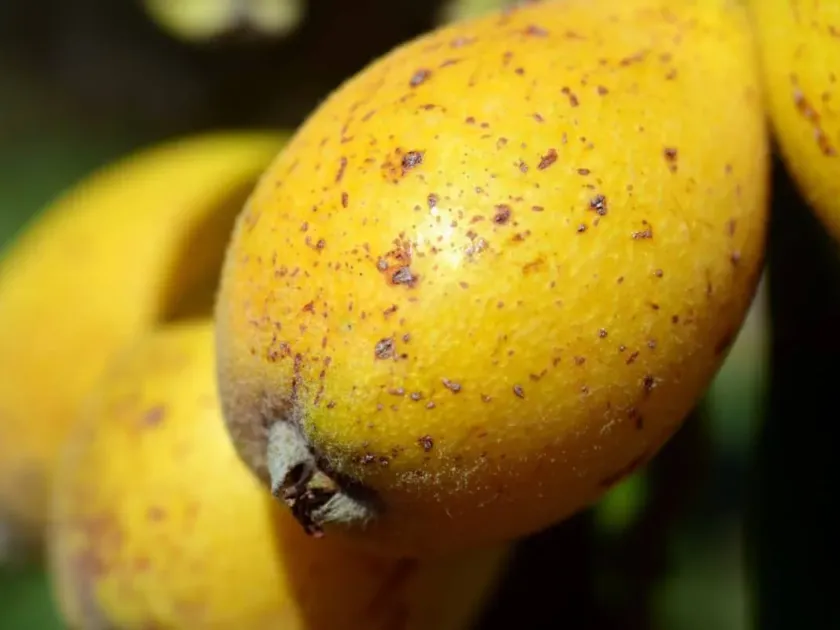
Description
Symptoms
Early symptoms appear as small, olive-green to brown spots on leaves. As the disease progresses, these lesions darken, expand, and often coalesce to form large, necrotic areas.
On young shoots, the infection manifests as depressed lesions or ulcers. Over time, these cracks appear, leading to shoot deformation and dieback if the infestation is severe.
The most distinctive and damaging symptom occurs on the fruits. Circular dark spots appear on the skin, often covered by a velvety layer of conidial fungal growth.
As the fruit matures, the infected spots fail to expand, resulting in skin cracking and severe fruit distortion. Such fruits lose their marketability and quality.
Heavy leaf infection leads to premature chlorosis and abscission. This significantly weakens the tree, reduces its vigor, and impairs its ability to withstand winter frosts.
Pathogen
The causative agent of loquat scab is the pathogenic fungus Spilocaea eriobotryae (also known as Fusicladium eriobotryae). This fungus is a specialized parasite that primarily infects plants of the genus Eriobotrya, most notably the Japanese loquat.
The pathogen survives the winter as mycelium in infected twigs, fallen leaves, and fruit debris. When weather conditions turn favorable in spring, it produces conidia that are disseminated by wind and splashing rain.
The fungus life cycle is closely linked to temperate and humid climates. In these regions, the pathogen can reproduce actively throughout the entire growing season of the tree.
The infection initiates when conidia enter the plant tissue through stomata or mechanical breaks in the cuticle. Once inside, the mycelium spreads under the epidermal layer, destroying host cells.
High humidity and rainfall are critical for the dispersal of conidia, making spring months with frequent showers a period of high infection pressure for loquat orchards.
Conditions for development
Prolonged periods of high humidity, such as persistent fog, heavy dew, or frequent rain, are the primary drivers for scab development. The fungus thrives at moderate temperatures between 15°C and 22°C.
Orchards with dense canopy structures suffer from poor air circulation, creating an optimal microclimate for Spilocaea eriobotryae spores to germinate and infect host tissues.
Inappropriate irrigation techniques that result in constant wetting of the foliage encourage rapid disease spread. During rainy seasons, spores can cover an entire tree within a few days.
Accumulation of leaf litter and fruit mummies beneath the canopy serves as the primary reservoir for the pathogen, ensuring the survival and recurrence of the disease in the following spring.
Trees weakened by nutrient deficiencies or insect infestations are significantly more susceptible to both primary and secondary fungal infections.
Why it matters
The primary economic impact is the massive reduction in marketable yield. Distorted, scabby fruits are unappealing and fail to meet retail quality standards, leading to major financial losses.
Widespread leaf infection inhibits photosynthesis, causing tree exhaustion. Weakened trees exhibit reduced growth rates and become more vulnerable to secondary pests and environmental stressors.
If left unmanaged, the tree's productivity declines rapidly. In severe cases, particularly with young trees, the necrotic lesions on branches can lead to the total death of the specimen.
Management costs increase significantly due to the necessity of repeated fungicide applications and the labor required for orchard sanitation.
The persistence of the fungus in the environment complicates the production of organic or residue-free crops, forcing growers to rely heavily on chemical control strategies.
Protection
Effective management requires strict adherence to good agricultural practices. Regular canopy pruning is essential to improve airflow, reduce humidity, and increase light penetration.
Strict orchard sanitation is critical. All fallen leaves and infected fruits must be collected and destroyed to eliminate the primary sources of overwintering inoculum.
Preventive fungicide applications should be timed for early spring, specifically before the flowering phase and immediately following petal fall, using copper-based treatments.
- Applying Bordeaux mixture during the vegetative phase.
- Using systemic fungicides upon the initial appearance of leaf spotting.
- Balanced fertilization with phosphorus and potassium to boost host resistance.
Choosing resistant loquat cultivars for new plantings is the most sustainable approach to long-term disease management, effectively reducing the need for chemical interventions.
Discussion
No discussions yet — be the first.