
Olive leaf spot
Spilocaea
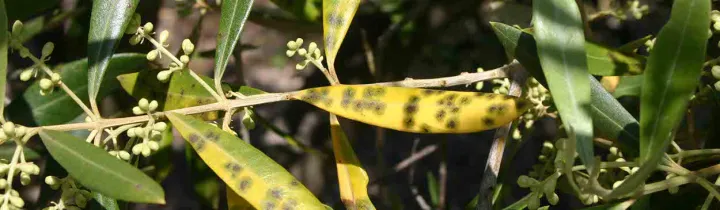
Description
Symptoms
The primary symptom of the disease is the appearance of circular spots on the upper leaf surface, commonly known as "Peacock spot" due to their distinctive pattern. The center of the lesion ranges from dark brown to olive-grey, often surrounded by a yellow halo.
Under high humidity, a thin layer of conidial spores forms on the affected areas. Over time, these spots expand and coalesce, leading to premature leaf chlorosis and heavy leaf drop, which significantly impacts the tree's health.
The infection affects not only the leaves but also petioles, young shoots, and fruit pedicels, negatively influencing fruit set. On the fruits, symptoms appear as dark, sunken lesions that reduce market quality and aesthetics.
Visual diagnosis is challenging during dry periods when the fungus remains in a latent state. Monitoring for symptoms immediately after rainy spells is essential for maintaining effective orchard phytosanitary control.
Severe crown infestation leads to defoliation, which weakens the tree's immune system, making it more susceptible to other secondary pathogens and environmental stressors.
Pathogen
The causal agent of the disease is the fungus Spilocaea oleaginea (syn. Fusicladium oleagineum), an ascomycete. This pathogen is a highly specialized parasite exclusive to olive trees.
The fungus survives in fallen leaves and on infected crown branches for extended periods, enduring adverse environmental conditions. The mycelium develops primarily underneath the leaf cuticle.
Infection spreads via conidia, which are dispersed by rain splashes and wind within the canopy and to neighboring trees. High-density planting significantly accelerates the rate of primary infection within an orchard.
The pathogen demonstrates high adaptability, allowing it to thrive in various climatic zones where olives are cultivated. Its life cycle is closely synchronized with the seasonal growth dynamics of the host.
The biological characteristics of Spilocaea oleaginea necessitate regular orchard inspections, particularly during periods of fluctuating temperatures and high humidity levels.
Conditions for development
Optimal conditions for spore germination and tissue infection include temperatures ranging from +10°C to +20°C. Spring and autumn are the most critical periods for disease development and spread.
High relative humidity, frequent fog, and prolonged rains facilitate mass spore production. The presence of free moisture on the leaf surface is a prerequisite for the fungus to penetrate the plant tissue.
Densely planted orchards that hinder air circulation create an ideal microclimate for the pathogen. Poorly ventilated areas retain moisture for longer durations, thereby extending the infection risk window.
Inadequate agricultural practices, such as the lack of sanitary pruning, contribute to the accumulation of inoculum. Older trees or orchards with excessive nitrogen fertilization are more prone to severe outbreaks.
Regional climates characterized by mild winters and humid springs support the presence of the fungus in its active phase throughout the year, making epidemic control more difficult.
Why it matters
The economic impact of olive leaf spot stems primarily from the impairment of photosynthesis caused by premature leaf drop. This leads to tree exhaustion and decreased long-term productivity.
Reduction in canopy leaf area limits the accumulation of organic reserves necessary for flower bud development for the following season, resulting in alternate bearing patterns and yield loss.
Infection of the fruit pedicels leads to fruit abortion, directly reducing the harvest quantity. Fruit quality is also diminished, which is unacceptable for premium oil or table olive production.
Severe infestations can lead to the death of young nursery saplings, as they lack the reserves to compensate for the loss of photosynthetic machinery, causing significant financial losses.
Infected trees become less cold-hardy and more sensitive to environmental stress, effectively shortening the productive lifespan of the olive orchard.
Protection
The cornerstone of control is the application of copper-based fungicides before the onset of the rainy season to establish a protective barrier on the leaf surfaces.
Regular thinning of the crown through pruning is an essential cultural practice. Improved aeration and light penetration into the inner canopy significantly reduce the risk of fungal establishment.
Sanitary management of the orchard, including the removal and destruction of fallen leaves, helps to drastically reduce the primary inoculum. Debris should not be left under the canopy.
When establishing new orchards, avoid low-lying areas with poor drainage and cold air pockets. Selecting the correct slope exposure is crucial for maintaining overall orchard health.
- Application of copper fungicides or systemic plant protection products.
- Adherence to proper planting densities to ensure adequate airflow.
- Execution of pruning during dry weather to ensure quick wound healing.
- Continuous monitoring of tree health following prolonged rain events.
Discussion
No discussions yet — be the first.