
Citrus scab
Sphaceloma fawcettii
Description
Symptoms
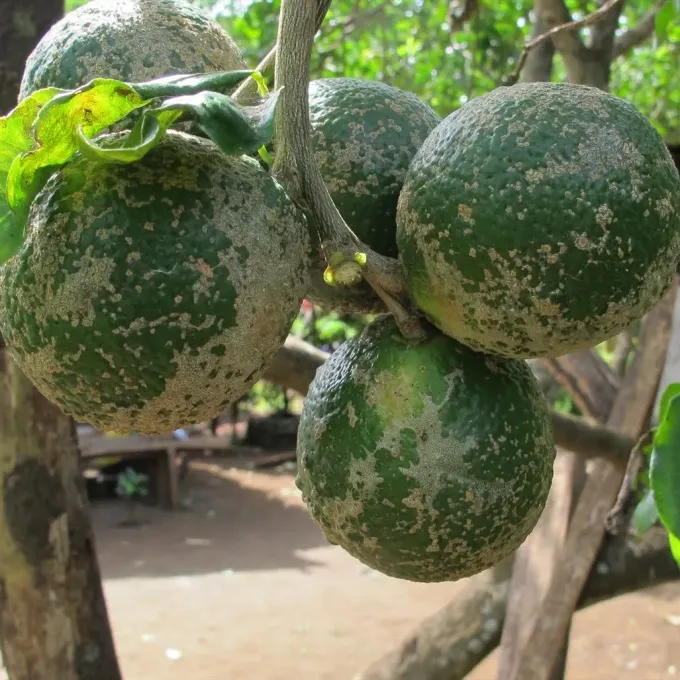
The first symptoms of the disease appear as small, semi-transparent spots on young leaves, shoots, and fruits. Over time, these spots develop into raised, wart-like growths that may have a gray, yellow, or brown color.
Affected leaves often show distortion, becoming wrinkled and gradually drying out. In cases of severe infection, young shoots may become twisted, and their growth is significantly stunted or halted entirely.
Cork-like scabs form on the surface of the fruit, significantly reducing their aesthetic appeal and market value. These lesions can merge to form large areas of necrotic tissue, rendering the fruit unsellable.
In high humidity, a faint, velvety coating of fungal spores can often be seen on the surface of the lesions. This sporulation serves as the primary source for further spreading the infection throughout the orchard.
When floral structures are infected, premature fruit drop occurs, which leads to a substantial loss of potential yield during the early stages of plant development.
Pathogen
The pathogen responsible for this disease is the ascomycete fungus Sphaceloma fawcettii (anamorph of Elsinoë fawcettii). This microorganism belongs to the class Dothideomycetes and specializes in attacking various citrus species.
The pathogen survives during unfavorable periods within the tissues of infected plants left in the canopy or as leaf litter. It possesses a high capacity for rapid reproduction when environmental conditions are conducive.
The spread of fungal spores occurs primarily through rain splashes and overhead irrigation. Insects and contaminated agricultural tools also play an active role in transmitting the infection between trees.
The biology of the pathogen dictates that it prefers to infect young, developing plant tissues. As tissues mature and harden, the resistance of shoots and fruits to fungal penetration gradually increases.
The infection cycle includes spore germination in water droplets on the leaf epidermis, followed by the penetration of hyphae into the plant tissue, where they develop and degrade the host cells.
Conditions for development
The development of citrus scab is directly dependent on air humidity levels and the presence of free water on foliage. Optimal conditions for infection occur at temperatures ranging from 15 to 25 degrees Celsius.
Prolonged rainy periods, frequent fog, and heavy morning dew during the spring and summer promote massive spore release. Under these conditions, the disease can quickly reach epidemic proportions.
Poor canopy ventilation due to a lack of proper pruning creates a microclimate with high humidity, which is ideal for the rapid reproduction of Sphaceloma fawcettii.
Improper agricultural practices, such as excessive application of nitrogen fertilizers, stimulate the growth of tender, succulent shoots that are highly vulnerable to pathogen attack.
Weakened plant health, often caused by unfavorable growing conditions or nutrient deficiencies, significantly increases the likelihood of rapid disease spread throughout the plantation.
Why it matters
The primary economic impact of citrus scab is the loss of product quality, as affected fruits lose their commercial appeal. This makes them unsuitable for sale in fresh produce markets.
When a significant portion of the leaf area is affected, photosynthetic activity is reduced, weakening the overall health of the tree. Consequently, trees become more susceptible to secondary infections and environmental stress.
Infection of young shoots leads to malformation and dieback, which disrupts normal canopy development. This limits the tree's fruit-bearing potential for subsequent years.
Economic damage includes the cost of implementing protective measures, crop loss, and the reduced grade of harvested fruit, all of which decrease overall orchard profitability.
In nursery environments, citrus scab can result in the complete loss of young seedlings, as young, non-hardened tissues have minimal resistance to fungal infection.
Protection
Prevention begins with selecting a planting site with excellent ventilation and sunlight exposure. It is essential to avoid dense spacing that restricts airflow between trees.
Mandatory cultural practices include regular sanitary and thinning pruning. Removing infected shoots and leaves helps reduce the inoculum levels within the orchard environment.
During the growing season, preventive fungicide applications based on copper are recommended. The first spray is applied before flowering, and subsequent treatments are necessary during fruit set.
It is important to monitor the health of the trees throughout the season and perform immediate secondary treatments with systemic fungicides if the first signs of disease are detected.
- Using only certified, disease-free planting material.
- Balanced fertilization, avoiding excessive nitrogen that promotes succulent growth.
- Timely removal and proper disposal of fallen leaves and infected fruit.
- Implementing efficient irrigation methods that prevent water from staying on the canopy.
Discussion
No discussions yet — be the first.