
Description
Symptoms
Visible symptoms often begin with a reduction in growth rates and a noticeable yellowing or thinning of the tree's foliage over several seasons.
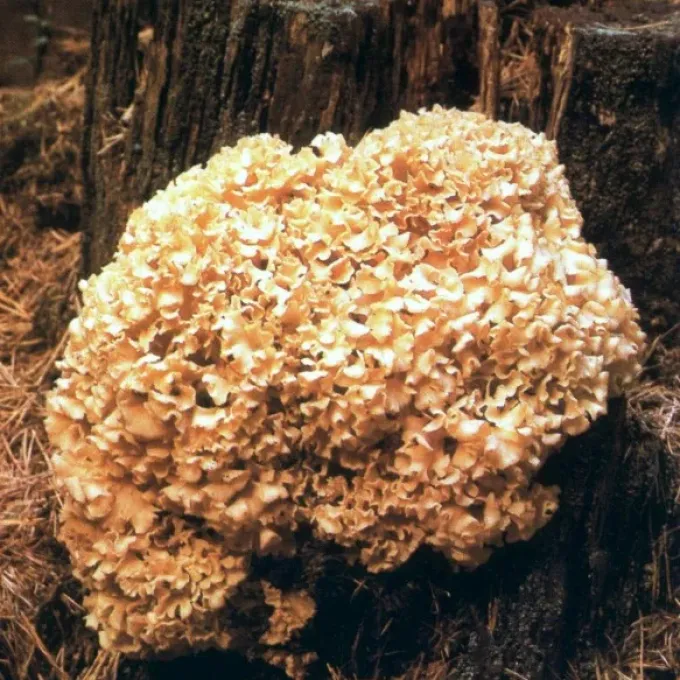
The most distinctive diagnostic feature is the emergence of creamy-yellow, frilled fruiting bodies at the base of the infected trunk in late summer.
Examination of the roots reveals a brown, cubic rot, where the wood becomes brittle and easily breaks into small fragments when disturbed.
Crown dieback typically progresses from the top of the tree downwards, reflecting the inability of the roots to supply sufficient water to the canopy.
Trees affected by advanced decay often become unstable and susceptible to windthrow, as the anchorage provided by the root system is severely weakened.
Pathogen
The disease is caused by the fungus Sparassis crispa, also known as the cauliflower fungus, which acts as a necrotrophic pathogen on the root systems of trees.
This basidiomycete fungus targets living conifers, causing extensive brown rot that destroys cellulose and compromises the structural integrity of the roots.
The mycelium survives for long periods in woody debris and soil, allowing the fungus to persist in a forest area even in the absence of a living host.
As the fungus colonizes the root tissue, it produces enzymes that break down the wood, resulting in brittle and dark-colored decayed matter.
The pathogen is particularly dangerous due to its ability to spread through root contacts between adjacent trees in a plantation.
Conditions for development
High soil moisture levels are a critical factor that facilitates the rapid spread of the mycelium through the ground and between individual trees.
The presence of old stumps or previously infected woody material in the soil provides a perfect substrate for the fungus to establish its primary infection.
Mechanical damage to the roots or the base of the trunk during forest management operations creates entry points for fungal spores and mycelial strands.
Optimal temperatures between 18 and 25 degrees Celsius promote the metabolic activity of the fungus and its rapid colonization of host tissue.
Dense stand conditions favor the spread of the pathogen, as closer spacing makes it easier for the fungus to move through the underground root network.
Why it matters
The disease poses a significant threat to various conifer species, including Douglas fir, often resulting in tree mortality and loss of timber.
Economic impact includes the devaluation of wood quality and the costs associated with the removal and management of affected forest sections.
Loss of trees leads to gaps in the forest canopy, which changes the local microclimate and affects the overall health of the ecosystem.
Trees weakened by this rot are highly prone to secondary infestations by bark beetles, which further accelerate the decline of the stand.
The long-term persistence of the pathogen in the soil complicates future replanting efforts, as young seedlings may become infected soon after planting.
Protection
The primary control strategy involves the early identification and removal of infected trees, including the extraction of root stumps to eliminate the inoculum source.
Preventative measures should focus on minimizing root damage during thinning or construction activities within or near the tree stand.
Regular surveillance during the late summer is essential for detecting the fruiting bodies and marking affected areas for immediate intervention.
In areas with high disease pressure, planting a mixture of resistant or less susceptible species can help buffer against total stand loss.
Improving soil drainage and maintaining appropriate stand density are effective cultural practices to make the environment less conducive to fungal development.
Pathogens and affected parts
Affects crops · 1
Discussion
No discussions yet — be the first.