
Description
Symptoms
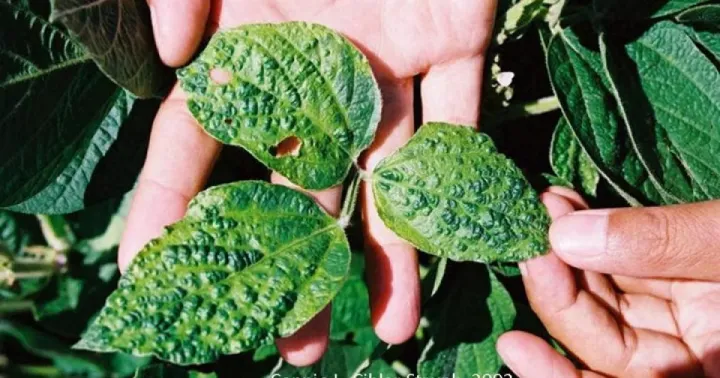
The primary symptom of the disease is the appearance of chlorotic spots on the soybean foliage. These spots are characterized by a yellowing of the tissue, often lacking well-defined boundaries.
Over time, these spots tend to enlarge and may develop a necrotic center as the fungal growth continues to damage the plant cells. The tissue surrounding the spot eventually turns yellow.
Symptoms are most commonly observed on the lower leaves of the plant initially, reflecting the source of the infection coming from the soil and crop debris.
In humid environments, a light fungal growth or sporulation may be visible on the surface of the lesions. This confirms the activity of the pathogen on the leaf surface.
Severe infection leads to premature senescence and leaf drop. This loss of canopy negatively impacts the plant's ability to undergo photosynthesis during the crucial pod-filling stage.
Pathogen
The causative agent of soybean chlorotic spot is the fungus Mycosphaerella sojae. This pathogen is a member of the Ascomycota group, commonly found surviving on crop residues.
The fungus overwinters in the form of mycelium or fruiting bodies within infected soybean debris left in the field after harvest. This provides a persistent source of inoculum for the following growing season.
During the spring, when temperatures rise and rainfall occurs, the pathogen releases spores which are disseminated by wind or water splashes onto the lower leaves of developing soybean plants.
As an adaptive pathogen, Mycosphaerella sojae thrives by utilizing organic matter, making crop rotation essential for managing the soil-borne inoculum pressure.
The lifecycle of this fungus allows for multiple infection cycles within a single growing season, provided that environmental conditions remain favorable for fungal growth.
Conditions for development
The disease flourishes under conditions of high humidity and moderate temperatures. Relative humidity levels above 70–80% are particularly conducive to the spread of the fungus.
A temperature range between 20°C and 25°C is ideal for spore germination and rapid mycelial colonization of the plant tissue, leading to quick onset of symptoms.
Dense crop canopies create a microclimate that remains damp for extended periods, preventing the leaves from drying quickly and thus promoting the development of fungal spots.
Minimal tillage practices that leave significant amounts of soybean residue on the soil surface dramatically increase the risk of disease by providing a substrate for the fungus to persist.
Frequent rainfall events throughout the vegetative stage assist in the splashing of spores onto the upper parts of the plant, accelerating the epidemic across the field.
Why it matters
The primary impact of the disease is the reduction in the total photosynthetic leaf area, which limits the energy production available for plant growth and seed development.
Infected plants exhibit reduced yield potential, characterized by smaller seed size and lower overall mass. The damage to the canopy can lead to significant economic losses in severe cases.
Reduced vigor makes the plants more susceptible to secondary stressors, including other diseases and pest infestations, further compromising the health of the soybean crop.
Seed quality can be significantly affected, potentially resulting in lower germination rates if those seeds are kept for planting in subsequent seasons without proper treatment.
The cost of managing the disease, through chemical interventions or specialized agronomic practices, adds to the production costs and reduces the overall profitability of the field.
Protection
Effective management begins with strict crop rotation practices. Planting soybeans in the same field only once every three to four years helps to reduce the build-up of the pathogen in the soil.
Deep plowing to bury infested crop debris is a highly recommended practice, as it accelerates the decomposition of plant material and reduces the availability of spores.
The use of fungicide-treated seeds provides early-season protection, which is vital for establishing a healthy, vigorous crop capable of resisting initial pathogen pressure.
- Application of foliar fungicides at the first sign of widespread spotting.
- Selection of soybean varieties known for their tolerance to local fungal diseases.
- Maintaining optimal planting density to improve airflow and facilitate quick leaf drying.
Regular field scouting is critical during the vegetative growth stages to identify early infection centers and apply targeted interventions before the disease can reach epidemic levels.
Pathogens and affected parts
Affects crops · 1
Discussion
No discussions yet — be the first.