
Description
Symptoms
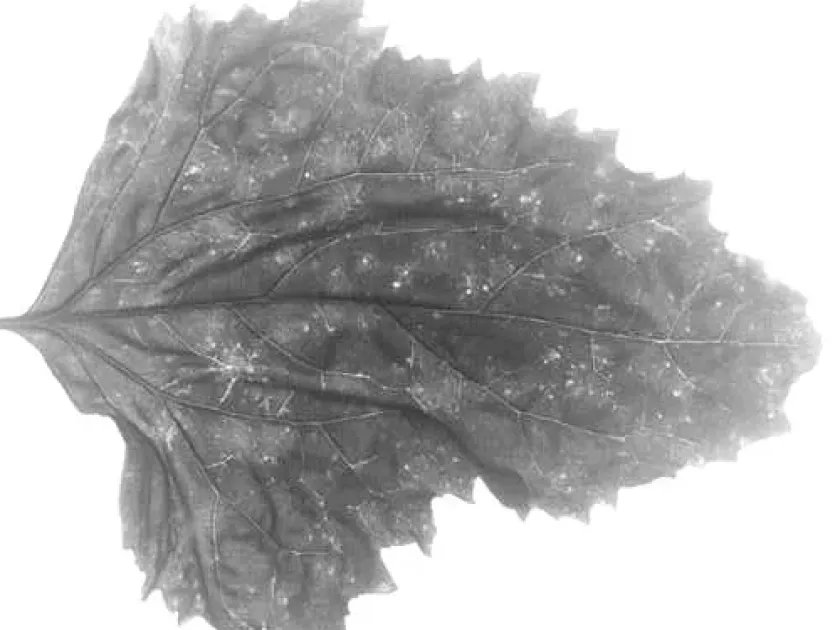
The primary visual indicator of this disease is a characteristic mottling or mosaic pattern on the leaves of infected plants. The color of the spots varies from light green to yellow, creating a patchy appearance that contrasts with the healthy plant tissue.
In the early stages of infection, mild leaf deformation may occur, often manifesting as slight curling of the leaf margins. In some cases, the infected leaves appear smaller than normal, and the internodes of the stem are noticeably shortened.
Sensitive crops show general growth suppression across the entire plant. While visual symptoms may be masked by fluctuations in temperature, the chlorotic spots become more pronounced under conditions that are favorable for the virus.
In potatoes, the symptoms may not appear immediately, complicating identification in the field. Infected specimens often lag in development, and severe cases show premature yellowing and desiccation of the lower leaf tiers.
Field symptoms often appear in clusters or patches, indicating the spread of the pathogen via insect vectors or mechanical contact. Weed reservoirs belonging to the Chenopodiaceae family often serve as the primary source of infection in the field.
Pathogen
The pathogen is the Sowbane mosaic virus (SoMV), belonging to the genus Sobemovirus. It is a small, spherical virus containing single-stranded RNA and is known for its high stability in the environment.
The virus has a wide host range, infecting both weeds and essential agricultural crops. It can persist in seed stocks for long periods, which is a critical factor in its spread across new agricultural territories.
The pathogenesis involves active replication of viral particles within host cells, disrupting normal photosynthesis and metabolic processes. Infected tissues suffer from nutrient depletion, eventually leading to cellular degeneration.
The virus is effectively transmitted via mechanical injuries sustained during standard agricultural practices like weeding, tilling, or vine cutting. Transmission through the seeds of various weed species also plays a significant role in its persistence.
Although the virus was first documented in Chenopodium (sowbane), its ability to affect a broad range of plant families, including Solanaceae, makes it a potential threat to intensive vegetable and potato production.
Conditions for development
Viral spread is favored by optimal temperatures, ranging from 20 to 25 degrees Celsius, which accelerate the virus's metabolism within plant tissues. A prolonged, cool spring often increases the risk of initial infection.
The presence of weeds near fields is the main driver of infection buildup. Since plants like sowbane and lambsquarters often act as symptomless carriers, they create a permanent infection pressure for adjacent crops.
High populations of insect pests during the growing season create additional risks for viral transmission. While mechanical contact is the primary route, certain aphid species may act as non-specific vectors.
The use of untested seed stock from previously infected fields is the main cause of disease outbreaks in new rotations. The virus can persist in dry plant debris and soil for extended periods.
Intensive irrigation and high humidity levels can indirectly facilitate the virus by maintaining high insect activity and providing favorable conditions for the survival of weed reservoirs that host the pathogen.
Why it matters
The main impact of Sowbane mosaic is a significant reduction in the productivity of agricultural crops. The virus depletes the plant's resources, resulting in decreased size and weight of the marketable yield.
When potatoes are infected, tuber quality declines, including reduced marketability and nutritional value. Total yield losses can range between 15% and 30%, depending on the severity and timing of the infection during the season.
The disease interferes with the maturation process of seeds, negatively affecting their germination rate and vigor. This causes long-term challenges for seed-producing farms, often requiring the culling of large batches of seed material.
Plants infected with the virus are more susceptible to secondary fungal and bacterial infections due to a compromised immune system. This necessitates increased expenditure on pesticides and fungicides.
On a farm scale, widespread infection disrupts the uniformity of crop stands, which negatively impacts the efficiency of mechanized harvesting and the quality of post-harvest storage.
Protection
The most important control measure is the rigorous management of weed vegetation around field edges and within crops. Eliminating members of the Chenopodiaceae family reduces the population of viral reservoirs.
The use of strictly healthy, certified seed material is essential to prevent the introduction of the virus into the field. Regular phytosanitary inspections of seed fields for mosaic symptoms are highly recommended.
Strict hygiene protocols must be followed during field operations: tools used for crop maintenance must be disinfected after every pass through the field to prevent transmission through sap contact.
Effective crop rotation planning is crucial. It is not recommended to plant sensitive crops, such as potatoes, in close proximity to areas where viral pathogens have previously been recorded in high density.
- Regular weeding of host weeds.
- Use of only certified seeds.
- Disinfection of farming tools.
- Management of insect vectors.
- Spatial isolation of crops.
Pathogens and affected parts
Affects crops · 1
Discussion
No discussions yet — be the first.