
Description
Symptoms
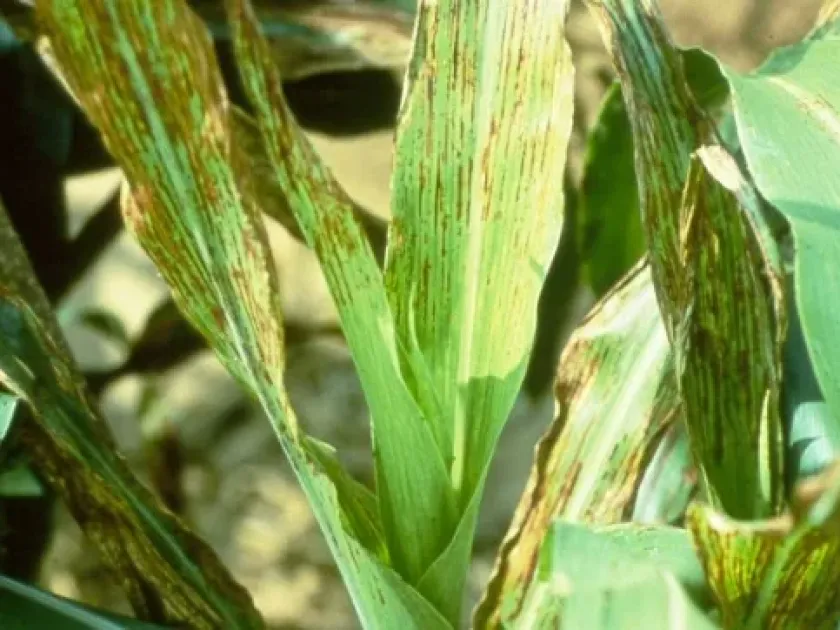
The characteristic sign of infection is a mosaic pattern on the leaves, appearing as alternating light-green and dark-green patches.
Infected plants exhibit severe stunting, which is the defining symptom that gives the disease its name, mosaic dwarfness.
Diseased sorghum often shows excessive tillering, while the panicles frequently fail to develop properly or become completely sterile.
Leaf blades may appear deformed, twisted, or exhibit chlorosis, leading to a general yellowing of the foliage across the plant.
Field observation typically reveals patchy patterns of infection, where affected plants are clearly identifiable among the healthy population.
Pathogen
The disease is caused by the Sorghum mosaic virus (SrMV), which is a member of the Potyviridae family.
The pathogen consists of filamentous virus particles containing a single-stranded RNA genome, which is highly stable within plant tissues.
Perennial grass weeds, such as Johnsongrass, serve as the primary reservoir for the virus, allowing it to survive during the winter.
Transmission occurs through various species of aphids that acquire the virus while feeding on infected plant sap.
The transmission is non-persistent, allowing the virus to be spread very rapidly between plants through short feeding probes by insect vectors.
Conditions for development
Disease spread is highly dependent on the population dynamics of aphids, which thrive under specific warm and humid environmental conditions.
Rainfall patterns that promote weed growth and insect activity significantly increase the risk of rapid virus dissemination across sorghum fields.
Proximity to infected perennial weeds provides a constant source of inoculum, facilitating early-season transmission to young sorghum crops.
Agricultural mismanagement, specifically poor weed control, creates favorable environments for the virus to persist and spread effectively.
Environmental stress can exacerbate the symptoms of the virus, making the disease more prominent and devastating in affected regions.
Why it matters
The main impact of the virus is a significant reduction in overall grain yield and poor quality of the harvested produce.
Viral infection disrupts normal photosynthetic processes, leading to shriveled grains and reduced weight of the panicles.
Plants affected by the mosaic virus have lowered resilience, making them more susceptible to drought and other environmental stressors.
In cases of early infection, the crop may suffer complete failure, as the plants stop growing and fail to produce viable seeds.
Economic damage is twofold, involving both direct loss of yield and the cost of implementing extensive pest control measures.
Protection
The most critical management strategy is the effective removal of weed hosts, particularly Johnsongrass, which serves as the primary virus source.
Establishing spatial isolation between new sorghum fields and areas known to harbor the virus is essential for disease prevention.
Monitoring aphid populations and applying targeted insecticides can help reduce vector pressure, especially during the early stages of growth.
Utilizing genetically resistant sorghum hybrids is the most sustainable and efficient approach for managing mosaic dwarfness long-term.
- Crop rotation practices.
- Optimized planting dates.
- Sanitation of crop residues.
- Strategic insecticide applications.
Pathogens and affected parts
Affects crops · 1
Discussion
No discussions yet — be the first.