
Description
Symptoms
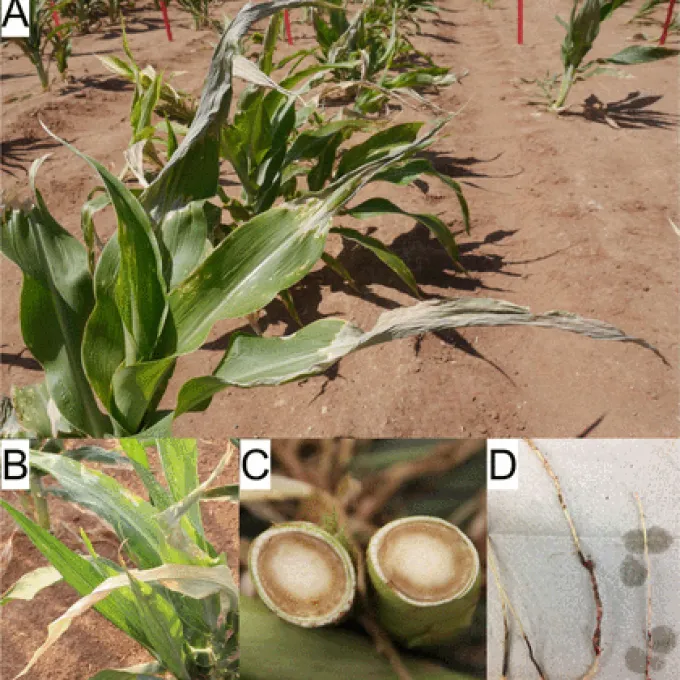
The primary symptom of this disease is the appearance of chlorotic spots on the sorghum leaves during the vegetative growth stage.
These spots are typically yellow or pale green in color and may vary in shape, often appearing circular or slightly irregular.
As the disease progresses, the chlorotic areas may become necrotic, transitioning into tan, brown, or greyish dead leaf tissue.
In severe cases, individual spots coalesce to cover large portions of the leaf blade, significantly impacting the plant's health.
Under magnification, evidence of fungal sporulation can sometimes be observed on the underside of these affected leaf lesions.
Pathogen
The disease is caused by specific fungal pathogens known to thrive on various members of the Poaceae family, including sorghum.
It is classified as a localized foliar disease, primarily affecting the leaves and sometimes the leaf sheaths of the crop.
The pathogen overwinters within infected crop debris left on the field surface or survives in the soil for extended periods.
Dissemination of the fungus occurs primarily through airborne conidia, which are spread by wind currents and splashing rain.
The biological cycle involves the germination of spores on the leaf surface, followed by the penetration of the plant tissue.
Conditions for development
The development of the disease is highly favored by periods of high humidity, frequent rain, and moderate air temperatures.
Fields with poor ventilation due to high plant density are particularly susceptible to rapid spread of the chlorotic spots.
Dew and fog create the persistent surface moisture on leaves required for fungal spores to successfully germinate and infect.
Stressed plants, often due to nutrient deficiencies or soil compaction, show higher vulnerability to the infection process.
Warm and humid weather conditions following initial infection facilitate secondary infection cycles, increasing the severity level.
Why it matters
The disease causes a reduction in the total functional leaf area, which directly impairs the plant's photosynthetic efficiency.
Stunted growth and reduced grain filling are common consequences of severe leaf damage, leading to lower crop yields.
For forage sorghum, the nutritional quality of the plant tissue may be degraded, resulting in poor livestock feed quality.
The cumulative effect of tissue death can lead to premature leaf senescence, shortening the active grain-filling period.
Economic losses arise from decreased production, costs for mitigation strategies, and potential downgrading of grain quality.
Protection
Crop rotation with non-host species is the most effective cultural practice to disrupt the fungal infection cycle.
Deep plowing and incorporation of crop residues into the soil help accelerate the decomposition of the infected material.
The use of high-quality, fungicide-treated seeds is crucial to prevent the introduction of pathogens during the early growth stages.
Maintaining proper plant density ensures adequate air circulation, which helps keep the leaf surface dry and unfavorable for fungi.
- Balanced fertilization to ensure plant vigor and disease resistance.
- Effective weed management to eliminate alternative pathogen hosts.
- Application of foliar fungicides if disease thresholds are exceeded.
Pathogens and affected parts
Affects crops · 1
Discussion
No discussions yet — be the first.