
Rice yellow mottle virus
Sobemovirus rymv
Description
Symptoms
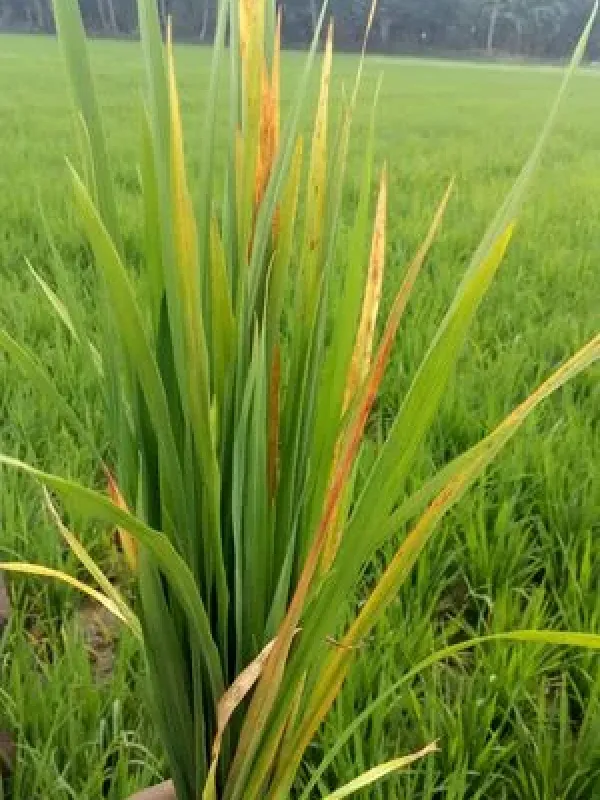
Symptoms typically begin as small, chlorotic yellow or green spots on the youngest leaves, which soon develop into distinct yellow or orange stripes. The foliage eventually turns a bright golden-yellow color.
Infected plants exhibit severe stunting, leaf deformation, and reduced tillering. The growth of the plant is significantly impaired, leading to a weak and sparse appearance across the field.
The virus severely impacts reproductive development. Affected plants often produce deformed, underdeveloped panicles with reduced grain filling or total sterility.
Early-stage infection frequently leads to tissue necrosis and the premature death of tillers. In severe cases, the entire plant may collapse, leading to substantial patches of crop failure.
- Yellow mottling and streaking on leaf blades.
- Reduced number of grains per panicle.
- Significant plant dwarfing and poor development.
- Delayed or completely suppressed flowering.
Pathogen
The causative agent is the Rice yellow mottle virus (RYMV), a member of the Sobemovirus genus. This positive-sense single-stranded RNA virus is characterized by a high rate of mutation and significant strain diversity.
The disease is a systemic viral infection that affects the host at the cellular level. The virus is highly contagious and spreads primarily through mechanical contact and specific insect vectors.
Wild grasses growing in and around rice paddies serve as the main natural reservoirs for the virus. It can persist in soil and plant debris, making long-term control extremely challenging.
While primarily infecting cultivated rice (Oryza sativa), the virus also affects wild rice species (Oryza glaberrima), which can be devastating for native ecosystems and biodiversity.
RYMV virions are remarkably stable in the environment, allowing the pathogen to remain viable for extended periods even when removed from the living host plant.
Conditions for development
High temperatures and high humidity promote the rapid spread of the virus. These conditions are ideal for the population dynamics of insect vectors, such as beetles of the Chrysomelidae family.
Mechanical transmission is facilitated by routine agricultural practices such as transplanting, weeding, and harvesting. Every time tools or human activity cause leaf damage, the virus can be easily transferred.
High-density planting creates a favorable environment for the virus to move between plants through physical contact of leaves, accelerating the epidemic process within a field.
Lack of proper crop rotation and the presence of infected wild host plants in close proximity create a permanent disease pressure that flares up whenever environmental conditions are favorable.
Human-mediated spread through contaminated farm machinery and tools is a primary factor in the long-distance transmission of the virus from infected to healthy areas.
Why it matters
Rice yellow mottle is one of the most destructive viral diseases in affected regions. Crop losses can range from 20% to as much as 100% depending on the susceptibility of the cultivar.
The disease leads to a drastic reduction in grain quality, size, and weight, causing severe economic damage to rice-producing communities and farmers.
By compromising the plant's photosynthetic capacity, RYMV makes rice crops more susceptible to secondary fungal and bacterial infections, compounding the yield loss.
In severe epidemics, entire fields may need to be destroyed to prevent the further spread of the virus to neighboring healthy plantations, resulting in total loss of input costs.
The ability of the virus to evolve and overcome current host-plant resistance traits poses a persistent and dynamic threat to global food security.
Protection
The use of resistant or tolerant cultivars is the most sustainable and effective management strategy. Breeding for virus resistance is essential for minimizing potential yield losses.
Strict quarantine measures on the movement of rice germplasm and seeds are necessary to prevent the introduction of the virus into unaffected geographic regions.
Integrated weed management, including the removal of wild host grasses around rice paddies, is critical to reducing the primary inoculum source for the virus.
Early detection through regular field monitoring allows for the isolation and removal of infected plants before the virus can reach epidemic levels within the paddy.
Sanitation of agricultural machinery and tools is mandatory. Proper disinfection protocols help to stop the mechanical transmission of the virus between different sections of the farm.
Discussion
No discussions yet — be the first.