
Description
Symptoms
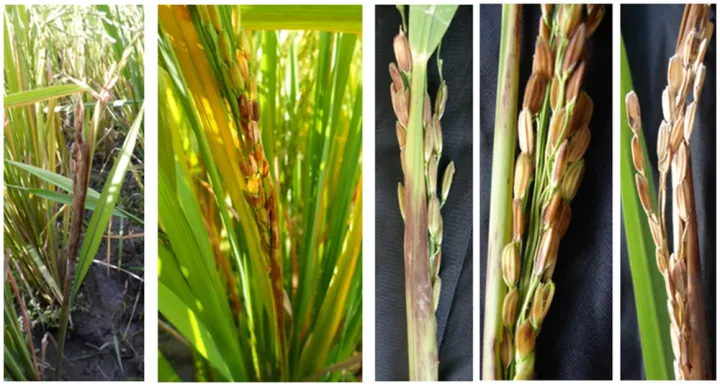
Symptoms typically appear as dark brown, irregular lesions on the leaf sheaths that enclose the emerging panicle. These lesions may coalesce and cover large areas of the tissue.
A classic sign is the failure of the panicle to emerge completely from the sheath, a condition often referred to as "panicle exsertion failure," resulting in grain sterility.
Affected panicles often show discolored, dark, or water-soaked grains, and the entire head may turn a pale, blighted color if the infection is severe.
In humid conditions, a bacterial exudate can be observed on the surface of the lesions. When this exudate dries, it may form a thin, shiny film or crust on the leaf sheath.
Younger leaves may show yellowing or browning tips, and severe infections can lead to premature senescence of the entire plant canopy.
Pathogen
The causative agent of the disease is the gram-negative bacterium Pseudomonas fuscovaginae. It is a specialized phytopathogen that primarily affects rice crops during their reproductive stages.
The bacteria can survive in infected seeds, soil debris, and irrigation water for extended periods, serving as a primary source of inoculum for subsequent seasons.
The pathogen produces phytotoxins that induce necrosis in leaf sheaths and panicles. This bacterial infection disrupts the plant's vascular system, hindering the transport of nutrients to the developing grain.
Unlike many other pathogens, P. fuscovaginae thrives in cool to moderate temperature ranges, making it a significant threat in temperate rice-growing regions.
The motility of the bacteria, facilitated by polar flagella, allows it to move rapidly through the water film in flooded rice paddies, leading to widespread dispersal within a field.
Conditions for development
The development of the disease is favored by high relative humidity and cool weather, particularly temperatures between 15°C and 22°C during the panicle emergence stage.
Frequent rainfall or persistent dew during the critical growth phases provides the necessary moisture for the bacteria to multiply and infect plant tissues.
Excessive application of nitrogenous fertilizers creates lush, succulent growth that is highly susceptible to bacterial penetration and colonization.
Stagnant irrigation water and poor field drainage contribute to the buildup of the bacterial population, increasing the risk of an outbreak across the field.
Injuries caused by leaf-feeding insects or mechanical damage during field operations act as entry points for the pathogen into the plant stem.
Why it matters
The primary damage caused by rice sheath brown rot is a significant reduction in grain yield due to panicle sterility and incomplete grain filling.
The disease significantly degrades grain quality, leading to discolored, lightweight, and low-quality kernels that may be rejected by commercial processors.
Infected seeds can carry the pathogen to new areas, posing a risk to seed certification programs and regional agricultural productivity.
The physiological stress caused by the infection weakens the plant, making it more vulnerable to secondary fungal diseases and environmental stressors.
Management costs increase significantly due to the need for monitoring, potential chemical interventions, and the loss of marketable yield, affecting the overall farm profitability.
Protection
Integrated management is essential, starting with the use of pathogen-free, certified seeds to minimize the risk of initial field contamination.
Proper field sanitation, including the destruction of rice stubble and control of alternative host weeds, is crucial for reducing the inoculum load.
Balanced fertilization practices, avoiding over-application of nitrogen, help maintain plant health and improve natural resistance to bacterial infection.
Water management strategies, such as improving drainage to prevent stagnant water, can help disrupt the dispersal of the bacteria in the field.
- Monitoring fields during the booting and heading stages.
- Use of resistant rice cultivars if available.
- Seed treatment with appropriate bactericides.
- Application of biological control agents where applicable.
Pathogens and affected parts
Affects crops · 1
Discussion
No discussions yet — be the first.