
Bulb mite
Shallot mite-borne latent virus
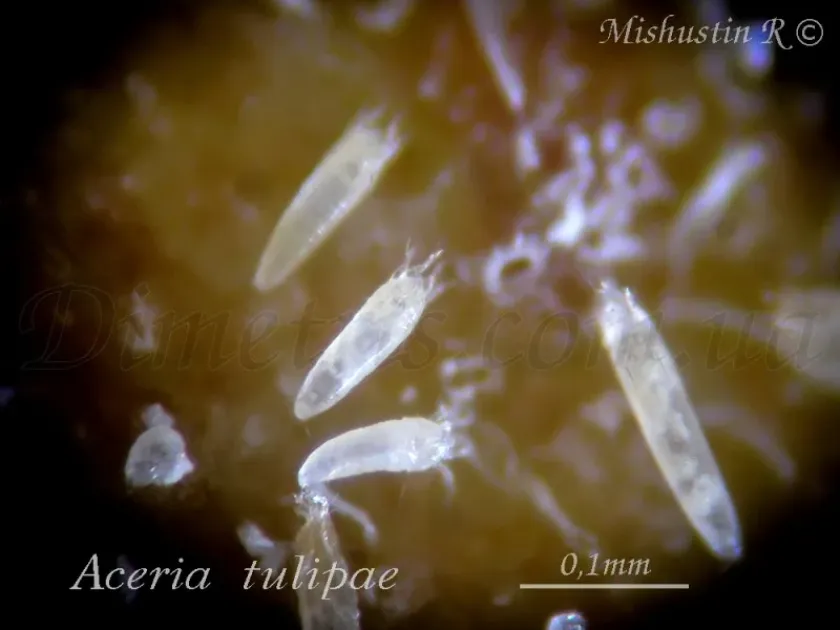
Description
Symptoms
Early signs of infestation include stunted growth and yellowing of the leaves from the tip downwards. The plants may appear wilted or weak as if they are suffering from nutrient deficiencies.
Upon inspection of the basal plate, a characteristic brown or greyish powder is visible. This debris consists of mite waste and fragments of destroyed bulb tissue.
Inside the bulb, tissues become soft, watery, and mushy. In advanced cases, the basal plate detaches completely from the scales, often emitting a strong, foul odor due to secondary bacterial rot.
During the vegetative stage, infested plants are easily pulled from the ground because their root systems have been partially or entirely consumed by the mite colonies.
In storage, mite colonies appear as white, dusty patches between the bulb scales. They quickly migrate to healthy bulbs, causing entire storage bins to decay if left uncontrolled.
Pathogen
The bulb mite (Rhizoglyphus echinopus) is a microscopic pest belonging to the Acaridae family. It is a severe threat to bulbous crops, acting as both a primary pest and a vector for secondary infections.
This pest is highly polyphagous, meaning it feeds on a wide range of hosts, including onions, garlic, shallots, and various ornamental bulbs like lilies, tulips, and hyacinths.
The life cycle involves egg, larva, protonymph, deutonymph, and adult stages. The deutonymph stage can transform into a specialized resistant form called a hypopus, allowing the mite to survive extreme conditions.
Infestation primarily spreads through contaminated soil and infested planting material, such as onion sets or garlic cloves, which are often used as a source of the next season's crop.
Agronomically, it is classified as a pest that triggers rot. It bores into the basal plate, facilitating the entry of fungi and bacteria that lead to the rapid destruction of the plant tissue.
Conditions for development
The bulb mite thrives in high humidity conditions (above 70% relative humidity) and soil temperatures ranging from 20°C to 25°C, making warm and moist seasons particularly risky.
Poor field drainage and excessive irrigation contribute to the rapid proliferation of the mite population in the soil, which serves as a reservoir for future infestations.
In storage, temperatures above 10°C combined with high humidity are the primary drivers of mite population explosions, often leading to total loss of the harvested batch.
Mechanical damage to bulbs during harvesting or handling creates entry points for mites, accelerating their colonization of healthy plant tissues.
Continuous monocropping of alliums in the same area prevents the mite population from declining, as the soil remains permanently infested with successive generations.
Why it matters
The primary economic impact is the loss of harvest quantity and quality. Mite-damaged bulbs are unmarketable and unsuitable for long-term storage due to rot progression.
Infestation of onion sets or garlic planting stock leads to poor germination and reduced plant stands, requiring replanting and increasing production costs.
The mites act as vectors for various plant pathogens, increasing the prevalence of diseases like Fusarium rot and basal rot, which further complicates crop management.
Substantial losses occur in storage facilities where mites move from infected bulbs to healthy ones, causing a domino effect that can ruin entire warehouse stocks.
The pest's ability to live deep within the bulb makes it difficult to detect during early infestation stages, often leading to delayed control actions that fail to save the crop.
Protection
Implementing a strict crop rotation schedule is vital. Avoid planting onion or garlic in the same field for at least 4 to 5 years to reduce soil mite populations.
Use only certified, mite-free planting material. Hot water treatment or specialized acaricide dips for seed bulbs can significantly reduce initial infestation levels.
Proper curing after harvest is essential; ensuring the neck and outer scales of the bulbs are thoroughly dried reduces the risk of mite penetration.
- Maintain storage temperatures below 2°C with low humidity to inhibit mite activity.
- Deep plowing of the field post-harvest to expose mites to cold and dry conditions.
- Promptly remove and destroy any debris or damaged bulbs from the field.
Chemical control is difficult during the growing season due to the protected location of the mites inside the bulbs; thus, sanitation and preventive measures remain the best strategy.
Discussion
No discussions yet — be the first.