
Northern Corn Leaf Blight
Setosphaeria
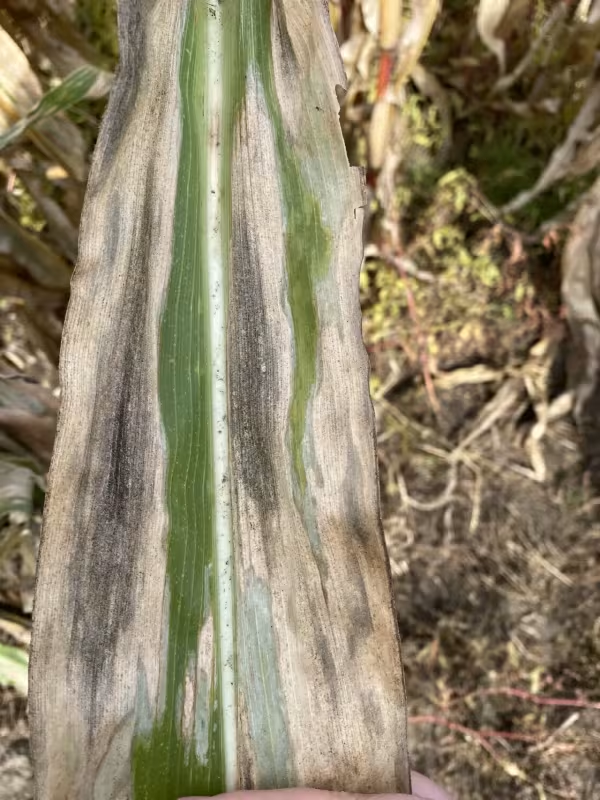
Description
Symptoms
Initial symptoms manifest on the lower leaves as small, elliptical, water-soaked spots that elongate over time parallel to the leaf veins.
Lesions typically develop a characteristic cigar-shaped or spindle-like appearance with tan or grayish-brown centers and dark margins.
Under conditions of high humidity, heavy sporulation occurs on the lesion surface, creating a distinct olive-green or dark velvety layer.
As the disease progresses, large necrotic areas form, causing entire leaves to wither and appear prematurely burnt or scorched.
Severe infections can extend to the leaf sheaths and husks, directly impacting the ear fill and overall vitality of the corn plant.
Pathogen
The disease is caused by the ascomycete fungus Setosphaeria turcica, which is the teleomorph of the pathogen Exserohilum turcicum.
This pathogen is highly specialized and affects primarily maize, sorghum, and some other related grass species in various agro-climatic zones.
The fungus survives between seasons as mycelium and conidia on crop debris left on the soil surface, serving as the primary inoculum source.
Infection cycles are driven by conidia that are disseminated by wind and rain splash, allowing for rapid secondary spread throughout the growing season.
Genetic diversity within the Setosphaeria population allows the pathogen to overcome resistance genes in modern maize hybrids over time.
Conditions for development
The development of Northern Corn Leaf Blight is favored by moderate temperatures (typically 18–27 °C) combined with high relative humidity.
Prolonged leaf wetness duration, often caused by heavy dew, fog, or frequent rainfall, is essential for conidial germination and penetration.
Dense planting patterns that limit airflow within the canopy create a microclimate that facilitates rapid disease spread across the field.
Minimum tillage practices increase the risk of disease by preserving infected crop residue, which acts as a sanctuary for the fungus during winter.
Early-season infections are particularly dangerous if weather conditions remain cool and wet, leading to an earlier onset of the epidemic.
Why it matters
The most significant impact is the reduction of green leaf area, which severely restricts the plant's ability to perform photosynthesis.
Grain filling is significantly impaired, leading to lower yields, reduced test weight, and poor kernel quality at harvest time.
The disease weakens the stalks, making plants more susceptible to lodging and stalk rot, which complicates harvesting operations.
Heavy infections can cause total yield loss in susceptible hybrids, posing a major economic threat to large-scale corn production.
The loss of silage quality and potential contamination with secondary fungi further diminishes the value of the affected harvest.
Protection
Planting resistant or tolerant maize hybrids is the primary and most cost-effective strategy for managing Setosphaeria infections.
Crop rotation with non-host crops is essential to break the life cycle of the fungus and reduce the inoculum load in the field.
Tillage operations that bury crop debris promote the decomposition of infected residues, significantly reducing the survival of the pathogen.
Foliar fungicide applications during the vegetative stages are recommended when scouting indicates threshold levels of disease progression.
- Use of certified, disease-free seed
- Balanced fertilization to improve plant vigor
- Scouting fields for early disease detection
Discussion
No discussions yet — be the first.