
Pepper golden mosaic
Serrano golden mosaic begomovirus
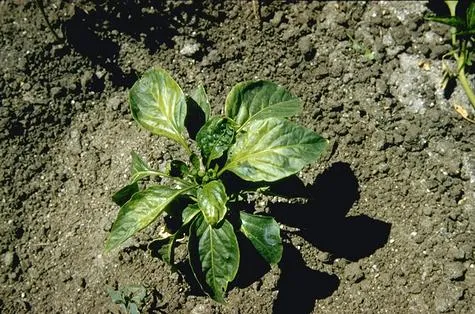
Description
Symptoms
The earliest symptoms include leaf chlorosis, which eventually develops into a bright golden mosaic pattern. The leaves lose chlorophyll, leading to the distinct yellowish appearance that gives the disease its name.
Plants exhibit severe morphological changes, including leaf curling, crinkling, and distortion. Stunted growth is typical, and infected plants are often significantly smaller than healthy ones of the same age.
Flower development is severely impacted, often resulting in flower drop or the formation of malformed buds. This significantly reduces the total yield of fruit per plant.
When fruit is produced on infected plants, it is often undersized, spotted, or misshapen, rendering it non-marketable. The overall architecture of the plant becomes compact and bushy due to shortened internodes.
- Bright golden-yellow mosaic patterns
- Curled and distorted leaf blades
- Significant stunting of plant height
- Flower abortion and poor fruit set
- Deformed and spotted fruit skin
Pathogen
The causative agent of this disease is the Pepper golden mosaic virus (PepGMV), a member of the Begomovirus genus within the Geminiviridae family. It is a virus with a single-stranded DNA genome that primarily attacks nightshade family plants.
The virus is transmitted in a semi-persistent manner by the tobacco whitefly, Bemisia tabaci. The virus cannot be transmitted through seeds or mechanical contact between plants, making insect management the primary focus.
Once inside the plant, the virus moves through the phloem to systematically infect all parts of the organism. This systemic infection disrupts the plant's metabolic pathways and inhibits normal physiological development.
The viral genome is highly specialized to replicate within the cells of solanaceous crops, allowing it to rapidly dominate the host plant's internal resources. This leads to the characteristic symptoms observed in infected peppers.
The virus persists in reservoir hosts, including various wild weeds common in agricultural areas, which allows the pathogen to survive during periods when no commercial crops are present.
Conditions for development
The development of golden mosaic outbreaks is closely linked to the density of the whitefly population. High temperatures and dry conditions facilitate the rapid reproduction and migration of the insect vector.
The presence of nearby infected wild solanaceous plants acts as a consistent source of inoculum, fueling new infections throughout the growing season. Early-season infestation is the most critical factor for subsequent crop loss.
In greenhouses, the virus can persist year-round if proper sanitation and vector control measures are not implemented. The stable climate inside greenhouses favors the continuous presence of the whitefly.
The migration of adult whiteflies from neighboring fields into healthy crops is the primary mechanism for the spread of the disease on a regional scale.
A lack of stringent weed control on field margins allows the viral reservoir to thrive, significantly increasing the probability of crop infection during the critical stages of growth.
Why it matters
The primary economic harm results from the total loss of fruit quality, which makes the harvest unsuitable for commercial sale. Yield reductions can reach nearly 100% in sensitive cultivars.
Infected plants are physiologically weakened, which often leads to increased susceptibility to secondary infections, including various fungal diseases and wilts that further exacerbate the damage.
Farmers face significant financial losses due to the need for continuous insecticide applications to manage the vector population. In many instances, the complete removal of infected crops is the only viable option.
The virus acts as a persistent regional threat because it is difficult to eradicate entirely once it has established a foothold in the local weed population.
The requirement for frequent scouting and preventive actions increases the cost of production and complicates integrated pest management schedules for pepper growers.
Protection
The most effective strategy is the rigorous control of the whitefly population using both systemic and contact insecticides. Alternating chemical modes of action is essential to prevent the development of resistance.
Installing insect-proof screens in greenhouses is a highly effective mechanical method for preventing whitefly entry. This physical barrier significantly reduces the risk of primary viral transmission.
Maintaining a weed-free environment in and around production areas is vital, as it removes the primary reservoir hosts that harbor the virus during the off-season.
Selecting tolerant or resistant pepper varieties is a cornerstone of long-term disease management. This approach provides the most sustainable protection against viral pressure in endemic areas.
Standard sanitation procedures, such as disinfecting equipment and removing all plant debris after harvest, are necessary to break the viral cycle and reduce the inoculum level for future planting cycles.
Discussion
No discussions yet — be the first.