
Narcissus Sclerotinia
Sclerotinia narcissicola
Description
Symptoms
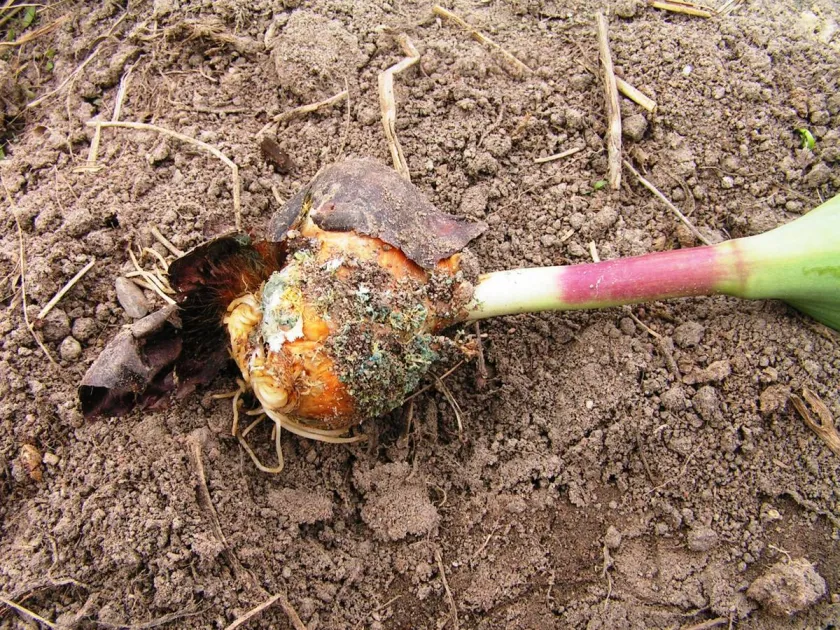
Early symptoms include yellowing and spotting on the leaves, which eventually turn brown. A gray or olive-colored fungal growth, known as sporulation, often appears on the affected leaf areas.
When inspecting bulbs, they appear soft and may show sunken brown lesions. Over time, the internal tissue of the bulb becomes decayed and loses its firm texture.
The most distinctive diagnostic sign is the presence of black sclerotia, which form under the bulb scales, on the basal plate, or on the surface of the bulb. This distinguishes the disease from other rots like fusarium.
Under high-humidity conditions during storage, the entire bulb can become covered in a dense mat of white or gray mycelium. Infected plants in the field often show stunted growth and premature yellowing of leaves.
Root systems are also severely affected, showing signs of decay and poor development, which leads to the overall weakening and eventual collapse of the entire plant.
Pathogen
The disease is caused by the fungus Sclerotinia narcissicola (syn. Botryotinia narcissicola). This pathogen belongs to the class of ascomycetes and is a significant threat to various bulbous plants, especially daffodils.
The fungus survives in the soil and on plant debris as small, black, hard resting bodies called sclerotia. These structures are highly resistant and can remain viable in the environment for several years.
During spring, if conditions are favorable, these sclerotia germinate to produce apothecia (fruiting bodies). These structures release spores that are carried by wind currents to infect the foliage of the plants.
The fungal mycelium can penetrate deep into the bulb tissues, gradually breaking down the cellular structure. The pathogen is highly persistent, making it difficult to eradicate once a field is contaminated.
The life cycle of the pathogen is closely tied to agricultural practices, including planting density, drainage quality, and the storage conditions of the bulbs after harvest.
Conditions for development
Cool and moist conditions during the spring season are ideal for the development of Sclerotinia. The fungus thrives at temperatures ranging from +10°C to +15°C.
High soil moisture promotes the germination of sclerotia. Waterlogged fields or poor drainage significantly increase the risk of primary infection by allowing the spores to reach the bulbs easily.
Post-harvest storage conditions are critical. High humidity and lack of ventilation in storage facilities trigger the rapid spread of the fungus among healthy bulbs.
Dense planting patterns reduce air circulation between plants, creating a humid microclimate that is perfect for the pathogen to spread from plant to plant.
Mechanical injuries caused during harvesting or by soil pests like bulb flies or nematodes create entry points for the fungal infection to invade the bulb tissue.
Why it matters
Narcissus Sclerotinia is a destructive disease that can lead to losses of 30-50% of the bulb stock if left unmanaged. It drastically reduces both yield and the quality of the bulbs.
Plants affected by this fungus often fail to produce flower stalks or yield low-quality blooms, which causes significant financial losses for commercial flower growers.
The pathogen is highly persistent in the soil, rendering fields unsuitable for bulb cultivation for several years after the initial infection. This necessitates long-term crop rotation strategies.
Significant economic loss also occurs during the winter storage period, where entire batches of bulbs may need to be discarded due to rot. This demands costly sanitization protocols.
Persistent infestation leads to the degradation of bulb health and variety quality over time, eventually causing the plants to lose their ornamental value completely.
Protection
The most effective strategy is the implementation of a long-term crop rotation cycle. It is recommended not to plant daffodils in the same area for at least 4-5 years after infection.
Rigorous culling of infected bulbs is essential during harvest and storage. Any bulb showing signs of rot must be immediately removed and destroyed to prevent the spread of spores.
Pre-planting treatment with specialized fungicides is recommended to protect healthy bulbs. Soil disinfection can also be effective in reducing the pressure of sclerotia in the ground.
Ensuring proper soil drainage and aeration helps mitigate the favorable conditions for the fungus. Controlling soil pests helps minimize the wounding of bulbs.
- Maintain proper temperature and ventilation during storage.
- Use certified disease-free planting material.
- Deep tillage to bury and decompose sclerotia.
- Regular cleaning of agricultural tools.
- Use of copper-based or systemic fungicides.
Discussion
No discussions yet — be the first.