
Scleroderma fungi
Sclerodermatales
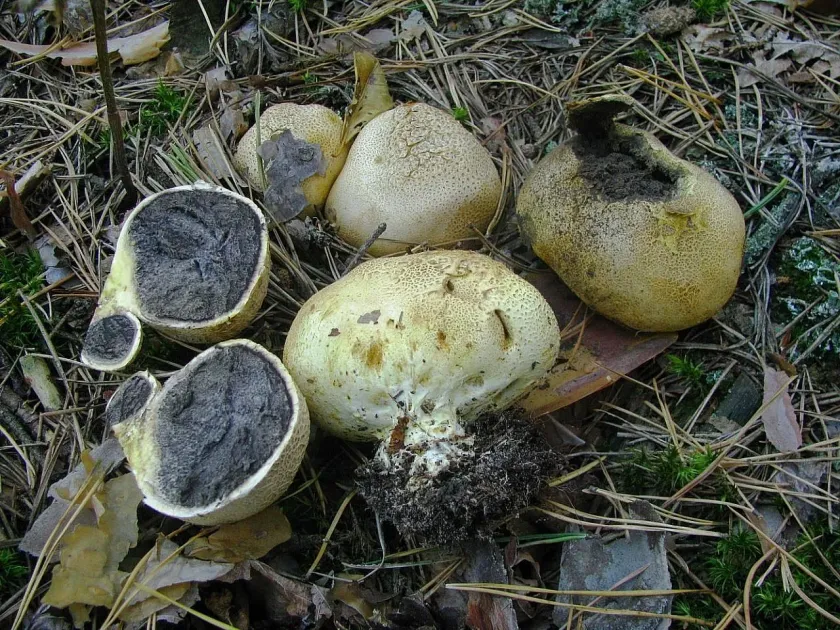
Description
Symptoms
The most distinctive sign of a Scleroderma presence is the appearance of thick-skinned, rounded fruiting bodies on the soil surface, often clustered around tree bases.
Host plants typically show signs of decline, such as yellowing of leaves (chlorosis), thinning of the canopy, and a reduction in annual growth rates.
Inspection of the root system often reveals necrosis and a reduction in the density of fine feeder roots, which are essential for nutrient uptake.
In advanced cases, the bark at the root collar may show signs of decay or cracking, and the soil near the roots may feel compacted or covered with white fungal threads.
- Presence of bulbous, tough fruiting bodies.
- Progressive leaf yellowing and crown dieback.
- Visible decay of root tissue and root collar necrosis.
Pathogen
Scleroderma fungi belong to the order Sclerodermatales. While many are mycorrhizal, certain species can behave as pathogens, particularly in nurseries and plantations where conditions favor their proliferation.
The primary source of infection is the production of basidiospores within hard, truffle-like fruiting bodies. These fruiting bodies often emerge from the soil near the base of woody plants.
Once established, the mycelium spreads through the soil, colonizing the rhizosphere and attaching to host roots. This process disrupts the plant’s ability to absorb essential nutrients and moisture.
The disease is characterized as a root-level infection. The pathogen exploits the weakened state of trees or shrubs, especially when the root environment lacks beneficial antagonistic microbes.
The biological cycle is highly dependent on humidity, as moisture is essential for the dispersal of spores and the survival of the mycelial network in the soil.
Conditions for development
Scleroderma fungi thrive in environments characterized by high soil moisture, poor drainage, and moderate temperatures typical of temperate climates.
Disturbed soil, such as that found in construction sites, nurseries, or recently cultivated areas, provides the perfect environment for the rapid colonization of these fungi.
Overcrowded plantations with poor air circulation around the base of trees promote humidity levels that favor spore germination and mycelial spread.
Mechanical injuries to the root system, caused by soil tillage or pests, provide entry points for the fungal mycelium to invade healthy root tissues.
Low-nutrient soils or those with improper pH levels can weaken plant immunity, making them more susceptible to colonization by Scleroderma species.
Why it matters
The primary harm caused by these fungi is the significant reduction in the root system's efficiency, leading to nutrient deficiencies and water stress in the host plant.
In nurseries, an infestation can lead to stunted plant development and mortality, resulting in substantial financial losses for growers.
By weakening the tree, the infection invites secondary attacks from wood-boring insects and other opportunistic pathogens, creating a compounded disease pressure.
Large-scale infestations in forests or parks can significantly degrade the health and aesthetic value of the vegetation, often requiring extensive intervention.
The persistence of spores in the soil makes long-term management difficult, as the pathogen remains ready to re-infect new plantings in the same site.
Protection
Effective management begins with improving soil drainage and ensuring that the base of the plant remains dry and free of decaying organic matter.
Physical removal and destruction of fruiting bodies before they mature and release spores is a crucial sanitation step to curb the spread of the infection.
Application of fungicides, specifically those formulated for soil drenching, can help suppress the fungal population in the rhizosphere.
Enhancing plant vigor through balanced fertilization helps trees and shrubs develop stronger root systems that are more resistant to fungal invasion.
Strict inspection of new planting stock is vital to prevent the introduction of contaminated soil or infected root systems into clean areas.
Discussion
No discussions yet — be the first.