
Schizophyllum rot
Schizophyllales
Description
Symptoms
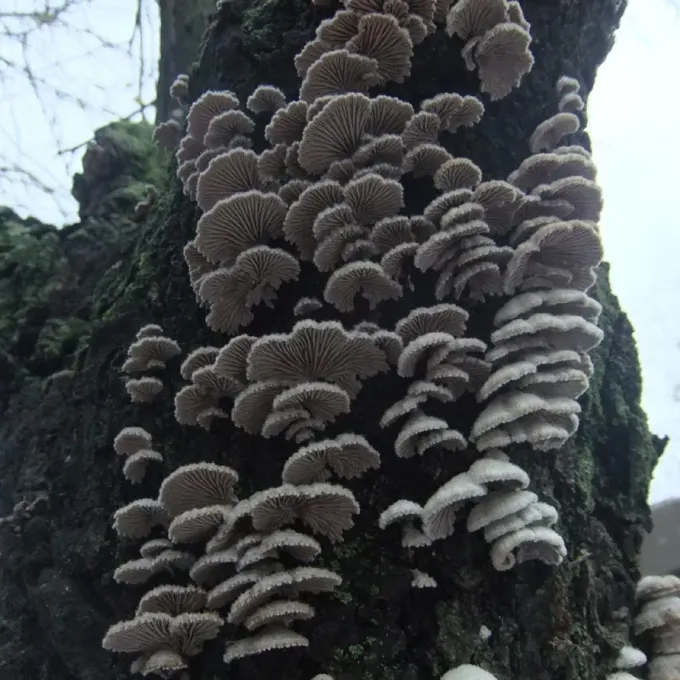
The primary symptom is the emergence of distinct, fan-shaped fruiting bodies directly from the bark or wood surface.
These fruiting bodies are typically greyish-white and possess the unique diagnostic feature of split gills underneath the cap.
Infected wood exhibits advanced white rot, becoming light-colored, brittle, and significantly lighter in density over time.
Cracks in the bark, areas of necrosis, and structural instability of the trunk are common signs of internal infection.
Visible mycelial mats may sometimes be found under the peeling bark of highly infected trees.
Pathogen
The disease is caused by the wood-decaying fungus Schizophyllum commune, which belongs to the order Schizophyllales.
This fungus acts as a necrotrophic parasite, colonizing weakened or dying woody tissues of trees and shrubs.
Its mycelium secretes powerful enzymes capable of degrading complex lignocellulosic materials within the host tree.
Schizophyllum commune is noted for its extreme resilience, capable of surviving in dormant states during long periods of drought.
The fungus propagates through the massive production of basidiospores, which are dispersed efficiently by wind currents.
Conditions for development
Infection usually occurs through wounds, including pruning cuts, sunscald, frost cracks, or mechanical damage.
High relative humidity is essential for the germination of spores and the subsequent colonization of the host's interior.
Trees under physiological stress, such as those suffering from poor soil conditions or drought, are highly susceptible.
The fungus thrives in moderate to warm temperatures, with growth typically accelerating between 20°C and 30°C.
Overcrowded plantations with poor aeration are particularly conducive to the rapid spread of the pathogen.
Why it matters
The disease leads to the rapid development of white rot, which destroys the structural integrity of the woody tissue.
This decay increases the risk of structural failure, making trees prone to snapping during high winds or heavy snow loads.
Continuous infection eventually causes premature senescence and the total death of the host tree.
The fungus acts as a significant economic pest in orchards, compromising the health and longevity of fruit-bearing trees.
In forest ecosystems, it contributes to the thinning of stands by attacking trees already compromised by other stressors.
Protection
Sanitation is the most critical management strategy, requiring the removal and destruction of all infested wood.
All pruning should be performed using clean, sanitized tools to prevent the accidental transfer of fungal spores.
Wounds and pruning cuts should be protected with appropriate wound sealants to prevent the entry of airborne spores.
Maintaining tree vigor through proper fertilization, irrigation, and care is the best preventative measure against infection.
- Remove and burn infected plant debris.
- Sanitize tools with isopropyl alcohol.
- Ensure adequate spacing between trees to improve air circulation.
Discussion
No discussions yet — be the first.