
Sarea resinae
Sarea resinae
Description
Symptoms
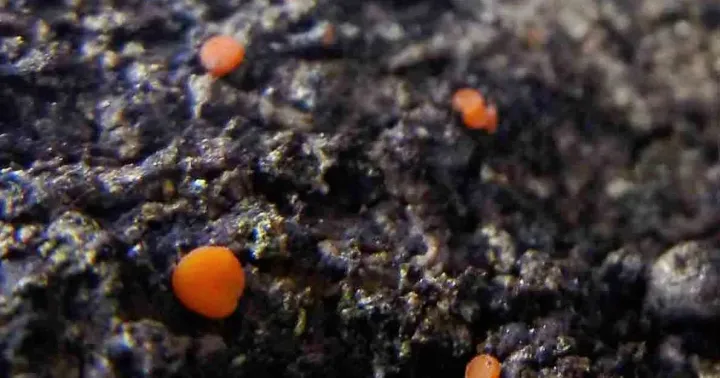
The most distinctive sign of Sarea resinae is the appearance of bright, small apothecia clustered on hardened droplets of conifer resin.
These fruiting bodies appear as minute, vibrant discs or cups, which are often grouped together in large numbers on the resin surface.
The colonized resin often loses its transparency or natural luster, becoming coated with the fungal structures.
Observers may notice clusters of these orange bodies on wounds, frost cracks, or areas previously attacked by bark beetles.
In cases of heavy colonization, the entire resinous accumulation might appear powdery or textured due to the dense fungal growth.
Pathogen
The fungus Sarea resinae (also known as Retinocyclus resinae) is a member of the Ascomycota division. It is a specialized mycophilous organism.
This fungus is not a typical plant pathogen but rather a saprotroph that exclusively thrives on resinous secretions of coniferous trees.
The fungus produces small, cup-shaped fruiting bodies known as apothecia, which are typically orange or yellowish in color.
Spore dispersal occurs primarily through the air, allowing the fungus to colonize new resin deposits on nearby healthy or stressed trees.
As a specific inhabitant of resin, the presence of this fungus is closely tied to the physiological state of the host and the availability of resinous substrates.
Conditions for development
Development is entirely dependent on the presence of abundant resin flow, which is typically triggered by external stressors on the host tree.
High humidity and mild temperatures are ideal for the development and maturation of the fungal fruiting bodies.
Mechanical damage to the bark, as well as damage from wood-boring insects, creates the necessary environment for the fungus to establish.
The fungus is most commonly found in forest stands where trees are weakened by drought, disease, or pest infestations.
It thrives in moist microclimates, often colonizing resin on branches or trunks where shade and humidity are maintained.
Why it matters
Sarea resinae is generally considered a secondary colonizer and does not directly cause the death of the host tree.
However, by colonizing the resin, it may interfere with the tree's natural healing processes and reduce the effectiveness of resin as a physical barrier.
The presence of the fungus often indicates underlying issues, such as bark beetle activity or stress, which are far more detrimental to tree health.
In ornamental forestry, the presence of the fungus is considered a negative aesthetic factor due to the disfigurement of the tree's bark.
Regular monitoring is advised because the fungus serves as a bioindicator of impaired resin production or chronic tree stress.
Protection
Direct chemical control for Sarea resinae is rarely implemented as it is not a primary threat to tree survival.
The best management strategy focuses on maintaining the vigor of the forest stand to minimize the stress that leads to excessive resin flow.
Silvicultural practices, including the removal of infested or damaged trees, can significantly reduce the potential for fungal spread.
Protecting trees from bark beetles and minimizing mechanical injury to the trunks are essential preventive measures.
- Sanitation logging of diseased trees.
- Enhancement of tree vitality through site-specific management.
- Prevention of physical bark injuries.
Discussion
No discussions yet — be the first.