
Description
Symptoms
The characteristic symptom is the shortening of internodes, which causes leaves to bunch together into tight, rosette-like clusters at the shoot tips.
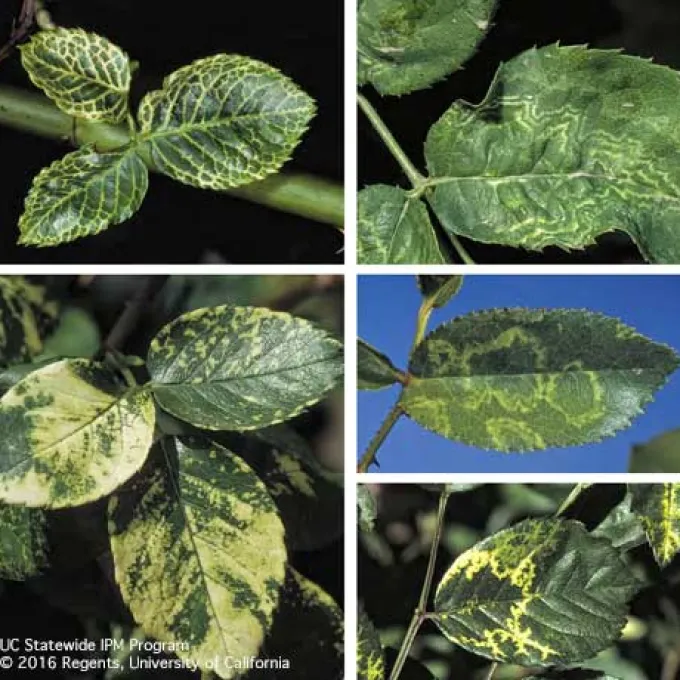
Leaves often display mosaic patterns, mottling, or chlorosis, and in severe cases, they may become distorted and drop prematurely.
During the spring, infected trees exhibit delayed bud break and poor blossoming, often resulting in misshapen or poorly developed flowers.
Fruits produced by diseased trees are frequently small, deformed, and show discoloration, rendering them unfit for commercial harvest.
Over time, the tree shows general decline, characterized by dieback of branches, stunted growth, and eventual death of the entire tree.
Pathogen
Peach rosette mosaic is a viral disease caused by the Peach rosette mosaic virus (PRMV), which is a member of the Nepovirus genus.
The virus is a systemic pathogen that affects stone fruits, significantly impacting their physiological processes and overall vigor.
It is not mechanically transmitted under field conditions, requiring specific nematode vectors to move from infected to healthy plants.
The pathogen thrives within the vascular system, effectively colonizing both the rootstock and the scion components of the fruit tree.
Wild stone fruit species often act as asymptomatic reservoirs, maintaining the viral presence in the surrounding environment.
Conditions for development
The primary mode of transmission is through soil-inhabiting dagger nematodes of the genus Xiphinema, which transmit the virus while feeding on roots.
Transmission also occurs through human activities, specifically the propagation and distribution of infected budding wood or nursery stock.
The presence of favorable soil conditions, such as adequate moisture and appropriate soil structure, supports nematode activity and viral spread.
The virus spreads slowly but steadily through the soil as nematodes move between tree roots, creating localized zones of infection.
Lack of rigorous quarantine protocols when introducing new plant material into orchards is the main driver of long-distance disease transmission.
Why it matters
The disease causes significant economic loss by drastically reducing fruit yields and damaging the marketability of the produce.
Infected orchards experience progressive tree death, leading to a loss of capital investment and potential site abandonment.
The weakened state of the trees makes them highly susceptible to secondary pathogens and environmental stressors like winter frost.
Since there are no curative measures for infected trees, the disease forces total removal of orchards, incurring substantial costs.
The persistence of the virus in the soil remains a long-term risk for any future replanting of stone fruit species in the same area.
Protection
The most effective strategy is the use of certified, virus-free nursery stock to prevent the initial introduction of the disease.
Rigorous monitoring and immediate rogueing of any infected trees, including the removal of roots, are essential to contain the spread.
Soil management, including the use of nematicides or fallow periods, can help reduce the population of vector nematodes before replanting.
Strict adherence to quarantine and nursery certification standards is vital to safeguard orchards from the entry of the virus.
- Site preparation including vector control.
- Regular inspections of orchard health.
- Avoidance of infected scion sources.
Pathogens and affected parts
Affects crops · 1
Discussion
No discussions yet — be the first.