
Description
Symptoms
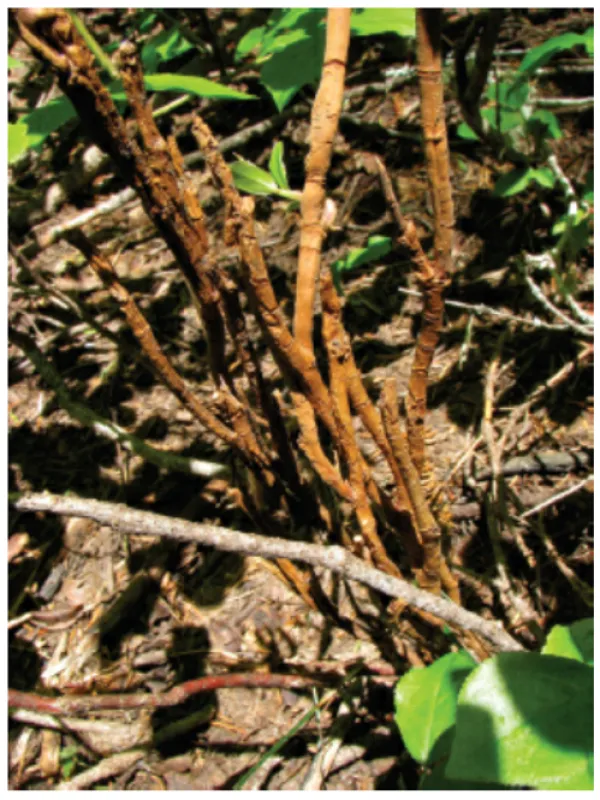
The primary host for this fungus is the American cranberry (Vaccinium macrocarpon). The disease manifests on stems, leaves, and berries, significantly impacting the quality of the harvested produce.
Initial signs include small, brown, or dark-colored spots on the leaves. As the disease progresses, these spots expand and coalesce, leading to withered leaves and dying branches.
A characteristic symptom is the formation of small, black, pinhead-sized dots on the infected areas, known as pycnidia. These are visible to the naked eye and are a clear indicator of active fungal reproduction.
When berries are infected, they lose their firmness, darken, and often drop prematurely. The presence of fungal mycelium inside the berry makes it unsuitable for storage or processing.
Shoot infections result in dieback, usually starting from the tips. If left unmanaged, this can severely impact the vigor of the entire shrub, leading to significant yield loss.
Pathogen
The disease is caused by the pathogenic fungus Coleophoma empetri, which belongs to the Deuteromycetes group. This fungus is known for its ability to attack vegetative organs, causing necrotic spots and tissue decay in plants.
The lifecycle of the pathogen is closely linked to plant debris, where the fungus overwinters and survives for extended periods. It acts as a facultative parasite, activating once the plant's natural defenses are compromised.
The fungus produces pycnidia, which are specialized fruiting bodies that release conidia (spores). These conidia are the primary mode of transmission, allowing the fungus to spread across fields under favorable conditions.
Infection typically begins at sites of mechanical injury or weakened tissue. The fungal mycelium penetrates the epidermis and spreads internally, breaking down cell structures and consuming plant nutrients.
A biological feature of Coleophoma empetri is its resilience across various climatic conditions. It is particularly well-adapted to the environments where large-scale cranberry cultivation takes place.
Conditions for development
High humidity and moisture are the most critical factors for the development of Coleophoma leaf spot. Rainfall, dew, and stagnant water create the perfect environment for spore germination.
Moderate temperatures during spring and autumn provide the optimal range for the fungus to spread. During these periods, the pathogen can quickly colonize healthy tissue if conditions remain damp.
Dense, poorly managed plantings exacerbate the issue by restricting airflow. Lack of ventilation prevents the foliage from drying out quickly after rain, which encourages fungal colonization.
Shaded or poorly ventilated areas weaken the plant's immune system, making it more susceptible to infection. In these low-light conditions, the fungus can thrive with little resistance from the host.
Excessive nitrogen fertilization leads to succulent, rapid growth with thin epidermal layers. Such tissue is more vulnerable to mechanical penetration by the fungus compared to stronger, well-hardened shoots.
Why it matters
The primary economic impact of Coleophoma leaf spot is a substantial decrease in cranberry yield. Infected plants exhibit reduced growth, which can lead to the deterioration of entire field sections.
Infected berries rapidly lose quality and become a source of decay in storage. This makes sorting extremely difficult and can lead to the loss of entire batches of harvested fruit.
Impaired photosynthesis due to leaf damage weakens the plant's overall energy stores in the rhizome. This leads to poor winter survival and reduced vigor during the subsequent growing season.
Financial losses occur due to the need for repeated fungicide applications, increased labor costs for sanitation, and lower market prices for lower-quality berries.
Without adequate control measures, infection rates can become severe, significantly threatening the long-term profitability of the cranberry plantation.
Protection
Management starts with rigorous sanitation practices. Removing and destroying all infected plant debris, twigs, and fallen berries is essential to break the pathogen's lifecycle.
Maintaining proper planting density is crucial to ensure good air circulation. Improved airflow helps keep foliage dry, directly inhibiting the growth of Coleophoma empetri.
Chemical control involving fungicides, particularly copper-based products, is effective during high-risk periods. Strategic applications help suppress spore levels before they cause major damage.
Balanced fertilization, focusing on potassium and phosphorus, helps reinforce cell walls, making the plants more resilient to fungal attacks and improving overall plant health.
- Regular field monitoring for early detection of necrotic spots.
- Use of certified pathogen-free planting stock.
- Effective field drainage to prevent water accumulation.
- Scheduled prophylactic fungicide applications during critical growth stages.
Pathogens and affected parts
Affects crops · 1
Discussion
No discussions yet — be the first.