
Crown gall
Rhizopoda
Description
Symptoms
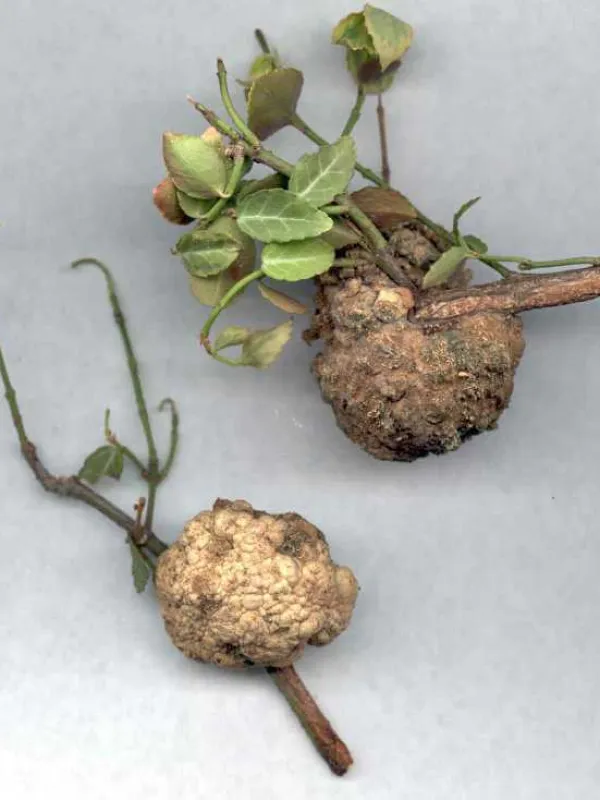
The hallmark symptom of crown gall is the formation of fleshy, abnormal swellings or galls on the roots or the crown of the plant. These growths often emerge where the stem meets the soil line.
Young galls are typically light-colored, smooth, and relatively soft to the touch. As they grow and age, they become darker, hard, and develop a woody, convoluted, or bumpy surface texture.
Infected plants frequently show signs of stunted growth and general lack of vigor. The disruption of the vascular system prevents efficient transport of water and essential nutrients from the roots to the canopy.
During the growing season, leaves may appear chlorotic or exhibit symptoms of nutrient deficiency even when soil fertility is high. This occurs because the root system's function has been critically compromised.
Severely galled roots are prone to secondary infections by saprophytic fungi and bacteria. This often results in the rotting of the gall tissue, which can eventually lead to the collapse and death of the plant.
Pathogen
The causative agent of crown gall is the soil-borne bacterium Agrobacterium tumefaciens. This pathogen is unique because it is capable of transferring a segment of its DNA into the plant cell nucleus.
Once the bacterial DNA is integrated, the plant's cells are reprogrammed to produce plant hormones and specific nutrients known as opines. This leads to the uncontrolled cell division that characterizes the disease.
The pathogen thrives in the soil and can persist for years in the absence of a host, making it a difficult disease to eradicate once established in a nursery or orchard environment.
Infection primarily occurs through wounds in the plant tissue. These wounds are typically caused by nursery handling, pruning, or the feeding activities of soil-dwelling pests like nematodes and beetles.
The bacteria have an exceptionally broad host range, including many fruit trees, ornamental shrubs, and several herbaceous species, which complicates effective crop rotation strategies.
Conditions for development
The development of crown gall is significantly influenced by soil pH, with neutral to alkaline soils being most conducive to the survival and infection processes of the bacteria.
Warm and moist soil conditions are ideal for bacterial mobility and infection. The bacteria use chemotaxis to move through soil water towards wounded plant tissues, making high humidity a risk factor.
Intensive cultural practices that involve frequent wounding of the roots or stem bases significantly increase the likelihood of infection. Using contaminated pruning tools is a common pathway for spread.
Infestations of soil insects or nematodes increase the rate of infection, as their feeding creates consistent, small wounds on the root system that are perfectly sized for bacterial entry.
Continuous cropping of susceptible species in the same location leads to a build-up of the bacterial population in the soil, eventually making the area unsuitable for nurseries.
Why it matters
Crown gall causes severe economic losses by reducing the quality and marketability of nursery stock. Infected plants are generally culled, resulting in total loss of investment for those specific units.
The disease undermines the long-term productivity of fruit orchards. Affected trees may survive for years but remain unproductive, with smaller fruit sizes and lower overall yields compared to healthy counterparts.
Increased susceptibility to environmental stress is a major hidden cost. Plants with root galls are much less likely to survive extreme heat or cold events than healthy, structurally sound trees.
Once a field is infested with Agrobacterium tumefaciens, it remains a long-term liability. Replanting susceptible varieties often results in immediate re-infection of the new stock.
The structural integrity of the root system is weakened by the presence of large galls. This makes the affected plants more susceptible to wind damage or uprooting during storms as the root architecture fails.
Protection
The most effective strategy is the rigorous selection of pathogen-free, certified nursery stock. Inspecting every plant for suspicious growths prior to planting is a mandatory first step.
Biological control agents, such as specific strains of Agrobacterium radiobacter, can be applied to nursery stock to prevent infection by outcompeting the pathogenic strains for the wound sites.
Sanitation is critical; all pruning equipment must be disinfected regularly. Avoiding mechanical damage during cultivation near the base of the trees will significantly reduce the number of potential infection sites.
Managing soil pests, especially nematodes, is essential, as they create the micro-wounds through which the bacteria enter. Integrated Pest Management (IPM) practices are highly recommended.
If infection is detected, affected plants should be removed and destroyed immediately. Avoid planting susceptible species in infested soil for several years and consider using soil-acidifying practices if the pH is high.
Discussion
No discussions yet — be the first.