
Description
Symptoms
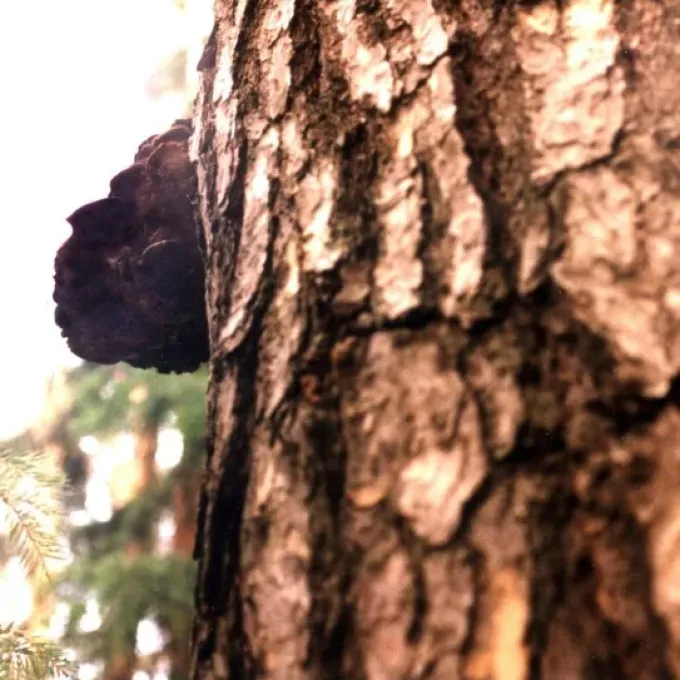
The most visible sign of an advanced infection is the presence of hard, hoof-shaped fruiting bodies (conks) on the trunk. They are typically found near branch stubs or scars.
The exterior of the fruiting body is dark brown or black with rough, cracked surfaces. The underside features a golden-brown pore layer, which is where spores are released.
Internally, the wood displays a distinct red-brown coloration in the early stages of decay. As the disease progresses, white pockets of fungal mycelium appear within the rotted tissue.
Trees affected by red rot may show crown thinning or chlorosis as the root and water transport systems become increasingly compromised due to the lack of structural vitality.
In the final stages, the trunk becomes hollow at the center, making the tree highly susceptible to wind-snap or breakage during severe weather conditions.
Pathogen
The disease is caused by the fungus Phellinus pini, a destructive pathogen that attacks the heartwood of living conifer trees. It is a perennial basidiomycete fungus.
The fungus infiltrates the tree through wounds or broken branches, establishing its mycelium in the central part of the stem. It secretes enzymes that break down lignin and cellulose.
This process results in a characteristic red-brown rot within the trunk. Over time, the fungus effectively hollows out the heartwood, compromising the structural integrity of the tree.
Phellinus pini is a major pathogen of various species, including pine, spruce, cedar, and Douglas fir (largetsuga). Older trees with existing mechanical injuries are the primary targets.
The fungal life cycle involves the formation of woody, perennial conks (fruiting bodies) that release spores into the air, facilitating the spread of the infection to other susceptible trees.
Conditions for development
High levels of humidity and warm temperatures promote the growth and spore release of Phellinus pini. The fungus is most common in mature, unmanaged forest stands.
Mechanical damage to the bark, whether caused by animals, weather, or human activity, provides entry points for airborne spores. Pruning wounds that are not treated are also high-risk areas.
Dense forest stands increase the likelihood of transmission from tree to tree. Poor forest hygiene, characterized by a lack of thinning, allows the pathogen to persist.
The disease progresses very slowly, often remaining undetected for years while the fungus gradually colonizes the heartwood. Consequently, by the time conks appear, the tree is usually significantly decayed.
Site conditions such as poor soil health or environmental stress can further weaken trees, making them more vulnerable to initial colonization by the pathogen.
Why it matters
Pine red rot causes severe economic losses by devaluing the timber. Heavily decayed logs are useless for structural construction purposes, significantly reducing their market value.
The disease leads to tree mortality and destabilizes forest ecosystems. Large trees can fall unexpectedly, causing damage to the surrounding understory and other trees.
Forest stands infected with Phellinus pini act as a source of spores, threatening neighboring healthy trees and making forest regeneration a complex and costly task.
The presence of heart rot encourages secondary infestations by wood-boring insects, further weakening the tree and accelerating its collapse.
In the case of Douglas fir and other commercial species, the disease limits the usable timber volume and necessitates intensive management and salvage logging.
Protection
The primary control measure is the systematic removal of infected trees through sanitation harvesting. Eliminating sources of spores is critical for preventing the spread to healthy individuals.
Proper forest management, including minimizing mechanical wounding during harvesting or thinning, is essential to keep trees healthy and capable of resisting infection.
Cleaning up windthrown wood and storm-damaged timber helps prevent the build-up of the fungal inoculum in the forest environment.
When working in forest stands, ensure that pruning is done correctly and during seasons when spore activity is minimal to reduce the risk of open wounds becoming infected.
Long-term strategies include promoting diverse tree species composition, which can help break the cycle of host-specific fungal spread across large areas.
Pathogens and affected parts
Affects crops · 1
Discussion
No discussions yet — be the first.