
Description
Symptoms
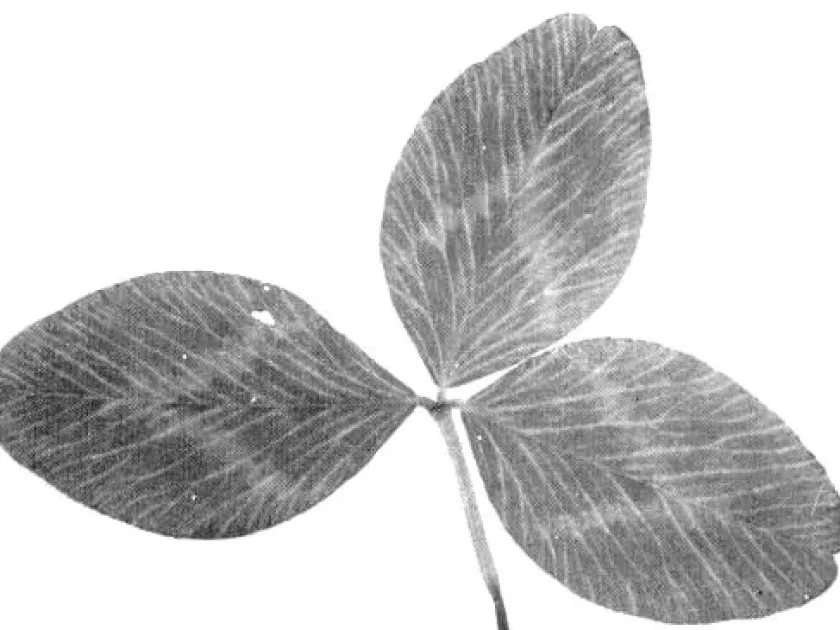
The hallmark symptom is the clearing or yellowing of leaf veins, which eventually develops into a distinct vein-banding pattern.
Leaves often exhibit chlorosis, curling, and crinkling, which are signs of systemic infection throughout the plant tissues.
Infected red clover and alfalfa plants typically display stunted growth, leading to a reduced overall biomass compared to healthy stands.
In some cases, necrosis of leaf tissues may occur, particularly if the plant is under additional environmental stress.
Internodes of affected plants may shorten, giving the foliage a bushy or rosetted appearance that is easily recognizable.
Pathogen
The disease is caused by the Red clover vein mosaic virus (RCVMV), which is classified within the Carlavirus genus.
This virus has a significant impact on legume production globally, infecting both forage crops and several wild legume species.
The virus particles are flexuous, filamentous rods that contain a positive-sense single-stranded RNA genome.
Transmission occurs primarily through aphid vectors in a non-persistent manner, meaning they can acquire and spread it rapidly.
The virus can also be transmitted mechanically, facilitating its spread during harvesting or trampling activities in the fields.
Conditions for development
The spread of the disease is closely linked to the population dynamics of aphid vectors, which prefer temperate and humid conditions.
Infection levels are typically higher in established perennial stands, where the virus acts as a persistent systemic pathogen.
Warm spring and autumn weather provides the ideal environment for both vector migration and rapid viral replication in legume hosts.
Proximity to previously infected clover or alfalfa fields increases the inoculum load, facilitating the spread of the virus to new crops.
Weedy host plants surrounding the fields serve as reservoirs, ensuring that the virus survives even when primary crops are harvested.
Why it matters
The virus significantly reduces the photosynthetic efficiency of the crop, leading to substantial yield losses in forage production.
Quality degradation is a major concern, as infected plants show lower protein content and reduced overall nutritional value for livestock.
Chronic infection lowers the cold tolerance of perennials, often resulting in increased plant mortality during winter months.
The cumulative effect of the disease leads to thinning stands, which necessitates costly replanting and soil management interventions.
Economic damage is further exacerbated by the need for increased pest management to control the aphids that transmit the virus.
Protection
Implementing a robust Integrated Pest Management (IPM) program focused on controlling aphid populations is essential to reduce spread.
Selecting and breeding for virus-resistant cultivars is the most effective long-term strategy for minimizing disease impact.
Maintaining adequate spatial distance between new seedings and established, older legume stands helps prevent rapid disease transmission.
Sanitation practices, including the removal of infected host weeds and debris, can significantly lower the primary inoculum pressure.
- Use of virus-resistant seed varieties.
- Effective aphid vector control.
- Proper crop rotation practices.
- Regular field monitoring for symptoms.
Pathogens and affected parts
Affects crops · 2
Discussion
No discussions yet — be the first.