
Description
Symptoms
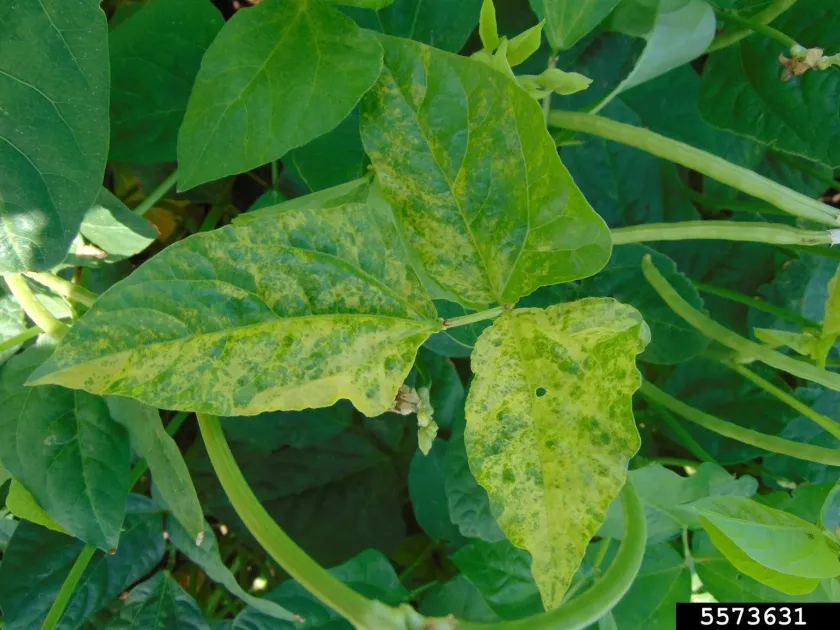
The most distinctive symptom is the development of a mosaic pattern on leaves, consisting of alternating light green and dark green patches of varied sizes.
Infected leaves often show severe distortion, crinkling, and a general reduction in surface area, which is characteristic of systemic viral damage.
Stunted plant growth is a common sign, leading to smaller, less vigorous plants that produce fewer branches and have significantly reduced vegetative mass.
During the reproductive phase, the infection causes flower abortion and the development of deformed, stunted pods with fewer seeds than healthy plants.
Chlorosis and leaf yellowing can also occur as the disease progresses, eventually leading to premature senescence and leaf drop in heavily infected fields.
Pathogen
The disease is caused by the Cowpea mosaic virus (CPMV), a plant pathogenic virus belonging to the Comoviridae family and the Comovirus genus.
The virus is characterized by isometric particles and possesses a significant ability to persist in plant debris and seeds, serving as a primary source of inoculum.
Transmission occurs through mechanical inoculation during cultivation practices or via insect vectors, primarily beetles and aphids, which facilitate the rapid spread within fields.
Once inside the host, the virus replicates in the cytoplasm, interfering with cellular machinery and causing systemic infection throughout the plant tissues.
The biological stability of the pathogen allows it to survive in various conditions, making it a persistent challenge for commercial legume production.
Conditions for development
Outbreaks of Cowpea mosaic are most severe under warm, humid conditions which promote the activity and reproduction of insect vectors like beetles.
High-density planting creates a favorable microenvironment for the rapid mechanical transmission of the virus through physical contact between infected and healthy leaves.
The presence of wild legume weeds acts as a reservoir for the virus during the off-season, providing a bridge for reinfection of crop fields each year.
Environmental stress factors, including drought or nutrient deficiencies, weaken plant immunity and increase the susceptibility of soybeans to viral colonization.
Poor crop rotation practices result in the build-up of the pathogen in the soil and on crop residues, ensuring a high level of initial infection in subsequent cycles.
Why it matters
Cowpea mosaic causes substantial economic losses in soybean cultivation, with yield reductions ranging from 20% to 40% depending on the infection timing.
Viral infection directly impacts the photosynthetic capacity of the plant, leading to lower accumulation of proteins and oils in the soybean grain.
Seeds harvested from infected plants often exhibit poor germination, reduced vigor, and can carry the virus, thus spreading the disease to new planting areas.
The disease weakens the overall fitness of the crop, making it more prone to secondary attacks by fungi, bacteria, and other environmental stressors.
Increased management costs for vector control and the need for seed replacement significantly impact the profitability of legume-based farming systems.
Protection
The most effective strategy is the use of certified, virus-free seeds and the cultivation of resistant or tolerant soybean varieties developed by breeders.
Integrated pest management (IPM) is crucial to suppress populations of insect vectors, thereby reducing the probability of viral transmission within the crop.
Implementing strict crop rotation and isolation of new soybean plantings from old or infected fields helps to minimize the spread of the pathogen.
Proper sanitation, including the destruction of weeds and deep plowing to remove crop residues, significantly reduces the primary inoculum levels in the soil.
- Selection of resistant cultivars.
- Vector management through insecticides.
- Strict field sanitation protocols.
Pathogens and affected parts
Affects crops · 1
Discussion
No discussions yet — be the first.