
Halo blight of oats
Pseudomonas coronafaciens
Description
Symptoms
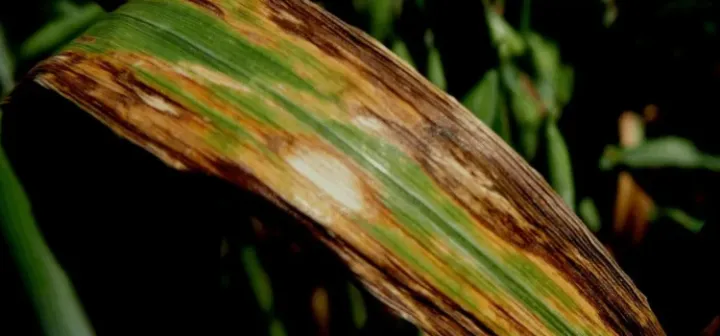
The disease is characterized by the appearance of small, oval-shaped spots on leaves, which typically develop a distinctive yellow halo surrounding a necrotic center.
As the infection progresses, these spots expand, dry out, and turn dark brown, eventually causing the entire leaf tissue to wilt and become brittle.
Under high humidity, a milky or yellowish bacterial exudate may be visible on the surface of the infected lesions, which contains millions of bacterial cells.
In severe infections, the disease can affect the leaf sheaths and panicles, leading to stunted plant growth and the development of shriveled, low-quality grains.
Early-season infections can lead to significant yellowing and browning of the foliage, drastically reducing the overall vigor of the oat crop during critical developmental stages.
Pathogen
The causal agent of halo blight is the gram-negative bacterium Pseudomonas coronafaciens, a motile organism that utilizes flagella to move across leaf surfaces.
This pathogen survives in soil, infected crop debris, and on the surface of seeds, which serves as the primary mechanism for its long-term persistence in agricultural environments.
The bacteria invade plant tissues through natural openings such as stomata or through injuries caused by insects, equipment, or harsh weather conditions.
Upon entry, the bacteria proliferate within the intercellular spaces, secreting toxins that trigger localized cell death and degrade chlorophyll in the surrounding areas.
Pseudomonas coronafaciens is highly adapted to temperate climates and can rapidly colonize oat plants, causing systematic damage if environmental conditions are favorable.
Conditions for development
The development of halo blight is strongly correlated with periods of high moisture, such as frequent rainfall, heavy dew, or prolonged periods of high humidity.
Optimal temperatures for the growth and spread of the pathogen range from 20°C to 25°C, making warm, wet springs particularly conducive to outbreaks.
Wind-driven rain and the movement of agricultural machinery through wet fields are major factors contributing to the rapid dispersal of the pathogen throughout a field.
Excessive nitrogen fertilization can lead to soft, lush plant tissue that is more susceptible to bacterial invasion and rapid colonization by the pathogen.
Poor drainage and low soil quality can stress the plants, weakening their natural defense mechanisms and increasing the probability of severe halo blight infection.
Why it matters
The primary economic impact of halo blight is the reduction in yield due to the loss of photosynthetic leaf area and subsequent grain weight reduction.
Grain harvested from heavily infected fields is often shriveled and lightweight, which diminishes its nutritional value and marketability for food or feed use.
Infection lowers the germination rate of seeds, which compromises the uniformity of the stand in the following growing season and may necessitate replanting.
Severe infestations weaken the plant's structural integrity, potentially leading to lodging and difficulty during the mechanical harvesting process.
In high-pressure years, if untreated, the cumulative effect of the disease can cause significant economic losses across large farming regions.
Protection
The use of disease-free, certified seeds is the first and most important step in preventing the introduction of halo blight into a new field.
Implementing a robust crop rotation strategy, where oats are not grown in the same field for consecutive years, significantly reduces the soil-borne inoculum pressure.
Deep plowing of crop residues is recommended to accelerate decomposition and reduce the survival rate of the bacteria in the soil environment.
Effective management of weeds that can act as alternative hosts helps to limit the movement of the bacteria into healthy oat populations.
- Application of appropriate seed treatments before sowing.
- Balanced nutrient management to promote plant health and disease resistance.
- Avoidance of field operations when foliage is wet to minimize spread.
Discussion
No discussions yet — be the first.