
Prymnesiaceae algae
Prymnesiaceae
Description
Pathogen
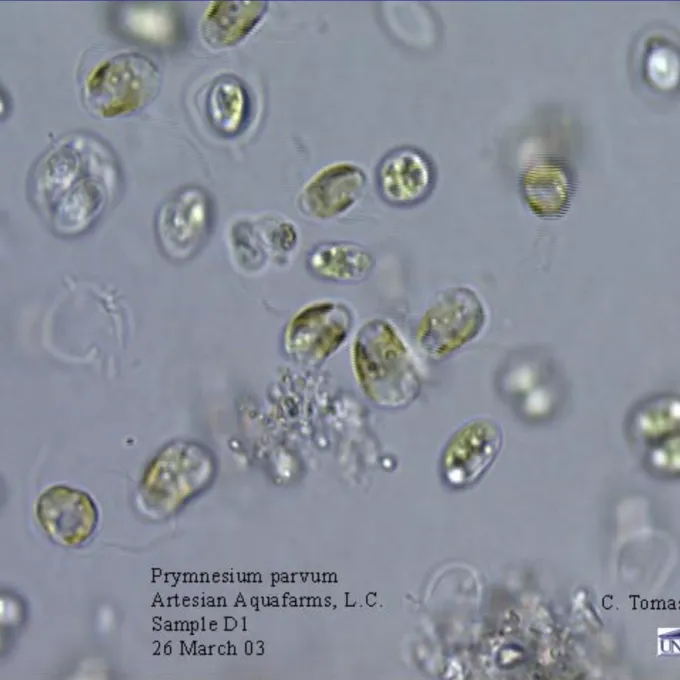
The disease is caused by microscopic flagellate organisms of the family Prymnesiaceae, most notably the species Prymnesium parvum. These haptophyte algae are known for their ability to thrive as mixotrophs under specific conditions.
These organisms are classified as significant aquatic pathogens capable of producing potent exotoxins called prymnesins. These substances have a detrimental effect on plant tissues when they come into contact with the root zone.
In agronomy, these algae are viewed as biological stressors that affect both hydroponic systems and traditional field crops irrigated with contaminated water. They essentially act as systemic toxins that interfere with plant physiology.
Dissemination occurs via motile cells and spores that travel easily through irrigation infrastructure. Their life cycle allows them to adapt to changing environmental conditions, making them persistent threats.
The biological activity of Prymnesiaceae is tightly linked to water chemistry, allowing them to outcompete beneficial microflora in specific agro-ecosystems where balance is compromised.
Conditions for development
The primary driver of development is elevated salinity levels in irrigation water. These algae prefer slightly alkaline environments rich in nitrogenous compounds.
The temperature range for mass blooming is between 15 and 25 degrees Celsius. Adequate light intensity is also a critical factor for rapid biomass accumulation.
Stagnant water in storage reservoirs, especially those lacking aeration, creates an ideal environment for the rapid growth of Prymnesiaceae populations and the accumulation of toxins.
Organic pollutants in irrigation channels act as a substrate that facilitates the growth of these algae, enabling their transition to mixotrophic feeding.
A lack of biodiversity in closed-loop irrigation systems provides a competitive advantage for Prymnesiaceae, allowing them to rapidly dominate the water source during warm seasons.
Why it matters
The primary danger lies in the secretion of potent neurotoxins that enter the rhizosphere during irrigation, causing systemic chlorosis and tissue necrosis in plants.
Infected crops typically show severe stunting of the root system, which prevents the uptake of essential nutrients and moisture, ultimately leading to wilting.
In hydroponic setups, contamination by Prymnesiaceae algae leads to rapid death of root hairs, which effectively terminates the crop's growth cycle and results in total loss.
Toxins from these algae can accumulate in plant tissues, significantly reducing marketability and raising safety concerns regarding the end-product.
Additionally, massive algal blooms deplete dissolved oxygen levels in irrigation water, leading to root suffocation and increasing susceptibility to secondary fungal infections.
Protection
The foundation of effective management is routine monitoring of irrigation water for both salt concentration and the presence of microalgae.
UV-C sterilization systems are highly effective for treating water in storage reservoirs, as they neutralize the algae before the water reaches the crops.
Chemical algicides may be used, provided that the dosages are strictly controlled to prevent phytotoxicity to crops and to avoid disrupting the beneficial soil microbiota.
Installing high-precision filtration systems in irrigation networks is recommended to mechanically remove algal cells before they enter the delivery lines.
Maintaining the integrity of irrigation channels and preventing runoff of fertilizers into water sources is crucial for preventing eutrophication and suppressing algal blooms.
Discussion
No discussions yet — be the first.