
Description
Symptoms
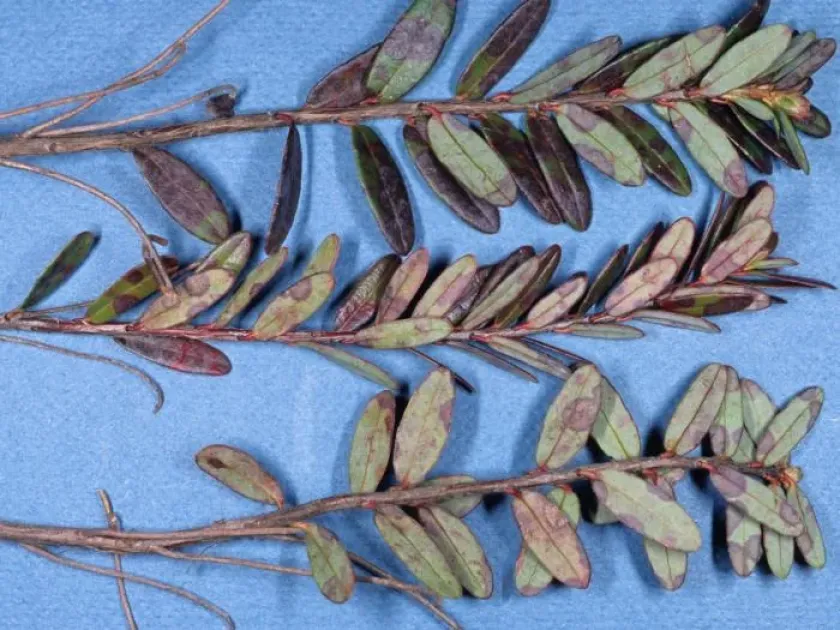
Initial symptoms appear as small brown or grayish spots on the upper side of the leaves. Over time, these necrotic areas increase in size and may coalesce.
An olive-colored or dark fungus layer often forms on the underside of the leaf at the lesion sites, representing the conidial sporulation. This is a key diagnostic marker in the field.
Berries are also susceptible: dark spots appear on their skin, which eventually lead to fruit deformation and premature drop.
Severe foliage damage leads to premature leaf fall, which significantly reduces the plant's photosynthetic capacity. Consequently, bushes lose the vigor required for winter preparation.
Damaged berries lose their commercial quality, becoming unsuitable for storage or processing, which significantly reduces the overall profitability of the cranberry operation.
Pathogen
The causative agent of this disease is the fungus Protoventuria myrtilli, which belongs to the ascomycetes group. The pathogen primarily affects large-fruited cranberry (Vaccinium macrocarpon), spreading to both vegetative and reproductive plant parts.
The fungus's life cycle includes the formation of ascospores, which serve as the primary source of infection in the spring. During the summer, the development is sustained by conidial spore production.
The pathogen overwinters in fallen leaves and plant debris, making them the main reservoir of infection between seasons. Spores are easily disseminated by air currents and raindrops onto healthy shoots.
The fungus exhibits high host specificity, affecting members of the Ericaceae family, which requires special attention during routine plantation monitoring.
The development of the fungus is closely linked to the physiological state of the host plant, with weakened bushes experiencing poor nutrient status being the most vulnerable.
Conditions for development
The active spread of the infection is triggered by high humidity and frequent rainfall during the cranberry's active growing season. Stagnant water on the plantation is the main risk factor.
Optimal temperatures for spore germination are between 15–22 degrees Celsius, often coinciding with the spring and summer vegetative period.
Dense, poorly ventilated plantings promote a microclimate favorable for moisture retention on leaf surfaces, which is critical for fungal hyphae penetration.
Insufficient sunlight exposure on the plot also weakens plant immunity, making them more susceptible to Protoventuria myrtilli attacks.
Poor agricultural practices, such as excessive nitrogen fertilization, induce rapid growth of soft tissues that are more easily penetrated by the pathogen.
Why it matters
The main impact is a sharp reduction in yield due to mass infection of ovaries and berries. Fruits infected by the fungus often rot directly on the bush.
The disease weakens the bushes, making the plantation vulnerable to secondary infections and winter freeze damage due to depleted nutrient reserves.
A reduction in healthy leaf surface area leads to smaller berries of inferior quality, negatively affecting taste and shelf-life.
Economic losses consist of direct yield loss and the cost of additional fungicide treatments during the maturation period.
If left uncontrolled, the disease can spread across the entire plantation, which in severe cases requires the partial or total removal of affected zones.
Protection
The fundamental control method is strict sanitation: regular collection and disposal of plant debris where the fungus overwinters.
Maintaining optimal planting density is recommended to ensure good air circulation and rapid leaf drying after rain or irrigation.
The use of approved preventive fungicides at the beginning of the season helps to prevent primary infection and spore spread.
- Applying copper-based preparations in early spring.
- Regular plantation monitoring during the flowering and berry development stages.
- Timely application of phosphorus-potassium fertilizers to improve tissue resistance.
Balanced nutrition and water table control are essential components of an integrated berry crop protection system.
Pathogens and affected parts
Affects crops · 1
Discussion
No discussions yet — be the first.