
Sorghum mosaic
Potyvirus sorghitessellati
Description
Symptoms
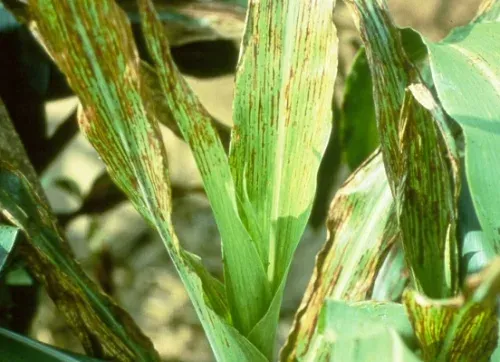
Initial symptoms include the appearance of chlorotic spots and light-colored stripes on the leaves of young sorghum plants.
A distinctive mosaic pattern often develops, characterized by stripes running parallel to the leaf veins, which is highly typical for this potyvirus.
As the disease progresses, necrotic lesions may appear, eventually leading to the yellowing and wilting of affected leaf tissue.
Infected plants show significant stunting and poor development of the inflorescence, often resulting in deformed panicles.
The root system of diseased plants is often poorly developed, which reduces the plant's ability to tolerate drought and absorb essential nutrients.
Pathogen
The causal agent of this disease is the Sorghum mosaic virus (SrMV), which belongs to the genus Potyvirus. It is a filamentous plant virus containing single-stranded RNA.
The virus exhibits high genetic variability, allowing it to adapt to various cultivars and hybrids of sorghum in different agro-climatic zones.
Transmission of the infection typically occurs mechanically through tissue damage or via insect vectors, primarily various species of aphids that feed on host plants.
The virus persists over the winter in the rhizomes of perennial grasses, which serve as the primary reservoir for the infection in the early spring.
Viral replication occurs within the living host cells, where the virus hijacks cellular machinery to produce viral proteins and genomic RNA.
Conditions for development
The spread of the virus within a field is heavily dependent on the activity of aphid populations, which migrate to sorghum crops.
Warm and humid weather conditions favor the rapid reproduction of aphid vectors, significantly increasing the rate of secondary transmission.
The proximity of wild perennial grasses, such as Johnsongrass, creates a continuous source of inoculum, fueling the spread of the virus.
Mechanical injuries to the leaves, caused by high winds or farming operations, create entry points for the virus to enter the plant tissues.
Planting at times when aphid populations are at their seasonal peak often results in a higher incidence of viral infection across the field.
Why it matters
The disease causes a drastic reduction in photosynthetic efficiency, leading to a major loss in biomass and final grain yield.
Infected plants often produce empty or poorly filled panicles, which significantly degrades the quality and quantity of the harvest.
The nutritional value of the crop, whether harvested for grain or silage, is significantly impaired due to the disruption of plant metabolism.
Plants weakened by the virus become more susceptible to secondary infections, such as root and stalk rots, further reducing crop health.
Economic losses arise not only from reduced yields but also from increased costs associated with pest control and the loss of crop quality.
Protection
The most effective strategy for managing Sorghum mosaic is the use of resistant or tolerant sorghum hybrids.
Sanitation measures, including the eradication of perennial weed hosts that serve as virus reservoirs, are critical for disease prevention.
Managing aphid populations with systemic insecticides can effectively reduce the transmission of the virus within the crop.
Implementing proper spatial isolation from other cereal crops can prevent the migration of infected vectors into the sorghum field.
Maintaining optimal soil fertility and crop health can help the plants better tolerate the physiological stress caused by the viral infection.
Discussion
No discussions yet — be the first.