
Tobacco vein mottling virus
Potyvirus nicotianamaculae
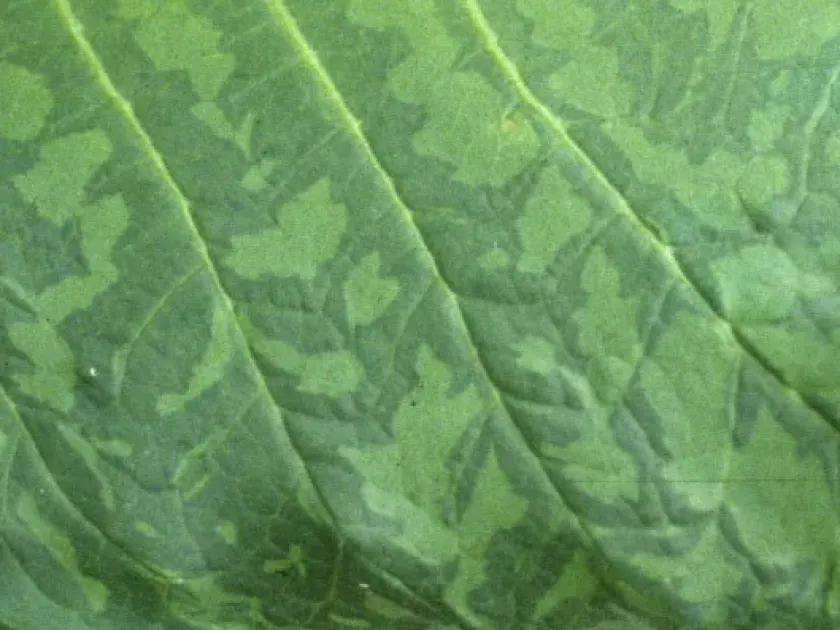
Description
Symptoms
The primary symptom of Tobacco vein mottling virus is the development of distinct mottle patterns, where light and dark green patches appear along the leaf veins.
Infected leaves often exhibit significant deformation, including crinkling, blistering, and an uneven leaf surface that hinders proper photosynthetic development.
Stunting of the entire plant is a common systemic sign, with shortened internodes leading to a compact and unproductive tobacco plant structure.
As the infection advances, necrotic lesions may develop, starting as small spots and potentially merging to cause significant tissue death across the lamina.
The overall vigor of the plant declines, resulting in poor-quality leaves that lack the necessary thickness and texture required for commercial tobacco processing.
Pathogen
The disease is caused by the Tobacco vein mottling virus, a member of the genus Potyvirus, characterized by flexuous filamentous particles containing single-stranded RNA.
As an obligate parasite, the virus relies entirely on the host plant's cellular machinery to replicate, effectively hijacking the plant's resources for its survival.
Transmission occurs primarily through mechanical means, such as handling plants, farm equipment, or tools that have come into contact with the sap of infected plants.
Aphids act as highly efficient biological vectors, acquiring the virus during brief probing periods and transmitting it to healthy plants during subsequent feeding.
The pathogen persists in various perennial solanaceous weeds and crop debris, serving as a primary inoculum source at the start of each growing season.
Conditions for development
Environmental conditions that favor the rapid proliferation and migration of aphid populations are critical drivers for the spread of the virus across fields.
Warm and humid weather cycles enhance the metabolic activity of both the host and the vector, accelerating the clinical expression of the disease symptoms.
The proximity of alternative host weed species creates a dangerous interface, allowing the virus to spill over into commercial tobacco crops throughout the season.
Poor sanitation practices, such as failing to disinfect cutting tools between plants, lead to localized outbreaks that can quickly expand across the entire production area.
High planting densities foster easy contact between neighboring plants, significantly increasing the probability of virus transmission via mechanical friction or insect activity.
Why it matters
The economic impact of TVMV is significant, as it leads to both quantitative yield loss and qualitative degradation of the harvested leaf material.
Lowered leaf quality renders the crop unsuitable for high-grade market requirements, significantly reducing the financial returns for tobacco farmers.
Plants weakened by the virus become increasingly susceptible to secondary opportunistic pathogens, which further complicates the health management of the entire crop stand.
Large-scale infections necessitate extensive field sanitation and the destruction of symptomatic plants, increasing labor costs and resource expenditure.
Without proper management, the virus can become established in a farm's environment, creating recurring infection cycles that endanger future production seasons.
Protection
The most effective strategy for managing the virus is the cultivation of tobacco varieties that have been bred for resistance to Potyvirus infections.
Strict sanitation measures, including the destruction of solanaceous weeds and the removal of infected crop residues, are essential to break the infection cycle.
Integrated pest management (IPM) focusing on aphid control is vital to minimize the vector-mediated spread of the virus within the tobacco field.
- Regular sanitization of agricultural tools using appropriate chemical disinfectants.
- Establishment of buffer zones to minimize contact with potential virus reservoirs.
- Early scouting for symptoms to remove and destroy infected plants immediately upon discovery.
- Implementing effective crop rotation schedules to interrupt the disease lifecycle.
Adhering to these preventive strategies reduces the initial pressure of the pathogen and preserves the overall productivity of the tobacco plantation throughout the year.
Discussion
No discussions yet — be the first.