
Tobacco etch virus
Potyvirus nicotianainsculpentis
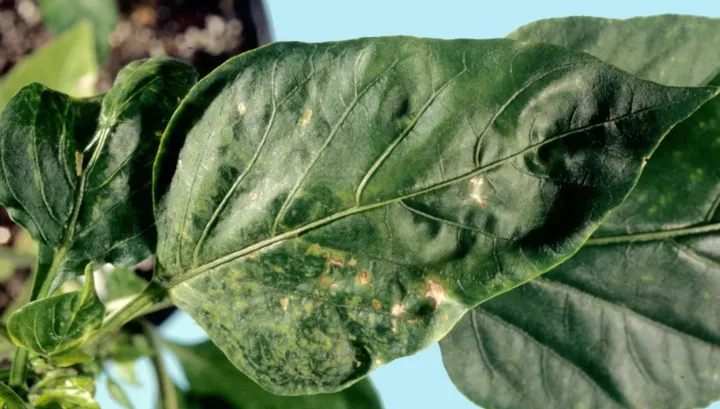
Description
Symptoms
Symptoms of TEV infection are highly characteristic and often include a mosaic or mottle pattern on the leaves. The specific "etching" appearance consists of thin, chlorotic lines or streaks that seem engraved on the leaf surface.
Leaf deformation is a common sign, often manifesting as curling, crinkling, or narrowing of the foliage. Plants frequently show severe stunting, with shortened internodes that result in a compact and bushy or stunted appearance.
In many susceptible species, necrotic spots or ring patterns may appear on leaves and stems. As the infection progresses, severe tissue necrosis can lead to premature leaf drop, significantly reducing the plant's photosynthetic capacity.
Fruit development is often adversely affected, resulting in smaller, misshapen, or discolored produce. In flowering plants, flower breaking (irregular coloration of petals) may also be observed as a consequence of the viral infection.
- Mosaic and mottle patterns on foliage.
- Characteristic "etched" lines and necrotic streaks.
- Severe leaf curling and crinkling.
- Stunted growth and reduced internode length.
- Deformed fruits and reduced yields.
Pathogen
The Tobacco etch virus (TEV) is a member of the Potyvirus genus, known for its significant impact on various agricultural and horticultural crops. The virus consists of a positive-sense single-stranded RNA genome encapsulated in a flexuous, rod-shaped protein coat.
Transmission occurs primarily through aphid vectors in a non-persistent manner. This means that aphids can pick up the virus from an infected plant after a short feeding probe and transmit it to a healthy plant almost immediately thereafter.
Mechanical transmission is another critical pathway, often facilitated by agricultural practices such as pruning, thinning, or harvesting. The virus enters the host through microscopic wounds in the plant tissue caused by these activities or insect feeding.
The virus persists in various weed hosts, which serve as essential reservoirs for overwintering. These reservoirs allow the virus to remain present in the environment even when primary crops are not being cultivated in the field.
Once inside the host, the virus replicates and moves systemically through the phloem. This rapid systemic spread ensures that even a small initial infection can quickly manifest as a disease throughout the entire plant.
Conditions for development
The spread of TEV is closely linked to the population dynamics of aphid vectors. Warm, dry weather conditions generally promote rapid aphid movement and colonization of crop fields.
Proximity to weed reservoirs is a primary factor in the initial infection cycle. Fields located near infested wild hosts are at a much higher risk of outbreaks due to the immediate availability of the virus and its carriers.
Overcrowded plantings and high humidity within the crop canopy can create favorable conditions for both the insects and the maintenance of viral levels within the plant tissue.
Agricultural practices that involve frequent handling of plants increase the potential for mechanical virus spread. If tools are not sanitized, a single infected plant can serve as a source of contamination for the entire row.
Environmental stress, such as drought or nutrient imbalance, can weaken plant defenses, making them more susceptible to systemic infection and accelerating the manifestation of disease symptoms.
Why it matters
TEV is highly damaging, with potential yield losses ranging from moderate to catastrophic depending on the timing of infection. Early-season infections often result in a near-total failure of crop production.
The commercial quality of the produce is severely compromised. For tobacco, the value of the leaf is drastically reduced due to loss of elasticity and necrotic lesions, making it unsuitable for high-quality markets.
In vegetable crops like peppers and tomatoes, the marketability is ruined by the deformation of fruit. Consumers often reject misshapen or discolored produce, leading to substantial economic losses for farmers.
Systemic infection disrupts the plant's metabolic processes, specifically photosynthesis and nutrient transport. This leads to overall plant weakness, making the crop more prone to secondary opportunistic diseases.
The economic impact is multifaceted, involving lost revenue from yields, increased labor costs for rogueing infected plants, and the added expenses of intensive insect control programs.
Protection
Managing the aphid vector population is the cornerstone of TEV control. Insecticide applications are necessary, particularly during the early growth stages, to prevent the initial arrival and settlement of viral carriers.
Sanitation is critical; this involves strict weed control within and around the field to remove potential viral reservoirs. Maintaining clean field borders significantly reduces the influx of the virus.
Selecting and planting resistant or tolerant cultivars is the most effective long-term management strategy. Breeders have developed varieties that either limit viral replication or minimize the severity of symptom expression.
Good agricultural practices include disinfecting tools with trisodium phosphate or similar reagents between tasks. Workers should also avoid moving from infected areas to healthy ones without proper sanitation.
Regular monitoring and rapid rogueing of infected plants help to break the cycle of infection within the field. All removed material should be burned or buried away from the production area to prevent spread.
Discussion
No discussions yet — be the first.