
Iris severe mosaic virus
Potyvirus iriseverum
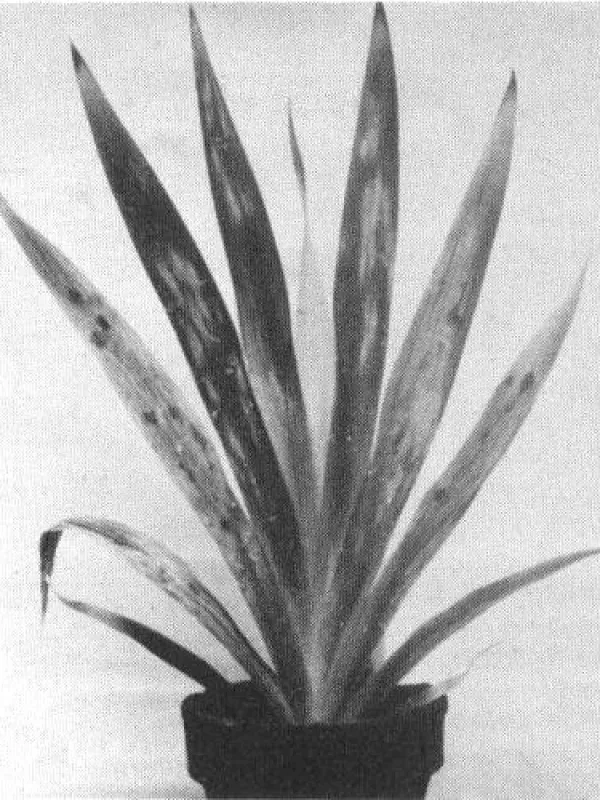
Description
Symptoms
Symptoms of the virus are most visible during the active growing season, primarily affecting the foliage and floral parts of the iris.
Leaves often exhibit a characteristic mosaic pattern, appearing as alternating light green and dark green stripes or irregular patches.
Flower petals show signs of color breaking, also known as variegation, where irregular streaks or spots of contrasting color appear on the blooms.
Infected plants typically show stunted growth, resulting in shorter flower stalks and buds that may fail to open fully or appear deformed.
As the infection progresses, the overall vigor of the plant declines, leading to premature yellowing, drying leaves, and a significant loss in floral aesthetic quality.
Pathogen
Iris severe mosaic virus (ISMv) is a destructive plant pathogen belonging to the Potyvirus genus, known to specifically target Iris species.
As an obligate parasite, the virus requires living plant cells for replication and survival, making it a persistent threat to perennial bulbous crops.
The virus is primarily transmitted by aphids, which act as vectors, picking up the virus while feeding on infected leaves and spreading it to healthy plants.
In addition to insect vectors, the virus can be easily spread mechanically by garden tools that have not been sterilized after contact with diseased tissues.
A significant factor in the disease cycle is the use of infected rhizomes or bulbs, as the virus can remain dormant in the plant tissue and emerge during the next growth cycle.
Conditions for development
The spread of ISMv is heavily influenced by environmental conditions that favor aphid activity, particularly warm and dry spring weather.
High planting density contributes to the rapid transmission of the virus, as it makes it easier for aphids to move from one host to another.
Poor sanitation practices, such as using unsterilized tools during division or pruning, facilitate the spread of the virus across the garden bed.
Plants under stress, whether from poor soil nutrition or water shortages, are more likely to express severe symptoms and succumb to the disease quickly.
The absence of natural resistance in certain popular iris varieties makes them particularly susceptible to rapid outbreaks when the virus is introduced.
Why it matters
The primary impact of the virus is the permanent loss of the plant's decorative value, as color breaking distorts the natural beauty of the blossoms.
Because the virus is systemic, it exhausts the plant's resources over time, leading to weak rhizomes that are less capable of surviving winter and producing blooms.
An infected iris becomes a continuous source of infection for neighboring healthy plants, necessitating the removal of affected stock to save the collection.
The loss of high-value cultivars due to viral degradation represents a significant economic and personal loss for breeders and commercial growers.
Once a collection is heavily infested, the cumulative damage often requires drastic measures, such as the total removal and destruction of the iris patch.
Protection
Since there are no curative treatments for viral diseases in plants, management focuses exclusively on prevention and early detection.
The most effective strategy is the immediate removal and destruction of any plant showing mosaic symptoms to prevent further transmission.
Implementing a rigorous aphid control program using systemic insecticides early in the season is vital to minimizing the primary vector population.
Sterilizing all cutting tools in a disinfectant solution (such as rubbing alcohol or a bleach dilution) between plants is essential to stop mechanical spread.
Only source iris bulbs and rhizomes from reputable nurseries that provide virus-free certification to ensure the long-term health of your garden.
Discussion
No discussions yet — be the first.