
Pepper severe mosaic virus
Potyvirus capsiseverum
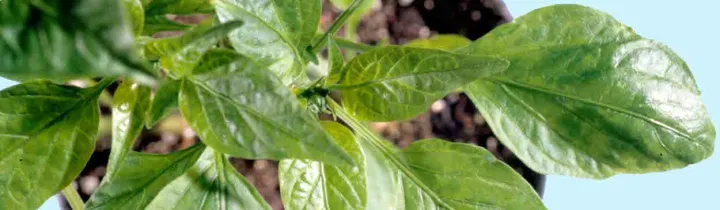
Description
Symptoms
The primary symptom is a distinct mosaic pattern on leaves, consisting of alternating light and dark green patches, often accompanied by severe leaf deformation and wrinkling.
Infected plants exhibit stunted growth with significantly shortened internodes, giving them a compact or dwarfed appearance compared to healthy plants in the field.
Fruits produced on infected bushes are often small, misshapen, and may display necrotic spots, stripes, or irregular bumps, which drastically reduces their commercial value.
In advanced stages, apical parts of the stems may twist and become thread-like, while older leaves may prematurely yellow and drop off, leading to sparse foliage.
Systemic infection often causes necrotic streaks on the main stem and branches, which can eventually lead to tissue cracking and the death of individual plant sections.
Pathogen
The causal agent is Potyvirus capsiseverum, a member of the Potyvirus group known for its high genetic variability and rapid replication cycles within host cells.
The virus consists of flexible, filamentous particles containing a single-stranded RNA molecule, which facilitates quick spread through the vascular system of the host plant.
This pathogen specifically targets various solanaceous crops, with peppers being among the most susceptible to severe physiological damage from the infection.
In agricultural environments, the virus is primarily transmitted by several aphid species that acquire and transfer the pathogen while feeding on infected plant sap.
The virus can persist in infested seeds, root remnants of perennial weeds, and debris left in the soil, allowing it to survive between growing seasons.
Conditions for development
The rapid spread of the disease is closely linked to the population dynamics of aphid vectors, which thrive in warm, dry weather conditions typical of mid-summer.
In protected greenhouse environments, poor ventilation and inadequate temperature control create an ideal microclimate for aphid reproduction and virus dissemination.
Fluctuating temperatures and environmental stress weaken the plant's natural immune response, making it easier for the virus to establish a systemic infection.
Poor agricultural practices, such as failing to disinfect pruning tools, contribute to the mechanical transmission of the virus from infected to healthy plants.
High planting density promotes faster movement of insect vectors between adjacent plants, significantly increasing the rate of secondary infection within a plot.
Why it matters
The disease is highly destructive, capable of reducing crop yields by up to 90% in severe cases, leading to massive financial losses for producers.
The degradation of fruit quality makes the product unsuitable for the fresh market, as deformities and spots are highly visible and unattractive to consumers.
Because there is no cure for established systemic viral infections, the primary harm involves the necessity of removing entire groups of plants to prevent further outbreaks.
Plants weakened by the virus become highly susceptible to opportunistic bacterial and fungal diseases, which further accelerate the decline and death of the crop.
The long-term impact includes the buildup of viral inoculum in the soil and surrounding environment, requiring years of strict sanitation to regain productivity.
Protection
The most effective strategy involves planting certified, virus-free seeds and selecting resistant or tolerant hybrid varieties that can withstand potential infections.
Strict management of aphid populations using targeted insecticide applications is essential to prevent the primary transmission of the virus into the crop field.
Sanitation measures, including the complete removal of weeds around fields and greenhouses, are critical to eliminate alternative hosts for both the virus and its vectors.
- Regular disinfection of pruning tools and equipment using approved sanitizing agents.
- Immediate rogueing and proper disposal of any plants showing suspicious viral symptoms.
- Implementation of a 3-4 year crop rotation cycle to prevent the accumulation of the virus in the soil.
Using reflective mulches or covers can help deter aphids from landing on young plants, thereby reducing the initial infection rate during the vulnerable stages of growth.
Discussion
No discussions yet — be the first.