
Beet necrotic yellow vein virus vector
Polymyxa betae
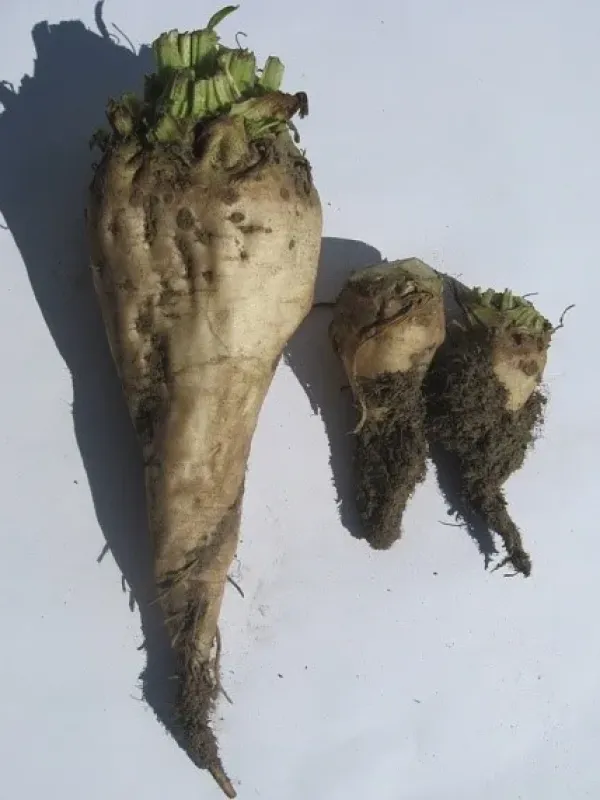
Description
Symptoms
Infection by Polymyxa betae alone often remains asymptomatic, as it does not typically cause severe physiological damage to the plant on its own.
Visible symptoms manifest primarily due to the associated rhizomania virus, characterized by the «bearded root» syndrome where excessive secondary rootlets emerge, giving the root a matted appearance.
Cross-sections of the taproot often reveal vascular browning or necrosis, which indicates the internal systemic damage caused by the viral infection.
Above-ground, plants exhibit stunting, leaf yellowing (chlorosis), and intermittent wilting despite adequate moisture, leading to poor crop uniformity.
In early stages, the infection may appear as patches in the field that fail to develop properly compared to healthy surrounding plants.
Pathogen
Polymyxa betae is an obligate soil-borne parasite classified within the Plasmodiophoromycota group. It functions as an endoparasite, living within the cells of the host plant's roots.
The primary agricultural significance of this organism is its role as the sole natural vector for the Beet Necrotic Yellow Vein Virus (BNYVV), which causes the severe disease known as rhizomania.
The lifecycle consists of motile zoospores that use flagella to swim through soil moisture, allowing them to locate and infect the fine root hairs of susceptible plants.
Once inside, the parasite develops into sporangia and eventually forms resting spores (cystosori), which can remain viable in the soil for over a decade, even in the absence of a host crop.
The host range is primarily limited to the Amaranthaceae family, including sugar beet, fodder beet, spinach, and several common weeds like common lambsquarters.
Conditions for development
High soil moisture is the critical requirement for the development of Polymyxa betae, as the zoospores must have a water film to swim and reach the roots.
The optimal temperature range for infection is between 15°C and 25°C, which corresponds to the peak growing season for sugar beet crops.
Poorly drained fields, soil compaction, and excessive irrigation are the primary environmental factors that promote the rapid spread of the pathogen.
The pathogen is easily disseminated mechanically through infested soil adhering to farm machinery, boots, and tools, or via runoff water after heavy rains.
Soil pH and the presence of crop residues can influence the longevity of the resting spores in the soil, allowing the pathogen to persist across multiple seasons.
Why it matters
The economic impact of Polymyxa betae is devastating when coupled with BNYVV, as it can cause yield losses of up to 80% in infested fields.
Beyond physical yield loss, the sugar content of the beets is significantly reduced, rendering the harvest commercially unviable for sugar processing factories.
Infestation makes a field a long-term reservoir for the pathogen, preventing the cultivation of susceptible beet varieties for many years.
Farmers face increased production costs as they are forced to shift toward expensive, rhizomania-resistant seed varieties to maintain viability.
Post-harvest storage losses are also higher, as damaged root systems predispose the crop to secondary rot infections while stored in piles.
Protection
The most effective management strategy is the exclusive use of rhizomania-resistant sugar beet hybrids, which provide the best protection against BNYVV infection.
Crop rotation is essential to prevent the buildup of the pathogen in the soil, although the longevity of resting spores makes this a long-term strategy.
Improving field drainage and subsoiling to prevent water stagnation are crucial cultural practices to limit the movement of zoospores.
Strict sanitation protocols for farm equipment must be implemented to avoid transferring infested soil from contaminated fields to clean areas.
Weed management, particularly targeting species of the Amaranthaceae family, is necessary to eliminate alternative reservoirs for the pathogen.
Discussion
No discussions yet — be the first.