
Barley yellow dwarf
Polerovirus mydvrmv
Description
Symptoms
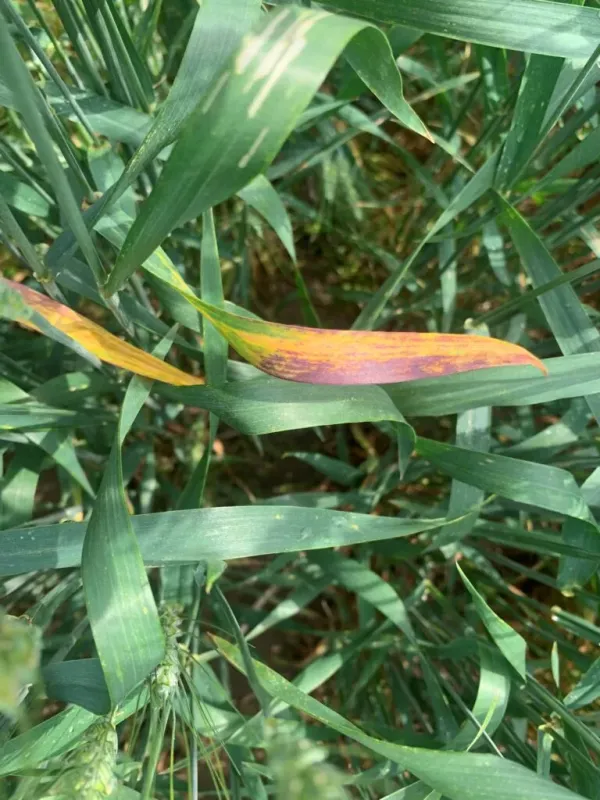
The primary symptom of Barley Yellow Dwarf (BYD) is a characteristic stunting of the plants, giving fields a patchy and uneven appearance. In barley, the leaves typically exhibit a bright yellow or golden discoloration that starts from the tip and moves downwards.
In wheat and oats, the coloration is often more reddish or purple, beginning at the leaf tips and margins. Infected plants often show increased tillering, resulting in a bushy, stunted appearance, but these tillers frequently fail to produce heads.
The root system is significantly underdeveloped, which compromises the plant's ability to take up water and nutrients. Consequently, heads that do form are often small, sterile, or filled with shriveled, low-quality grain, leading to severe yield loss.
Symptoms are highly dependent on the host cultivar, the timing of infection, and environmental conditions. Infection that occurs during the seedling stage is particularly devastating, often resulting in complete yield failure for those plants.
Because visual symptoms can mimic nutrient deficiencies or herbicide injury, confirmation of the disease often requires specialized laboratory testing, such as ELISA, to identify the presence of the virus in plant tissues.
Pathogen
The disease is caused by several related viruses in the Luteoviridae family, with Barley yellow dwarf virus (BYDV) being the most prominent. These viruses are obligate parasites that infect a broad range of grasses, including wheat, barley, oats, and rye.
The virus is exclusively transmitted by aphids, with over 20 species serving as potential vectors. It is not transmitted mechanically through sap, contact, or contaminated soil, making vector control the cornerstone of disease management.
Upon feeding on an infected plant, the aphid acquires the virus, which circulates through its system and settles in the salivary glands. During subsequent feeding on healthy plants, the virus is injected directly into the phloem tissue.
The virus persists in the aphid's body throughout its lifespan. Reservoirs for the virus include perennial grasses and volunteer cereal plants, which act as "green bridges" between growing seasons, allowing the virus to survive the winter.
BYDV exists as multiple strains with varying degrees of virulence and aphid-transmission efficiency. This genetic diversity makes the development of broad-spectrum resistant cultivars a significant challenge for cereal breeding programs.
Conditions for development
The development of epidemics is heavily influenced by warm and moist autumn conditions, which promote the rapid buildup of aphid populations. These conditions allow aphids to colonize newly emerged winter cereal crops early in the season.
Late sowing of winter cereals often exposes young, highly susceptible seedlings to peak periods of aphid migration. Crops that are not yet established lack the physiological vigor to withstand early viral infection.
Mild winters allow aphids to survive and continue breeding, maintaining a high level of viral inoculum into the spring. As temperatures rise, these aphids migrate to spring-sown crops, continuing the disease cycle.
Cultural practices that lead to high plant density and vigorous vegetative growth, such as excessive nitrogen fertilization, can make plants more attractive to aphids. This increased feeding activity significantly raises the probability of virus transmission.
Proximity to perennial grass pastures or field margins with weed hosts provides a constant source of infection. Furthermore, monoculture cropping systems without proper rotation increase the risk of consistent viral pressure across seasons.
Why it matters
Barley yellow dwarf is one of the most economically damaging viral diseases of cereals worldwide. Losses in grain yield can range from 30% up to 80% in severe epidemic years, depending on the intensity of the aphid infestation.
The disease significantly impacts grain quality, resulting in shriveled kernels and reduced test weight. This makes the grain less desirable for milling and reduces its overall market value and potential for seed replanting.
Infected plants are immunocompromised and show higher susceptibility to secondary pathogens, such as crown rot and various fungal diseases. This leads to increased mortality and poor winter survival in winter wheat crops.
Economic damage also includes the costs of insecticide applications required to suppress vector populations. These added input costs can strain farm profitability, particularly when control measures are not fully effective.
By interfering with the translocation of photosynthetic products to the grain, the virus drastically alters the plant's metabolic sink-source relationships. This leads to stunted plant growth and a failure to meet the plant's biological yield potential.
Protection
The most effective management strategy is to optimize sowing dates to avoid the peak flight periods of aphid vectors. By planting at the appropriate time, farmers can ensure that seedlings are past their most vulnerable stage during migration.
Controlling volunteer cereals and grass weeds in the field and surrounding areas is critical to eliminating the primary reservoirs of the virus. Maintaining clean field borders helps break the cycle of infection between crops.
Seed treatment with systemic insecticides provides a vital protection window for young seedlings. This prevents aphids from establishing colonies and transmitting the virus during the first few weeks after emergence.
Regular scouting using yellow sticky traps or visual inspection allows for the timely application of foliar insecticides. Targeted interventions during the early stages of aphid colonization can prevent the virus from spreading throughout the field.
Integrating resistant or tolerant wheat and barley varieties into the cropping system provides long-term protection. When combined with balanced fertilization and proper crop rotation, these measures significantly reduce the incidence and impact of BYD.
Discussion
No discussions yet — be the first.