
Poinsettia mosaic
Poinsettia mosaic virus
Description
Symptoms
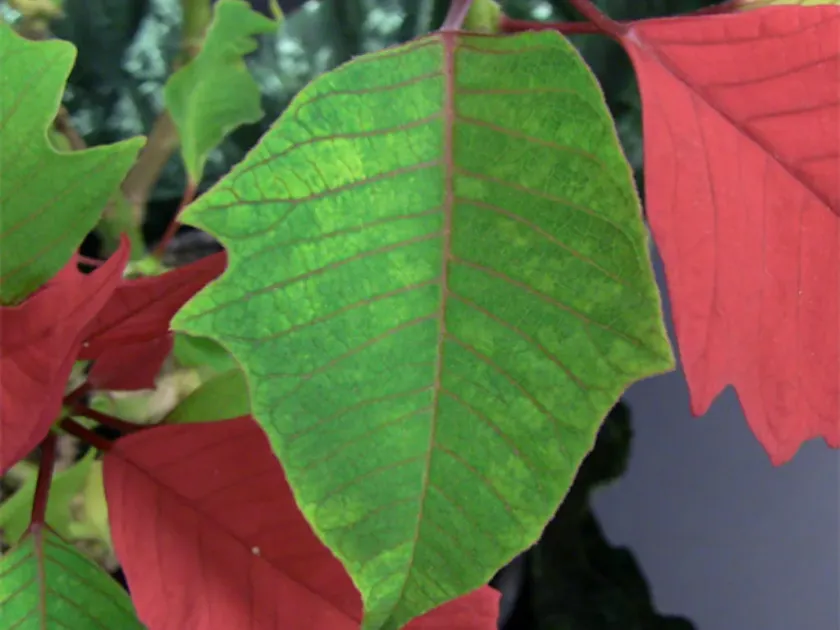
The most characteristic sign of the infection is the development of a mosaic-like pattern on the leaves, featuring a mix of light green, yellow, and dark green discolored areas.
In certain Poinsettia varieties, symptoms may appear as chlorotic spotting or distinct ring patterns on the foliage, which significantly diminishes the plant's aesthetic value.
Many plants may harbor the virus in a latent state, showing no visible symptoms, which makes them dangerous asymptomatic carriers capable of spreading the virus unknowingly.
Advanced stages of the disease can cause leaf deformation and stunted growth, making the plants unsellable and reducing the overall quality of the greenhouse crop.
The intensity of visual symptoms can be influenced by environmental factors, including light intensity and temperature, as well as the plant's general physiological state.
Pathogen
The disease is caused by the Poinsettia mosaic virus (PnMV), a member of the Tymovirus genus. This virus consists of icosahedral particles containing a single-stranded RNA molecule.
The virus is known for its high stability in the environment and its ability to persist in infected plant debris. It functions as an obligate parasite, replicating strictly within the living cells of its host plants.
The primary natural reservoirs for this virus are species belonging to the Euphorbia genus, with Poinsettia (Euphorbia pulcherrima) being the most commonly affected commercial crop.
Transmission occurs primarily through mechanical means. The virus is easily spread during routine horticultural operations such as pruning, pinching, or propagation when contaminated tools are used.
While the virus can be spread manually, there is no significant evidence that insects act as active vectors for this specific tymovirus, emphasizing the role of human activity in its spread within nurseries.
Why it matters
The primary damage caused by Poinsettia mosaic is the severe reduction in the commercial quality of the plants, leading to significant economic losses for producers.
The virus interferes with the plant's metabolic pathways and photosynthesis, which negatively affects the development and coloration of the poinsettia bracts.
Systemic infection weakens the plant's immune system, making it more susceptible to secondary infections by other pathogens like fungi or bacteria.
In large-scale commercial greenhouses, the presence of the virus can lead to the loss of entire batches, requiring costly sanitation and disposal measures.
The disease cycle is difficult to interrupt once the virus is established, as the pathogen remains viable in cuttings and stock plants for long periods.
Protection
Because there are no curative treatments for viral infections in plants, the strategy for managing Poinsettia mosaic relies entirely on prevention and strict hygiene.
It is essential to disinfect all pruning and propagation tools after each use, or when moving from one plant to another, to avoid cross-contamination.
Producers must ensure they only use virus-indexed or certified disease-free starting material to prevent the introduction of the pathogen into their facilities.
Any plant showing symptoms must be immediately isolated and destroyed to prevent the virus from spreading throughout the greenhouse population.
- Thorough tool sterilization using appropriate disinfectants;
- Strict quarantine for new plant introductions;
- Regular visual monitoring for symptom development;
- Safe disposal of infected plant material;
- Adherence to high sanitation standards during propagation.
Discussion
No discussions yet — be the first.