
Plasmodiophoromycota
Plasmodiophoromycota
Description
Symptoms
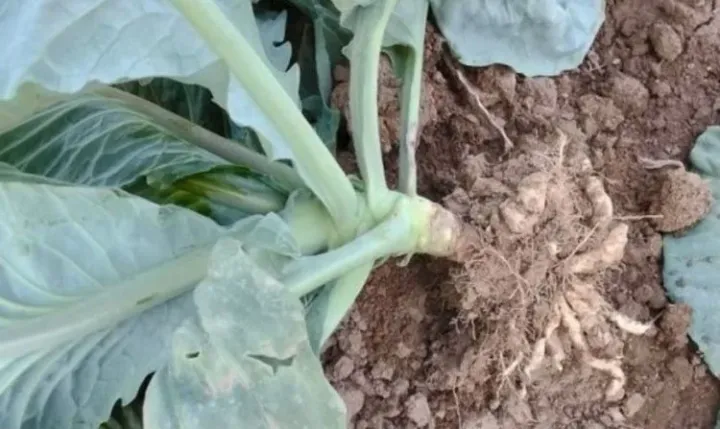
The most diagnostic sign of infection is the development of distinct, gall-like swellings and club-shaped deformations on the root system of the affected plants.
Above-ground, infected plants often exhibit stunted growth, wilting during periods of high temperature, and general chlorosis caused by impaired nutrient uptake.
As the disease progresses, the root architecture is entirely destroyed, leading to the decay of tissue and the eventual death of the entire plant structure.
Plants affected at a young stage fail to establish, resulting in poor stand establishment and visible gaps in the crop field during the growing season.
Internally, the roots lose their vascular integrity, preventing water movement, which explains why infected plants cannot survive even under sufficient irrigation.
Pathogen
Plasmodiophoromycota are a group of obligate, intracellular parasites known for their complex life cycle involving motile zoospores that navigate through soil moisture.
These organisms are classified as cercozoan protists and are primarily recognized for causing abnormal growth and hypertrophy in the root systems of their host plants.
The life cycle features a plasmodium stage, where the organism grows within host cells, followed by the formation of highly resistant resting spores that persist in the soil.
Because these resting spores have thick cell walls and can survive for many years, they make the management of Plasmodiophoromycota-related diseases extremely difficult.
The most infamous member of this group is the pathogen responsible for clubroot in cruciferous crops, which causes severe agricultural damage globally.
Conditions for development
Plasmodiophoromycota thrive in moist conditions, as soil water is essential for the movement of zoospores from the resting spores to the plant roots.
The optimal temperature for infection usually ranges between 15°C and 25°C, making early spring and autumn planting windows particularly high-risk periods.
Soil acidity is a major determining factor, with lower pH levels (below 6.0) significantly accelerating the germination of spores and subsequent infection rates.
The pathogens are primarily disseminated through human activities, such as moving contaminated soil on equipment, footwear, or by transporting infected nursery stock.
High-density planting and the lack of crop rotation create a conducive environment for the rapid buildup of inoculum in the soil over consecutive seasons.
Why it matters
The economic impact of these diseases is severe, particularly for the cabbage family, where yield losses can reach 100% in heavily infested fields.
Once the soil is contaminated, it may remain unsuitable for susceptible crops for nearly a decade, necessitating a shift in cropping patterns or costly soil remediation.
Reduced root functionality leads to poor physiological development, lowering the nutritional value and market quality of the harvested produce.
Farmers often suffer significant financial losses due to the need for total field abandonment or the implementation of intensive and expensive chemical control programs.
The destruction of roots not only ruins the current crop but also introduces the pathogen to new areas if residue management is not strictly performed.
Protection
Implementing long-term crop rotation is the primary strategy, ensuring that host crops are not grown on the same field for at least five to seven years.
Adjusting the soil pH through liming to reach a neutral or slightly alkaline range (pH 7.0–7.5) can significantly inhibit the activity of the zoospores.
Strict sanitation protocols should be practiced, including cleaning equipment and ensuring that transplants are certified as pathogen-free before planting.
The use of resistant cultivars is considered one of the most sustainable and effective ways to manage Plasmodiophoromycota in areas where the soil is known to be infested.
- Remove and destroy all infected roots to reduce soil inoculum;
- Avoid movement of soil from infested areas to clean fields;
- Monitor soil moisture and drainage to prevent prolonged saturation.
Discussion
No discussions yet — be the first.