
Pigeonpea sterility mosaic virus
Pigeonpea sterility
Description
Symptoms
The most diagnostic sign of the infection is the complete or partial sterility of the inflorescence, preventing the development of seed-bearing pods.
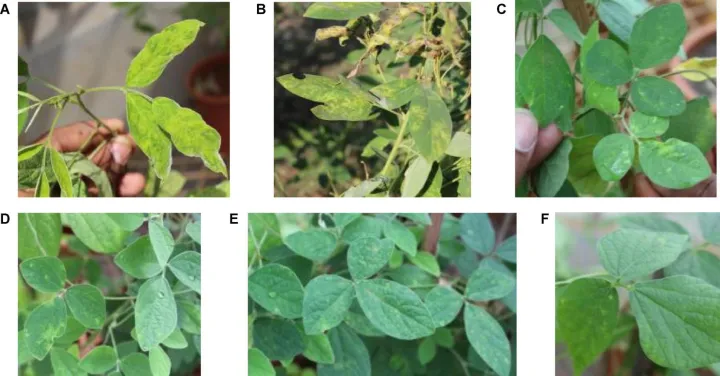
Infected leaves exhibit a characteristic mosaic pattern, with alternating patches of light and dark green, often leading to severe chlorosis.
Plants display a stunted growth habit, characterized by short internodes and a proliferation of secondary branches, giving them a bushy appearance.
Floral structures are often deformed, reduced in size, or fail to develop entirely, which is the primary cause of total yield loss.
The overall morphology of an infected plant is distinctly different from that of a healthy plant, often appearing bushy and failing to produce flowers.
Pathogen
Pigeonpea sterility mosaic virus (PPSMV) is a serious viral pathogen that significantly impacts the productivity of pigeonpea (Cajanus cajan) cultivation worldwide.
The virus is classified as a member of the genus Emaravirus, possessing a multipartite single-stranded RNA genome.
The disease is transmitted exclusively by the eriophyid mite Aceria cajani, which acquires the virus while feeding on infected plant tissues.
There is no evidence of seed transmission or mechanical transmission in the field; the virus relies entirely on the vector for its dissemination.
The pathogen effectively persists in the environment by utilizing weed hosts and perennial pigeonpea plants as reservoirs during the off-season.
Conditions for development
The development and spread of the disease are heavily dependent on the population density of the mite vector, Aceria cajani, within the crop fields.
Hot, dry weather conditions provide an ideal environment for the multiplication and rapid dispersal of the mite vectors.
Wind currents facilitate the aerial movement of mites from old, infected pigeonpea fields to newly planted areas, triggering early-season outbreaks.
The presence of overlapping cropping seasons allows the vector to move continuously between mature and young plants, sustaining the viral cycle.
Inadequate sanitation measures that leave infected crop debris in the soil increase the pressure of the disease for the subsequent growing season.
Why it matters
This virus is recognized as a major limiting factor in pigeonpea production, often causing losses that reach up to 100% in severe cases.
Because the disease causes total floral sterility, farmers face a complete failure of the grain harvest on infested fields.
The reduction in vegetative biomass also compromises the quality of the plants, which might otherwise be used for forage purposes.
The economic impact of the virus forces farmers to abandon certain regions or switch to less profitable crops to avoid total loss.
Given the rapid transmission rate in optimal conditions, a minor initial infection can escalate into a major field-wide epidemic very quickly.
Protection
The most sustainable management strategy is the deployment of resistant or tolerant pigeonpea genotypes that effectively suppress viral replication.
- Elimination of volunteer pigeonpea plants and weeds that harbor the vector.
- Establishing a host-free period to break the mite's life cycle between cropping seasons.
- Judicious use of acaricides to manage mite populations in high-risk zones.
- Implementing spatial isolation by planting new crops away from older infected fields.
Integrated pest management (IPM) practices, emphasizing crop rotation and sanitation, are essential for minimizing the risk of viral transmission.
Discussion
No discussions yet — be the first.